Installation guide
 Owner’s manual
 Error Codes
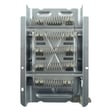


How do I know if my dryer thermistor is bad?
On Kenmore dryer model 11062722101, the temperature control described in our documentation is thermostat-based (not a thermistor). If you are chasing “thermistor-like” symptoms such as no heat, overheating, or long dry times, focus on airflow and the cycling thermostats outlined in the 11062722101 owner's manual.
What this model uses instead of a thermistor
This 29-inch Kenmore electric dryer uses a mechanical timer and thermostats to regulate heat. The manual also describes moisture-sensing operation on some cycles, but it does not identify a thermistor as a service part.
Symptoms that still point to a heat-control problem
- Dryer runs but no heat on heated cycles
- Heat is weak or inconsistent (clothes stay damp)
- Dryer overheats (very hot cabinet or clothes)
- Dryer shuts down after getting too hot (safety devices trip)
- Drying times suddenly get much longer
Quick checks first (most common cause)
Restricted venting can mimic a failed temperature control.
- Clean the lint screen before every load
- Check the vent for crushing, kinks, or lint blockage
- Confirm the outside hood opens and blows strongly
- Avoid Air Dry/Air Fluff when you expect heat
Parts to consider on this model
If airflow is good and heat is still wrong, the likely suspects are thermostats or safety cutoffs.
| Part | What it does | When it’s suspect |
|---|---|---|
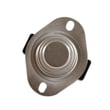
| Dryer operating thermostat WP3387134 | Cycles heater on and off during normal drying | Weak heat, overheating, erratic cycling |
| Dryer high-limit thermostat WP3977767 | Safety limit if temperatures get too high | Overheating, repeated shutdowns |
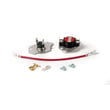
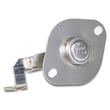
| Dryer thermal cut-off fuse kit 279816 | One-time safety cutoff if overheating occurs | No heat after an overheat event |
Why it matters
Misdiagnosing a “bad sensor” can lead to repeat overheating and blown safety cutoffs. Correct airflow and proper thermostat operation protect the heater circuit and help the dryer dry efficiently.
Last updated: January 2026
How to tell if a dryer thermal fuse is bad?
On our Kenmore dryer model 11062722101, a bad thermal fuse most often causes the dryer to not run at all. The reliable way to confirm is a multimeter continuity test: a good fuse reads closed (near 0 ohms), and a blown fuse reads open (no continuity).
Common signs on model 11062722101
A thermal fuse is a one-time safety device that opens when the dryer overheats, usually from restricted airflow.
- Dryer will not start even with the door closed and controls set
- Dryer stopped mid-cycle and will not restart
- Very long dry times leading up to the failure (often a venting issue)
- Lint buildup in the lint screen housing or vent ducting
For safety and access guidance for this model, use the 11062722101 owner's manual.
How to test the thermal fuse (multimeter)
Safety: unplug the dryer or switch off the breaker before removing any panels.
- Access the fuse area (commonly on the blower housing or exhaust duct).
- Pull at least one wire off the fuse terminal (so you do not read the rest of the circuit).
- Set your meter to continuity (beep) or the lowest ohms setting.
- Touch one probe to each fuse terminal.
What the meter reading means
| Meter reading | Fuse condition | What to do next |
|---|---|---|
| Beep / ~0 Ω | Good | Keep troubleshooting (door switch, timer, motor, wiring) |
| No beep / OL / infinite | Blown | Replace the fuse and correct the overheating cause |
Model-specific replacement note
For model 11062722101, one verified option in our parts list is the dryer thermal cut-off fuse kit 279816. Depending on the exact configuration, your dryer may also use a separate thermal fuse; match parts by model and diagram before ordering.
Fix the cause before you run the dryer again
Restricted venting is the most common reason a fuse blows.
- Clean the lint screen before every load
- Clear lint from the lint screen housing and blower area
- Clean the vent duct from the dryer to the outside hood
- Replace crushed, kinked, plastic, or foil venting with heavy metal vent
- Make sure the outside hood opens freely and is not clogged
Why it matters
If you replace the fuse without restoring airflow, the new fuse can blow again and the dryer can take longer to dry, wasting energy.
Last updated: January 2026
What are the most common issues with 11062722101?
For Kenmore dryer model 11062722101, the most common problems are no heat or weak heat, won’t start, loud squealing or thumping, and long dry times. These issues usually trace to airflow restrictions, a failed heating or safety component, or worn drum support parts; use the owner's manual for model-specific checks.
Common symptoms and what they usually point to
- No heat or not drying: heating circuit problem (heater, thermostats, thermal cut-off) or poor venting
- Long dry times: clogged lint screen, blocked lint chute, crushed vent hose, or restricted exterior vent hood
- Won’t start: door not closing, failed door switch, timer issue, or motor problem
- Loud noise (squeal, rumble, thump): worn belt, idler pulley, drum rollers, or blower wheel
- Stops mid-cycle: overheating from restricted airflow, thermal cut-off opening, or motor overheating
Parts that commonly fix these issues (when they test bad)
If troubleshooting points to a failed component, these are common replacements for this model:
| Symptom | Common part to check | Example part on this model page |
|---|---|---|
| No heat | Heating element | Dryer element 279838 |
| Overheats or no heat | Thermal cut-off kit | Dryer thermal cut-off fuse kit 279816 |
| Won’t start when door closes | Door switch | Dryer door switch WP3406107 |
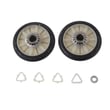
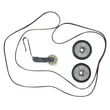
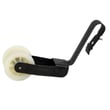
| Squealing or drum not turning | Belt and pulley wear items | Dryer drum belt 341241 |
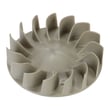
| Roaring or vibration | Blower wheel | Dryer blower wheel WP694089 |
Quick checks we recommend before ordering parts
- Clean the lint screen and confirm strong airflow at the outside vent.
- Inspect the vent hose for kinks, crushing, or excessive length.
- Confirm the door fully latches; a bad latch or switch can prevent starting.
- If the drum turns but there’s no heat, focus on the heating circuit components.
- If the dryer is noisy, inspect belt routing and rotating parts for wear.
Why it matters
Most “dryer problems” on the 11062722101 are either airflow-related (causing long dry times and overheating) or wear-and-tear failures (belt, pulley, blower wheel). Fixing the root cause prevents repeat failures, especially thermal cut-offs opening again due to a blocked vent.
Last updated: March 2026