 Owner’s manual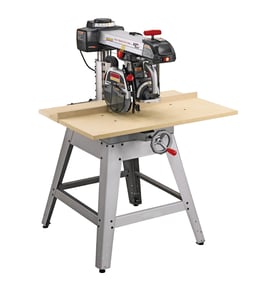

Are radial arm saws worth anything?
Yes. A Craftsman radial arm saw like model 113197110 is often worth something if it’s complete, runs smoothly, and still has key safety and alignment parts installed; value drops fast when guards, anti-kickback parts, or alignment hardware are missing.
What drives value for a Craftsman 113197110 radial arm saw
- Completeness: blade guard, spreader, and anti-kickback pawls present and functional.
- Accuracy: the saw can be aligned and holds settings (miter, swivel, bevel locks).
- Condition: smooth carriage travel, solid arm/column, minimal rust, intact table.
- Electrical health: starts reliably, no burning smell, no excessive sparking at the motor.
- Safety readiness: labels and guards in place; no “freehand” use setup.
Quick condition checklist before you price it
Use this as a practical pass/fail list.
- Unplugged inspection: cord intact, switch works, no cracked housings
- Carriage: slides without binding; returns to the rearmost position after crosscuts
- Locks: miter, swivel, bevel locks tighten and hold; rip lock locks when needed
- Guarding: guard positions correctly for crosscutting and ripping
- Hardware: no overtightened or warped blade collar area; arbor feels true
Typical value ranges (what most buyers pay)
Actual pricing depends heavily on your local market and included accessories.
| Condition | What it usually includes | Typical buyer interest |
|---|---|---|
| Parts-only | Missing guard parts, won’t run, heavy rust | Low |
| Usable | Runs, basic adjustments work, some wear | Medium |
| Clean and complete | Runs well, aligned, guards and anti-kickback parts present | High |
Why alignment and safety parts matter
On a radial arm saw, alignment is a core performance and safety issue. The operator guidance for this model emphasizes that blade alignment is the most important assembly step because poor alignment can cause binding, jams, or thrown workpieces. Keeping the blade guard set correctly for crosscutting and using the spreader and anti-kickback pawls for ripping also directly affects safe operation. Review the setup and alignment steps in the 113197110 owner's manual before selling or putting the saw back into regular use.
Last updated: February 2026
What are the common problems with radial arm saws?
Common radial arm saw problems are kickback during ripping, binding that throws the workpiece, inaccurate cuts from poor blade alignment, and unsafe operation from incorrect guard or lock settings. On Craftsman model 113197110, most issues trace back to setup, alignment, and feeding technique; not the motor itself.
Most common issues we see (and what causes them)
- Kickback while ripping: the blade gets pinched or bound by the workpiece.
- Wrong-way feed: feeding into the end with anti-kickback pawls can launch the workpiece.
- Inaccurate cuts: blade alignment is off, or locks are not set before the cut.
- Workpiece or debris thrown: chips, workpiece pieces, or blade fragments can be ejected.
- Blade contact injuries: reaching in before the blade fully stops.
Quick safety and setup checks for model 113197110
Use these checks before troubleshooting parts:
- Unplug the saw before adjustments.
- Lock the miter, swivel, and bevel before every cut.
- For ripping, lock the rip lock; for crosscutting, lock it before and after each cut with the saw rearmost.
- Keep hands as far from the blade as practical; never reach around the blade to pull stock through.
- Wear ANSI Z87.1 safety goggles.
Ripping vs. crosscutting: what changes
| Task | Key risk | What to do every time |
|---|---|---|
| Ripping | Kickback and thrown workpiece | Feed into the infeed end (the end without anti-kickback pawls) and keep anti-kickback pawls/spreader lowered |
| Crosscutting | Blade contact after cut | Return saw to rearmost position; wait for blade to stop before reaching for the workpiece |
Why it matters
Kickback and thrown workpieces happen fast and can cause severe injury. Accurate alignment also prevents binding, which reduces jams and helps the saw cut straight and consistently.
For the exact alignment sequence and lock/guard positions for Craftsman 113197110, follow the owner's manual.
Last updated: February 2026
What is the best brand of radial arm saw?
For most DIY and light shop use, Craftsman is one of the best-known radial arm saw brands because parts support and long-running model families make maintenance and alignment easier. If you already own a Craftsman 113197110, the “best” choice is the brand that keeps your saw accurate, safe, and serviceable over time.
How we define “best” for a radial arm saw
Radial arm saw performance depends more on setup, alignment, and condition than the logo on the arm. We judge “best” by these practical factors:
- Accuracy and repeatability: arm locks, miter index, and bevel lock hold position
- Smooth travel: carriage rolls without play; arm bearings and tracks are in good shape
- Parts and documentation: clear diagrams, parts lists, and adjustment procedures
- Electrical reliability: switch, cord, and wiring connections stay solid
- Serviceability: common wear items can be replaced and adjusted
For your Craftsman 113197110, the 113197110 owner's manual includes parts lists and adjustment guidance that directly support long-term service.
What matters most: condition and alignment (brand comes second)
Even a top brand will cut poorly if it is out of alignment or the blade is dull. The manual’s troubleshooting guidance highlights common real-world issues like cutting too fast, a dull blade, and table leveling problems.
Quick checks that improve any radial arm saw
- Use a sharp, correct blade for the material; replace or sharpen if it burns or wanders
- Feed with a slow, steady pull through the cut
- Verify the table is level and the fence is straight
- Confirm the arm and column locks hold firmly without shifting
- Inspect the power cord and switch for wear or looseness
Brand comparison: what to look for
| What you care about | Best “brand trait” | What you should verify on the saw |
|---|---|---|
| Clean crosscuts | Rigid arm and positive locks | No arm drift; miter and bevel locks hold |
| Long-term ownership | Strong parts ecosystem | Parts diagrams, common hardware, clear manual |
| Smooth operation | Quality bearings and tracks | Carriage rolls smoothly with minimal play |
| Electrical safety | Robust switch and wiring | Switch works consistently; cord strain relief intact |
Why it matters
Radial arm saws are powerful crosscutting tools; accuracy and safe control come from a stable setup, a sharp blade, and reliable locks and electrical components. Choosing a “best brand” is really choosing the easiest path to keep the saw cutting true year after year.
Last updated: February 2026
When did Craftsman stop making radial arm saws?
Craftsman radial arm saws like model 113.197110 were largely phased out of Sears new-product sales in the early 1990s; most production and retail sales ended around 1992, with some smaller versions continuing a bit longer. For model-specific details and service information, use the 113.197110 owner's manual.
What “stopped making” usually means for Craftsman radial arm saws
For this product line, the change typically happened in stages:
- New saws stopped being sold through Sears catalogs and stores (early 1990s)
- Parts and service support continued after sales ended
- Used-market availability remained high because many saws were already in homes and shops
- Consumer demand shifted toward compound miter saws and table saws for many common cuts
How to date your specific saw more accurately
We recommend using the identification details on your saw to narrow down the timeframe.
- Check the model tag for 113.197110 and any serial number
- Look for a motor plate date code (if present)
- Compare your switch and guard style to the diagrams and parts lists in the manual
- Confirm whether your saw is the 10-inch configuration shown in the documentation
Quick reference: what you can confirm from the manual
| Item | What we can confirm for 113.197110 | Where to look |
|---|---|---|
| Model family | Craftsman 10-inch radial saw series | Parts list pages in the manual |
| Key assemblies | Arm assembly, yoke and motor assembly, column support | Exploded views and parts lists |
| Service cautions | Motor support alignment is factory-set | Safety/service notes |
Why it matters
Knowing the approximate era helps you choose compatible parts and safe setup procedures. On a radial arm saw, correct alignment of the arm, column support, and carriage travel directly affects cut accuracy and kickback risk.
Last updated: February 2026