Owner’s manual
 View engine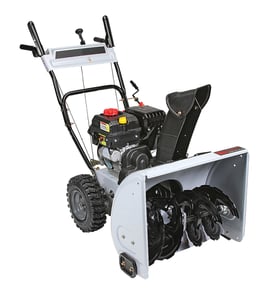




Can I use 5W30 instead of SAE 30 in my snowblower?
Yes; for Craftsman snow thrower model 247887001, we recommend using SAE 5W-30 because that is the engine oil specified for this model, and it will flow better for cold-weather starting than straight SAE 30. Confirm oil type and capacity in the 247887001 owner's manual.
What the manual specifies for model 247887001
From the model-specific specs, this snowblower calls for:
- Engine oil type: SAE 5W-30
- Oil capacity: 21 oz.
- Fuel: Unleaded regular
When SAE 30 can be a problem in a snowblower
Straight SAE 30 is thicker in cold temperatures, which can make:
- Pull-starting harder
- Electric starting slower or inconsistent
- Initial lubrication slower right after startup
- Cold-idle rougher until the engine warms up
Quick comparison
| Oil type | Cold starting | Warm protection | Best use case |
|---|---|---|---|
| SAE 5W-30 | Better | Good | Snowblower use in winter temps |
| SAE 30 | Worse | Good | Warmer-weather small engines |
Why it matters
Using the correct viscosity helps your 247887001 engine start easier, lubricate faster at startup, and reduce wear during cold operation, which is when most snowblower engines work the hardest.
Last updated: January 2026
How long should a gas snowblower last?
A gas snowblower like the Craftsman 247887001 typically lasts 10 to 15 years with normal residential use and consistent maintenance. Keeping up with oil changes, belt checks, and wear-item replacement is what most often determines whether it reaches the high end of that range; see the maintenance schedule in the Craftsman 247887001 owner’s manual.
What most affects lifespan
- Fuel care and storage: stale fuel and varnish in the carburetor shorten engine life.
- Oil changes: change oil on schedule; low or dirty oil accelerates wear.
- Belt and cable condition: slipping belts and misadjusted cables overwork the drive and auger systems.
- Wear items: skid shoes, shave plate, and shear pins protect expensive components.
- Rust prevention: cleaning and light oiling before storage reduces corrosion.
Maintenance checkpoints we recommend
Use these as a simple baseline for the Craftsman 247887001:
| Task | Typical interval | Why it matters |
|---|---|---|
| Check engine oil level | Every use | Prevents low-oil engine damage |
| Change engine oil | After first 2 hours, then every 25 hours | Extends engine life |
| Inspect belts | Every 25 hours | Prevents loss of drive/auger power |
| Check spark plug | Every season (replace about every 200 hours) | Helps starting and power |
| End-of-season storage steps | End of winter | Prevents fuel-system problems |
Signs it may be nearing end of life
- Hard starting even with fresh fuel and a good spark plug
- Engine surging or running rough that returns quickly after a tune-up
- Excessive vibration from the auger/impeller area
- Repeated belt failures or loss of self-propel function
- Major rust-through on the auger housing or frame
Why it matters
A snowblower’s engine and auger drive are expensive to rebuild compared with routine upkeep. Following the model-specific service intervals and replacing wear parts early usually costs less and keeps performance consistent in heavy snow.
Last updated: January 2026
Is it cheaper to repair or replace a snowblower?
For the Craftsman snow thrower model 247887001, it’s usually cheaper to repair when the problem is a normal wear item (belts, skid shoes, spark plug, tire) and the total cost stays well below the price of a comparable new 2-stage unit. Replace when repair costs approach about half the cost of a new snowblower, or when major drivetrain or engine issues keep returning.
A practical cost rule we use
If you can get your 247887001 back to reliable operation with one repair visit and common maintenance parts, repairing typically wins. If you’re stacking multiple repairs in the same season, replacement often becomes the better value.
- Repair is usually the better choice when:
- The engine starts and runs well after a tune-up
- The auger and drive issues point to belts, cable adjustment, or shear pins
- The machine has solid structure (handles, housing, chute) with no major damage
- You can do the work yourself using the 247887001 owner’s manual
- Replace is usually the better choice when:
- The engine has low compression, heavy smoking, or persistent no-start after fuel and ignition checks
- The transmission/gearbox has internal damage (not just adjustment)
- You need repeated repairs each winter (downtime and labor add up)
- Parts plus labor are nearing the “half the cost of new” threshold
Quick decision table
| Situation | Usually cheaper | Why |
|---|---|---|
| Worn belts, skid shoes, shear pins, spark plug | Repair | Low parts cost, predictable labor |
| One-time tire or wheel issue | Repair | Simple fix; restores mobility |
| Multiple major issues at once (engine + drive + auger) | Replace | Cost and time stack quickly |
| Major drivetrain/engine failure on an older unit | Replace | Overhaul costs can exceed value |
Model-specific examples (247887001)
This model is a 5 HP, 22-inch two-stage unit; common “repair-first” items include belt inspection/replacement and routine maintenance steps outlined in the manual. If you’re dealing with traction problems caused by a damaged wheel, a direct-fit option is the tire assembly 634P07686.
Why it matters
A snowblower that is reliable in storms is worth more than the cheapest one-time fix. Using a clear cost threshold and focusing on high-wear parts helps you avoid sinking money into repeated breakdowns.
Last updated: January 2026
What is the most common problem with snow blowers?
On the Craftsman snow thrower model 247887001, one of the most frequent issues owners run into is an engine that fails to start, often caused by stale fuel, incorrect choke or primer use, or a spark plug problem. The troubleshooting steps in the 247887001 owner's manual walk you through the quickest checks.
Quick checks first (fastest wins)
- Verify the ignition key is fully inserted (this model’s key snaps in; you do not turn it).
- Confirm the spark plug wire is firmly attached.
- Use fresh, clean unleaded gasoline; old fuel is a top cause of hard starting.
- Set choke and primer correctly for the temperature (over-priming can flood the engine).
- Check engine oil level before starting; the manual specifies SAE 5W30.
What the manual lists as common symptom areas
The 247887001 troubleshooting section covers several frequent problem categories, not just starting:
| Symptom category | Typical examples | First thing to check |
|---|---|---|
| Engine won’t start | no crank or no fire | fuel freshness, choke/primer, spark plug connection |
| Engine runs rough | surging, uneven idle | choke position, fuel condition |
| Won’t self-propel | wheels don’t drive | drive belt condition and adjustment |
| Won’t discharge snow | auger not moving or chute packed | shear pins, clogs, auger belt/cable |
When a part is involved
If the snowblower is hard to move because a wheel or tire is damaged (separate from engine starting issues), replace the wheel with the exact match tire assembly 634P07686.
Why it matters
Starting problems are usually quick to correct, but repeated cranking with old fuel or incorrect priming can foul the spark plug and waste time when you need the machine running.
Last updated: January 2026