Owner’s manual
 Error Codes


What are the dimensions of the Samsung model RH22H9010SR?
The Samsung RH22H9010SR side-by-side refrigerator is typically listed at about 35 7/8 in. wide and about 69 7/8 in. tall (to the top of the hinges). Depth changes depending on whether handles are included, so we recommend confirming the exact configuration in the RH22H9010SR manual.
Dimension sets you may see (what they mean)
Manufacturers publish multiple measurements because hinges and handles change the overall footprint.
- Width is usually the same across configurations (cabinet and doors): about 35 7/8 in.
- Height is commonly shown two ways: to the top of hinges vs. to the top of cabinet
- Depth varies the most: with handles is deeper than without handles
Quick reference table
| Measurement style | Includes | Best used for |
|---|---|---|
| With hinges and handles | Full installed footprint | Kitchen clearance and walkway planning |
| With hinges, no handles | Reduced depth | Counter-depth planning |
| Without hinges (cabinet height) | Lower overall height | Tight overhead cabinet clearances |
How we measure for a guaranteed fit
- Measure the widest width (door edges) and compare to 35 7/8 in.
- Measure height to the highest point (hinge cover area), compare to about 69 7/8 in.
- Measure depth from the back wall to the front of the handles (if installed)
- Add clearance for:
- Door swing
- Airflow behind and above
- Water line connection space
Why it matters
Using the wrong depth configuration is the most common reason a counter-depth Samsung refrigerator sticks out too far or will not clear a doorway. Verifying the “with handles” depth prevents installation surprises.
Last updated: February 2026
What are the most common issues with RH22H9010SR?
The most common issues we see on the Samsung RH22H9010SR side-by-side refrigerator are ice maker problems, weak water dispensing, temperature swings (warm fridge or freezer), water leaks, and unusual fan noise. Many of these trace back to airflow, filtration, or dispenser and ice system components; use the owner's manual for model-specific checks.
Common symptoms and what usually causes them
- Not making ice or small/hollow cubes: restricted water flow, ice maker fault, or ice buildup in the ice room
- Water dispenser slow or no water: clogged filter, frozen water line, or dispenser switch issue
- Fridge warm but freezer OK (or vice versa): airflow control problem, fan issue, or frost buildup affecting circulation
- Water under the fridge or in fresh food section: drain system restriction or drain tube/grommet issue
- Buzzing or rattling: condenser fan area obstruction or a failing fan motor
Parts that commonly relate to these problems
If your symptoms match, these model-compatible parts are often involved:
| Symptom | Part to check | What it does |
|---|---|---|
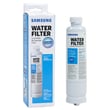
| Slow water, bad taste/odor | Refrigerator water filter DA29-00020B | Filters incoming water to the dispenser and ice maker |
| Leaks or water pooling | Refrigerator drain tube grommet DA63-00951B | Helps seal and route drain water properly |
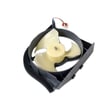
| Warm temps, noise near back | Refrigerator condenser fan motor assembly DA97-15765A | Moves air across the condenser to remove heat |
| Ice dispensing issues | Refrigerator auger motor DA97-14619A | Turns the auger to push ice out of the bin |
Quick checks we recommend before replacing parts
- Confirm temperature settings; typical targets are 0°F freezer and 37°F fresh food
- Make sure doors fully close and seals are clean; warm air causes frost and poor cooling
- Replace the water filter on schedule (commonly every 6 months)
- Inspect for ice clumps in the bin; break up clumps and reseat the bin fully
- Look for visible frost buildup on the freezer back panel (a clue of airflow/defrost trouble)
Why it matters
These issues affect food safety, ice and water quality, and compressor workload. Fixing airflow restrictions, drain problems, or a clogged filter early helps prevent bigger cooling failures.
Last updated: March 2026
Why is my refrigerator running but not cooling on my Samsung?
If your Samsung RH22H9010SR refrigerator is running but not cooling, the problem is almost always airflow or heat removal: blocked vents, heavy frost on the evaporator, dirty condenser area, or a fan not moving air. Start with quick checks in the RH22H9010SR owner's manual, then inspect the condenser fan and frost buildup.
Quick checks we recommend first
- Confirm the temperature settings were not accidentally raised.
- Make sure food packages are not blocking interior air vents.
- Check that both doors close fully and the gaskets seal all the way around.
- Look for heavy frost on the back wall inside the freezer (a strong sign of an airflow/defrost issue).
- Unplug the refrigerator for 5 minutes, then restore power to clear a temporary control glitch.
Most common causes (and what to do)
| What you notice | Most likely cause | What to do next |
|---|---|---|
| Freezer has heavy frost; fridge side is warm | Airflow blocked by ice (defrost system issue) | Do a full manual defrost (doors open, towels down) and then monitor for frost returning within 24 to 72 hours. |
| Fridge and freezer both warm; unit still runs | Condenser area not shedding heat | Clean dust from the condenser area and verify the condenser fan runs; replace the refrigerator condenser fan motor assembly da97-15765c if the fan is not operating. |
| Freezer cold but fridge warm | Damper not opening or airflow restriction | Check for blocked vents; if airflow is weak, the damper control can be the issue. |
| Clicking, then stops; poor cooling | Compressor start device issue | A failed overload can prevent reliable compressor operation; a technician can confirm. |
Why it matters
When the refrigerator can’t move cold air through the compartments or can’t dump heat at the condenser, it may run constantly while temperatures rise. Fixing airflow and condenser cooling early helps prevent food spoilage and reduces strain on the compressor.
When a repair is likely needed
These symptoms typically point to a failed part rather than a simple adjustment:
- Condenser fan never runs while the compressor is running
- Frost returns quickly after a full defrost
- Temperatures keep rising even after cleaning and verifying good door seal
For model-specific operating modes, diagnostics, and control settings, follow the steps in the RH22H9010SR owner's manual.
Last updated: February 2026