Owner’s manual
 View engine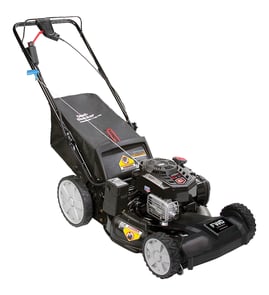



How to find Craftsman model number?
On the Craftsman walk-behind mower model 917377971, the model and serial number are typically printed on a decal attached to the rear of the mower housing. We recommend matching the full model number exactly before ordering parts to ensure proper fit. See the 917377971 owner's manual for the label location and recording space.
Check these common spots on this specific mower:
- Rear of the mower housing (most common for this model)
- Near the rear discharge door area
- On the deck housing surface where debris is less likely to scrape it off
- If the decal is worn, look for an imprint outline or adhesive residue where it used to be
Record both numbers from the decal:
- Model number (example format: 917.377971)
- Serial number (unique to your mower)
- Date of purchase (helpful for maintenance tracking)
The model number narrows parts to the correct Craftsman design version. The serial number can help confirm production variations when a part changed mid-run.
| Item | What it identifies | Used for |
|---|---|---|
| Model number | The mower design family | Choosing compatible parts and diagrams |
| Serial number | Your exact unit | Confirming production-specific variations |
If you cannot read the decal on your 917377971 mower, use these practical options:
- Compare your mower’s features (drive control, discharge style, handle style) to the diagrams for model 917377971
- Check any original paperwork or the owner’s manual cover page if you still have it
- If you are replacing a wheel-related item, confirm the wheel and hardware style before ordering (for example, a dust cover like husqvarna lawn mower wheel dust cover 581840401 must match your wheel setup)
Last updated: January 2026
What are the common problems with Craftsman lawn mowers?
On the Craftsman 917377971 21-inch 6.75-hp walk-behind mower, the most common problems we see are starting issues (fuel, spark, air), loss of power from restricted airflow or heavy buildup under the deck, and self-propel drive problems from belt or drive hardware wear. For model-specific maintenance intervals and troubleshooting steps, use the 917377971 owner’s manual.
- Won’t start or starts then dies: stale fuel, dirty air filter, disconnected spark plug wire, weak battery (electric start models), or carburetor/fuel contamination.
- Loss of power or bogging down: clogged air filter, mowing too low in heavy grass, or grass buildup under the mower housing.
- Poor cut or uneven cut: dull/bent blade, low blade speed, or deck packed with wet clippings.
- Excessive vibration: loose blade hardware, damaged blade, or (less commonly) a bent crankshaft.
- Self-propel not pulling: worn or off-track drive belt, worn drive cable, or debris in the drive pinions.
- Use fresh regular unleaded fuel and drain old fuel if it has been sitting.
- Check the air filter; replace if dirty (a restricted filter can cause hard starting and power loss).
- Inspect the blade area safely (spark plug wire disconnected); remove packed grass from under the deck.
- Confirm blade hardware is tight and the blade is not bent.
- If self-propel slips, inspect the belt and drive components; the lawn mower ground drive belt 532166060 is a common wear item on this model.
| Symptom | Most likely cause | Typical fix |
|---|---|---|
| Won’t start | fuel/air/spark issue | fresh fuel, clean/replace filter, new spark plug |
| Cuts poorly | dull/bent blade | sharpen/replace blade, clean deck |
| Vibrates | loose/damaged blade | tighten or replace blade/hardware |
| Hard to push | cutting too low, bag full | raise height, empty bag |
| No self-propel | belt/cable/pinions | inspect belt, cable, clean pinions |
Catching these problems early helps prevent bigger failures (like overheating from deck buildup or damage from running with a loose blade). It also keeps cut quality consistent and reduces strain on the engine and drive system.
Last updated: January 2026
What are the most common lawn mower repairs?
On the Craftsman 917377971 21-inch 6.75-hp walk-behind mower, the most common repairs are usually basic maintenance fixes: fuel-related no-start issues, air filter and spark plug service, blade and blade adapter problems, and self-propel drive issues such as a worn belt or drive components. See the 917377971 owner’s manual for the troubleshooting chart and maintenance schedule.
- Won’t start or hard starting: stale fuel, dirty air filter, disconnected spark plug wire, weak battery (electric start models)
- Loss of power: dirty air filter, grass buildup under the deck, cutting too low in heavy grass
- Poor cut or uneven cut: dull/bent blade, deck packed with clippings, mowing too fast
- Excessive vibration: loose blade bolt, damaged blade, damaged blade adapter
- Self-propel problems (loss of drive or hard to push): worn/broken belt, belt off pulley, debris in drive pinions
- Fuel: Use fresh regular unleaded gas; if fuel is older than about 30 days, drain and refill.
- Airflow: Inspect and replace the air filter if dirty.
- Ignition: Confirm the spark plug wire is firmly connected; replace the spark plug if fouled.
- Deck condition: Scrape grass buildup from the underside of the mower housing.
- Drive system: If self-propel slips, inspect the belt and drive components.
| Symptom | Likely area | Example compatible part for this model |
|---|---|---|
| Vibration, blade won’t stay tight | Blade mounting | Lawn mower blade adapter 581547901 |
| Poor cut, ragged grass tips | Cutting system | Husqvarna lawn mower mulching blade, 21-in 159267 |
| Self-propel slips or won’t pull | Drive system | Lawn mower ground drive belt 532166060 |
Catching these issues early helps prevent bigger failures (like damaged crankshafts from severe blade impacts) and keeps your Craftsman mower cutting cleanly, starting reliably, and driving smoothly.
Last updated: January 2026
What is the life expectancy of a gas lawn mower?
A gas walk-behind mower like Craftsman model 917377971 typically lasts 8 to 10 years with normal residential use and routine maintenance. Many units run longer if the engine oil is changed on schedule, the blade is kept sharp, and the deck is kept clean (see the 917377971 owner’s manual).
- Maintenance frequency: oil changes, air filter service, spark plug replacement
- Storage habits: dry storage, fuel stabilized or drained for off-season
- Operating conditions: dusty mowing, sandy soil, steep slopes, heavy wet grass
- Deck care: grass buildup under the housing increases heat and load
- Blade condition: dull or bent blades strain the engine and drive system
| If you see this | What it usually means | Typical next step |
|---|---|---|
| Starts hard, runs rough, smokes | Fuel, air, spark, or oil-related issue | Tune-up items first (oil, filter, plug) |
| Excessive vibration | Blade or blade adapter issue | Inspect blade and adapter; replace if damaged |
| Poor cut quality | Dull/worn blade or deck buildup | Clean deck; replace blade if needed |
| Drive problems (self-propel) | Belt/pulley/cable wear | Inspect belt and pulleys; replace worn parts |
We recommend following the schedule in the manual; these items have the biggest payoff:
- Change engine oil about every 25 hours of operation or each season
- Replace the air filter yearly (more often in dusty conditions)
- Replace the spark plug yearly and set the correct gap
- Keep the underside of the mower deck clean after use
- Keep the blade sharp; replace it when bent, cracked, or badly worn
A mower that is maintained to spec usually costs less per season to own, cuts more evenly, and is less likely to develop expensive secondary damage (like vibration-related wear in the crankshaft area).
Last updated: January 2026