Owner’s manual


How do I know if my Kenmore dryer thermal fuse is blown?
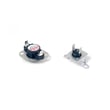
If your Kenmore Elite dryer model 11087721701 won’t start or the drum turns but there’s no heat, a blown thermal fuse (or a tripped house fuse/breaker) is a top suspect. We confirm it by safely accessing the fuse and checking continuity with a multimeter; a blocked vent often causes it.
Quick symptoms to look for
- Dryer won’t run at all (no motor operation)
- Dryer runs but produces no heat
- Cycle starts then stops quickly (overheat protection opening)
- You recently noticed long dry times or a very hot cabinet (airflow restriction)
How we test the thermal fuse (safe, reliable method)
- Unplug the dryer or disconnect power.
- Access the thermal fuse area (commonly on the blower housing or exhaust path).
- Remove at least one wire from the fuse terminal.
- Check the fuse with a multimeter set to continuity or ohms.
- Good fuse: continuity (near 0 ohms). Blown fuse: open circuit (no continuity).
For model-specific access steps and safety notes, use the 11087721701 owner’s manual.
Rule out power supply issues first (common on electric dryers)
Your manual notes that electric dryers can have two household fuses or breakers; the drum may turn but you still get no heat if one side of the 240V supply is lost.
| What you see | Likely cause | What to check |
|---|---|---|
| Drum turns, no heat | One breaker tripped or one fuse blown | Reset both breakers, check both fuses |
| Dryer won’t run | Door not latched, start not held, power issue | Door latch, hold Start 2 to 5 seconds, power |
| “AF” code | Vent crushed or blocked | Venting and lint buildup |
If the fuse is blown, fix the cause before replacing parts
- Clean the lint screen and housing
- Inspect the entire vent run for kinks, crushing, or heavy lint
- Confirm the outside vent hood opens freely
- Avoid long, restrictive venting (too many elbows increases heat)
If you’re also chasing a “no heat” complaint after airflow is corrected, the dryer heating element WP8544771 is a common heat-system part to evaluate next.
Why it matters
A thermal fuse is a one-time safety device; replacing it without correcting restricted airflow often leads to repeat failures, longer dry times, and overheating symptoms.
Last updated: February 2026
How do I tell if my dryer heating element is bad?
If your Kenmore Elite dryer model 11087721701 runs but does not heat, takes much longer to dry, or leaves clothes damp, the heating element is a top suspect. We confirm it by safely disconnecting power and testing the element for continuity with a multimeter; a broken coil or a short to the metal housing means it has failed.
Quick symptoms to check first
- Dryer tumbles normally but there is no heat on heated cycles
- Dry times suddenly get much longer
- Clothes come out cool and damp
- A breaker trips when heat should turn on (can indicate a short)
- You see an L2 diagnostic code; the drum turns but the heater may not be getting full power (often a home power supply issue)
How we test the heating element (safe, reliable method)
- Unplug the dryer (or switch off both breakers for an electric dryer).
- Access the heater terminals (follow the access steps in the 11087721701 owner's manual).
- Use a multimeter on ohms (Ω) to check continuity across the element.
- Check for a short to ground by testing from each heater terminal to the metal heater housing.
Typical readings (what to expect)
| Test | Normal result | Bad result |
|---|---|---|
| Continuity across element | Usually ~10 to 50 Ω | OL/no continuity (open) |
| Terminal to metal housing | No continuity | Continuity (shorted) |
Related parts that commonly fail with “no heat”
A failed heater is common, but we also check the safety devices that can shut heat off.
- Heating element: dryer heating element WP8544771
- Thermal safety kit: dryer thermal cut-off fuse kit 279973
- Temperature sensing: dryer thermistor WP8577274
Why it matters
A dryer that tumbles without heat is often a simple electrical or heater-circuit problem. Testing the element and safety devices prevents replacing the wrong part and helps restore normal drying performance.
Last updated: February 2026
What are the codes for Kenmore Elite dryer?
Kenmore Elite dryer model 11087721701 commonly shows diagnostic codes like PF, F service codes (such as F1, F2, F20), L2, and AF. These codes point to power interruptions, control issues, home power supply problems, or restricted venting; the next step depends on the specific code.
Common codes and what they mean
- PF (power failure): The cycle was interrupted by a power loss; press and hold START to restart.
- F service codes (F1, F2, F20): Control or interface related failures; service is typically required.
- L2: The drum may turn, but the heater may not; this usually indicates a home power supply issue.
- AF: Airflow restriction; the vent may be crushed, blocked, or too long.
What to do first (quick checks)
- Make sure the dryer is plugged in and the door is fully closed.
- For PF, press and hold START to resume.
- For L2, check both household fuses or breakers (many electric dryers use two).
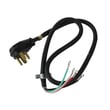
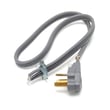
- Confirm the power cord is installed correctly (wiring/terminal connections matter).
- For AF, inspect the vent run behind the dryer and the outside exhaust hood for lint buildup.
Code-to-action guide
| Code | What it points to | Best next step |
|---|---|---|
| PF | Power interruption | Restart cycle; check outlet power stability |
| F1/F2/F20 | Electronic control or keypad issue | Schedule service after a power reset |
| L2 | Insufficient supply voltage to heat | Reset both breakers; verify cord/terminal wiring |
| AF | Restricted airflow/venting | Clear lint, fix crushed duct, shorten vent run |
Why it matters
These codes help prevent repeat failures and unsafe operating conditions. For example, AF can cause long dry times and overheating, and L2 can keep the heater from turning on even though the drum tumbles.
Helpful references
- Use the 11087721701 owner’s manual for the model-specific troubleshooting steps and code behavior.
- For a broader list and explanations, see Kenmore elite dryer error codes.
Last updated: February 2026
What is the average life of a Kenmore dryer?
A Kenmore dryer typically lasts 10 to 13 years. With consistent care on your Kenmore Elite 11087721701, it’s common to reach the high end of that range because good airflow and regular lint removal reduce heat stress on the heater, motor, and controls.
Typical lifespan and what affects it
Most dryers fail early for the same reasons: restricted venting, lint buildup, and worn moving parts.
- Cleaning the lint screen after every load helps maintain airflow and drying performance.
- Removing lint from the exhaust vent about every 2 years (or more with heavy use) helps prevent overheating.
- Long, twisty vent runs increase dry time and energy use, and they shorten dryer life.
- Worn drum support rollers and idler pulleys can strain the drive system and cause noise.
- Overloading can wear the belt, drum supports, and motor faster.
For model-specific care intervals and cleaning steps, follow the 11087721701 owner’s manual.
Maintenance schedule we recommend
| Task | How often | Why it matters |
|---|---|---|
| Clean lint screen | Every load | Keeps airflow strong and reduces overheating |
| Check vent hood flap outside | Monthly | Confirms exhaust is moving freely |
| Clean exhaust vent run | About every 2 years | Reduces heat buildup and improves efficiency |
| Inspect drum support and idler | Yearly | Prevents squealing, thumping, and belt wear |
Parts that commonly extend service life
If your dryer is getting noisy or the drum feels rough to turn, these are common wear items for this model:
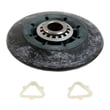
- Support WPW10314173 (drum support roller style part)
- Dryer idler pulley 279640 (keeps belt tension correct)
- Dryer repair kit 4392067 (often used to refresh multiple wear components at once)
Why it matters
A dryer’s lifespan is mostly about heat and airflow. When venting is too long or lint builds up inside the cabinet or vent, the dryer runs hotter and longer, which accelerates wear on the heating element, thermal cut-offs, motor, and electronic controls.
Last updated: February 2026
What size is a Kenmore model 11087721701 dryer?
The Kenmore Elite dryer model 11087721701 is a full-size 27-inch class dryer. For planning space, we use the installation dimensions shown in the 11087721701 owner's manual, and we also allow extra room for venting and door swing.
Typical dimensions you should plan for
Most installations for this Kenmore 110 series platform fit within these planning targets:
- Width: about 27 in. (cabinet)
- Height: about 38 in. to the top (without a pedestal)
- Depth: plan for the cabinet plus venting space behind the dryer
- Rear clearance for venting: typically 5 in. minimum behind the dryer for an exhaust vent with an elbow
- Side and rear spacing: the dryer has been tested at 0 in. on sides and rear, but extra space helps service access and noise reduction
Pedestal and clearance notes
If you install a pedestal, the overall height increases:
- 10 in. pedestal: total height is approximately 46 in.
- 15.5 in. pedestal: total height is approximately 51.5 in.
Why it matters
Correct sizing prevents crushed venting, overheating, and long dry times. Leaving the recommended vent clearance also makes it easier to service common wear items like the belt path and drum support system.
Quick planning table
| Installation detail | What to plan for | Why |
|---|---|---|
| Cabinet width | ~27 in. | Fits standard laundry alcoves |
| Cabinet height (no pedestal) | ~38 in. | Matches undercounter planning diagrams |
| Rear vent clearance (typical) | 5 in. minimum | Prevents kinked exhaust duct |
| Height with 10 in. pedestal | ~46 in. | Helps match washer height |
| Height with 15.5 in. pedestal | ~51.5 in. | Adds storage, increases reach |
Related parts that can affect fit and noise
If you are measuring because the dryer is noisy or vibrating, worn drum support parts can be the real issue:
- Support WPW10314173 (drum support roller) can cause thumping or rumbling when worn.
- Dryer idler pulley 279640 can squeal and affect belt tracking.
- Dryer repair kit 4392067 is a common way to refresh multiple wear components at once.
Last updated: February 2026
Where is the model number on a Kenmore Elite dryer?
On the Kenmore Elite dryer model 11087721701, the model and serial number are printed on a label attached to the dryer cabinet, most often just inside the door opening. Use that label any time you order parts or look up service information in the 11087721701 owner's manual.
Common places to check
Look for a paper or metal label in one of these spots:
- Inside the door opening on the cabinet frame (most common)
- Along the front rim of the opening near the lint screen housing
- On the back of the dryer cabinet near the top
- On a side panel edge near the door hinge area
- Behind the lower access panel (if your version has one)
What to write down (and why)
The manual’s product record section calls out the key details to keep handy. Record:
- Model number (for example, 11087721701)
- Serial number (unique to your dryer)
- Purchase date (helpful for service history)
Why it matters
The model number narrows your dryer to the correct parts list and wiring/venting requirements. The serial number helps identify production variations that can affect which replacement part fits.
Quick ID checklist
Use this table to avoid mix-ups when ordering parts.
| What you see on the label | What it’s used for | Example |
|---|---|---|
| Model number | Matches the correct diagrams and parts | 11087721701 |
| Serial number | Identifies the specific unit build | Varies |
| Type (electric/gas) | Confirms heating system and parts | Electric or gas |
Tip for faster parts matching
If you are replacing a wear item (like rollers or an idler), match by model first, then confirm the part ID. For this model, common maintenance parts include the support WPW10314173 and the dryer idler pulley 279640.
Last updated: February 2026
Why is my Kenmore Elite dryer not tumbling?
If our Kenmore Elite dryer model 11087721701 runs but the drum will not turn, the most common causes are a broken/slipping belt, a seized drum support roller or idler pulley, or a motor that cannot start under load. Confirm the cycle is not set to Rack Dry (no tumbling). See the 11087721701 owner's manual.
Quick checks (no tools)
- Make sure Rack Dry is not selected; that cycle is designed to dry without tumbling.
- Open and close the door firmly; a bad door switch can stop tumbling.
- Try a different cycle (Timed Dry vs. Automatic) to rule out a control selection issue.
- Reduce the load size; heavy loads can bind the drum and prevent startup.
- Listen for symptoms:
- Humming then stop: motor struggling, drum hard to turn, or belt jam.
- Runs but no drum movement: belt broken or off the pulley.
Parts that commonly stop tumbling on this model
On Kenmore 110-style dryers like 11087721701, these parts are frequent culprits:
- Drum support rollers: flat spots or seized bearings (squeal, thump, hard-to-turn drum)
- Idler pulley: seized pulley or weak tension (belt slips, drum stalls)
- Drive motor: weak start winding or internal failure (hums, trips, or stops)
- Drum seal or lint buildup: drum drag from friction or obstruction
Helpful model-matched parts to check:
What to do next (safe, practical steps)
- Unplug the dryer.
- Try turning the drum by hand; it should rotate with steady resistance, not bind.
- If the drum is hard to turn, inspect rollers and idler pulley first.
- If the drum turns easily but will not tumble, inspect the belt path and idler tension.
Symptom-to-likely-cause guide
| What we notice | Most likely cause | Typical fix |
|---|---|---|
| Drum does not move; motor runs | Belt broken/off | Reinstall or replace belt (often via kit) |
| Loud squeal/thump; drum stiff | Roller worn/seized | Replace rollers (often as a set) |
| Humming; drum barely starts | Idler/roller drag or weak motor | Fix drag first; then test motor |
| Only “no tumble” on Rack Dry | Normal operation | Select a tumbling cycle |
Why it matters
A dryer that will not tumble usually is not drying correctly because clothes cannot lift and fall through heated airflow. Fixing the belt, rollers, or idler pulley restores proper drum rotation and helps prevent motor overheating.
Last updated: February 2026