
What does 4.0 SCFM at 90 PSI mean?
For your Craftsman model 106154581, 4.0 SCFM at 90 PSI means the compressor can deliver about 4 standard cubic feet of air per minute while maintaining 90 PSI at the outlet. This rating helps you match the compressor’s airflow to the needs of air tools and spray equipment.
Most pneumatic tools list an airflow requirement (SCFM or CFM) at a specific pressure (often 90 PSI). To avoid the compressor running nonstop or pressure dropping during use:
- Compare the tool’s required SCFM at 90 PSI to the compressor’s 4.0 SCFM at 90 PSI
- Plan for a cushion; many users target 25% to 50% more SCFM than the tool requires
- Remember that continuous-use tools (spray guns, sanders, grinders) need steadier airflow than intermittent tools (brad nailers)
- If you use a regulator, set it to the tool’s required PSI; airflow still has to be there
- Long hoses, small fittings, and quick-connects can reduce real airflow at the tool
SCFM is “standardized” airflow. It reports output under a defined set of conditions so you can compare compressors more fairly.
| Term | What it tells you | Why it matters |
|---|---|---|
| PSI | Pressure available | Tools need a minimum PSI to operate correctly |
| SCFM | Air volume delivered (standardized) | Determines whether the tool can run without starving for air |
| Tank size | Stored air reserve | Helps with short bursts, but does not replace SCFM for continuous work |
This airflow level commonly supports light to moderate air demand tasks, especially when used in shorter cycles.
- Brad/finish nailers and staplers
- Blow gun and tire inflation
- Small touch-up spray work (short passes)
Higher-demand tools (like many HVLP spray guns, DA sanders, and grinders) often need more SCFM for continuous operation.
If a tool needs more airflow than 4.0 SCFM at 90 PSI, pressure will drop while you work, the motor may run continuously, and results can suffer (poor spray pattern, weak tool power, longer recovery time).
For more help with electrical checks related to compressor performance (switches, cords, connections), use our how to use a multimeter to test electrical parts video.
Last updated: February 2026
Is a 150 PSI air compressor good for car detailing?
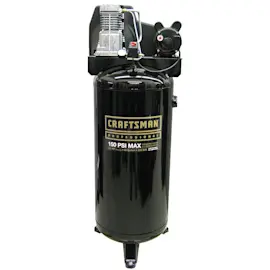
Yes. A 150 PSI air compressor is a solid choice for car detailing because it gives you enough maximum pressure for most air tools; what matters more day to day is having enough airflow (CFM) at your working pressure and enough tank capacity to avoid constant cycling on your Craftsman model 106154581.
For detailing tools, you typically regulate pressure down and rely on steady airflow.
- PSI (pressure): 150 PSI max is plenty; you will usually run tools around 60 to 90 PSI.
- CFM (airflow): This is the limiter for Tornador-style cleaning guns, blow guns, and continuous air use.
- Tank size: Bigger tanks reduce how often the pump runs and help maintain consistent output.
- Duty cycle and recovery time: Faster recovery keeps you working instead of waiting.
- Moisture control: An inline filter/water separator helps prevent water spots when blowing out crevices.
Use this as a quick rule of thumb when comparing compressors.
| Detailing use | Typical regulator setting | Typical CFM need (at 90 PSI) | Tank size that feels comfortable |
|---|---|---|---|
| Blow gun, quick interior dust-outs | 60 to 90 PSI | 2 to 4 CFM | 6 to 20 gal |
| Tornador-style cleaning gun (continuous bursts) | 80 to 90 PSI | 4 to 6 CFM | 20+ gal |
| Light air sanding / longer continuous air use | 90 PSI | 6+ CFM | 30+ gal |
Even with 150 PSI available, a compressor with low CFM will drop pressure quickly under load, which makes tools feel weak and forces frequent pauses while the tank refills. Matching CFM at 90 PSI to your most demanding tool is what keeps detailing efficient.
If you are comparing similar Craftsman compressors or confirming your exact model number before ordering parts, use how to find your appliance model number (and what it means for parts).
Last updated: February 2026
What is the most common cause of air compressor failure?
The most common cause of failure on a Craftsman air compressor like model 106154581 is poor maintenance that leads to overheating and accelerated wear (dirty intake filter, moisture left in the tank, low or incorrect oil on oil-lube units, and loose fittings that leak air). These issues force the pump and motor to work harder until a component fails.
- Restricted airflow and overheating: hot-running motor, frequent thermal shutdown, slow recovery.
- Dirty or clogged intake filter: reduced CFM, longer run times, hotter pump head.
- Moisture and corrosion in the tank: rusty drain water, pinhole leaks, contaminated air.
- Air leaks in fittings, hose, or check valve: compressor runs often, pressure bleeds down quickly.
- Electrical issues (cord, switch, capacitor, pressure switch): won’t start, hums, trips breaker.
- Lubrication problems (oil-lube designs): noisy pump, rapid wear, overheating.
- Drain the tank after each use to remove water.
- Keep the intake area clear so the pump and motor can cool.
- Inspect and tighten fittings; use thread sealant where appropriate.
- Replace or clean the intake filter on a regular schedule.
- If your unit is oil-lube, keep oil at the correct level and use the recommended compressor oil.
| Symptom | Most likely cause | What to check first |
|---|---|---|
| Runs constantly, won’t reach cut-out | Air leak or bad check valve | Listen for leaks; soap-test fittings |
| Trips breaker on start | Electrical load or failing start components | Power cord, outlet, capacitor (if equipped) |
| Gets very hot, shuts off | Overheating from long run time or poor airflow | Ventilation, filter, duty cycle |
| Pressure drops when off | Leak or tank drain not sealing | Drain valve, fittings, regulator |
Overheating and leaks are “multiplier” problems: they increase run time, which increases heat, which speeds up wear on the pump, seals, and motor. A few routine checks can prevent most premature failures.
For help identifying the correct replacement parts by diagram for 106154581, search by model on Sears PartsDirect.
Last updated: February 2026
Are air compressor parts interchangeable?
Air compressor parts are not automatically interchangeable. For a Craftsman 106154581 twin-cylinder tank-type paint sprayer, parts must match the exact model and the original specifications (pressure rating, port size, voltage, and duty cycle) to fit correctly and run safely.
Some items can cross over between compressors, but only when the specs match.
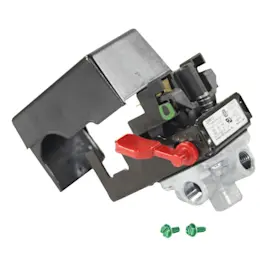
- Sometimes interchangeable (spec-dependent): pressure switch, regulator, gauges, safety relief valve, check valve
- Usually not interchangeable: pump head/cylinder components, crankcase parts, reed valves, connecting rods, tank fittings welded to the tank
- Electrical parts vary a lot: motor, capacitor, cord, on/off switch (must match voltage and amperage)
- Air-end parts vary a lot: intake filter housings, intercoolers, discharge tubes (shape and heat rating matter)
Use this list before ordering or installing any replacement part.
- Model number: 106154581 (exact match)
- Electrical: voltage, phase, motor HP, running amps
- Air system: max PSI, CFM requirement, regulator range
- Connections: NPT size, thread pitch, port orientation
- Mounting: bolt pattern, bracket style, shaft size (for motor/pump)
These are the most common reasons a part that seems close still fails.
| Part type | What must match | What happens if it doesn’t |
|---|---|---|
| Pressure switch | Cut-in/cut-out PSI, port size, amperage rating | Won’t build pressure correctly or can overheat contacts |
| Regulator | Flow capacity (CFM), inlet/outlet size | Low tool performance or constant pressure drop |
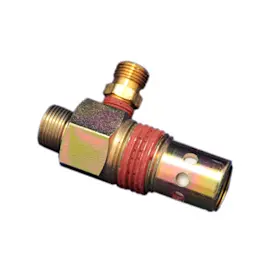
| Check valve | Tank port size, tube size, PSI rating | Hard starting, backflow, air leaks |
| Safety valve | PSI rating | Nuisance venting or unsafe overpressure risk |
On a twin-cylinder tank-type unit like the Craftsman 106154581, even small differences in PSI settings, thread size, or electrical ratings can cause air leaks, short cycling, hard starting, or premature motor and pump wear.
We recommend using the model number 106154581 to match the correct diagram and part listing, then comparing the old part’s markings (PSI, amps, port size) before installing. For help navigating model numbers and what they mean for parts, use how to find your appliance model number (and what it means for parts).
Last updated: February 2026
Can you use any air compressor for a nail gun?
No. A nail gun needs an air compressor that matches the nailer’s required PSI and delivers enough CFM at that pressure. Your Craftsman model 106154581 is an air compressor; it works with a nail gun only if its regulator range and CFM output meet the nailer’s specs.
Check the nail gun label or manual first, then compare to the compressor’s rating plate and regulator.
- PSI requirement: Most pneumatic nailers run in the 70 to 120 PSI range.
- CFM requirement: Many finish and brad nailers work around 1 to 3 CFM; framing nailers often need 2 to 4+ CFM.
- CFM rating must be “at PSI”: Use the CFM value listed at the nailer’s operating pressure (for example, CFM @ 90 PSI).
- Tank size and recovery: Smaller tanks work for intermittent nailing; rapid firing needs faster recovery to prevent pressure drop.
- Hose size and length: Long, small-ID hoses reduce airflow at the tool and cause weak drive.
| Nail gun use | Typical demand | Compressor characteristics that work well |
|---|---|---|
| Brad/finish nailer | Lower CFM, intermittent | Small portable compressor, stable regulator |
| Framing nailer | Higher CFM, bursts | Higher CFM @ 90 PSI, larger tank or faster recovery |
| Continuous production nailing | Sustained airflow | High CFM and duty cycle; minimal pressure drop |
- Set the regulator to the nailer’s recommended PSI; test on scrap and fine-tune.
- Use the shortest practical hose; 3/8-inch ID is a common choice for higher-demand nailers.
- Drain the tank after use to reduce moisture in the air line.
- If the compressor runs constantly and pressure falls, slow your firing rate or move to a higher-CFM compressor.
When CFM is too low or pressure drops under load, the nailer cannot fully cycle; that causes inconsistent depth, jams, and extra wear on seals and the driver.
For help confirming the exact model number when looking up parts or diagrams, use how to find your appliance model number (and what it means for parts).
Last updated: February 2026