Owner’s manual
 Error Codes


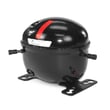
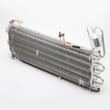
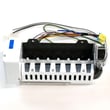
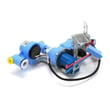
Why is my Kenmore Elite refrigerator leaking water out of the bottom?
Water leaking out of the bottom of your Kenmore Elite refrigerator model 79574032411 is most often caused by a clogged or frozen defrost drain, which forces defrost water to overflow into the freezer or fresh-food area and then run down to the floor. Use the steps in the 79574032411 owner's manual to access panels safely and confirm the drain path.
- Check for a sheet of ice on the freezer floor or water under the crisper drawers (common with a blocked defrost drain).
- Look for a clogged drain hole or trough at the back wall inside the freezer.
- Make sure the refrigerator is level front-to-back and side-to-side; poor leveling can make water spill out of the drain pan area.
- Inspect the door gaskets for gaps that can cause excess frost and repeated drain freezing.
- If the leak happens only when dispensing water or making ice, focus on the water supply line and fittings.
- Unplug the refrigerator.
- Remove freezer contents and the rear interior panel (if equipped).
- Melt ice around the drain opening using warm water (not boiling) and towels.
- Flush the drain with warm water until it flows freely to the drain pan underneath.
- Reassemble and restore power; monitor for 24 hours.
| Symptom | Most likely cause | What to do next |
|---|---|---|
| Ice returns in days | Defrost system not clearing frost | Test defrost sensor and related wiring; replace if failed |
| Water backs up but no heavy frost | Drain tube restriction | Clear tube and check for debris/sludge |
| Leak only during ice/water use | Water line or valve seep | Inspect fittings and tubing for drips |
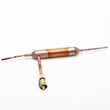
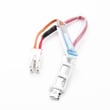
If you suspect a defrost control issue, a common part involved is the refrigerator defrost sensor assembly 6615JB2005R.
A blocked drain can create recurring ice buildup, warm temperatures, and water damage around the refrigerator. Clearing the drain restores normal defrost drainage and helps prevent repeat leaks.
Last updated: January 2026
What size is Kenmore refrigerator model 79574032411?
Kenmore refrigerator model 79574032411 is a Kenmore Elite bottom-mount unit in the 33-inch-wide class; most refrigerators in this design measure about 33 in. wide, 30 to 34 in. deep, and 67 to 70 in. tall. For the exact cabinet and door-swing dimensions, use the 79574032411 owner's manual.
We recommend measuring both the refrigerator and the installation opening so you avoid clearance problems at the wall, cabinets, and doorways.
- Measure width at the widest point (often the doors/handles)
- Measure height from floor to top hinge area
- Measure depth from the back to the front of the doors/handles
- Confirm door swing clearance so doors open fully
- Allow airflow space behind and above the cabinet
These ranges help with planning when you are comparing models or checking fit before moving the refrigerator.
| Measurement | Typical range for this style | What can change it |
|---|---|---|
| Width | ~33 in. | Door design, trim, hinge caps |
| Depth | ~30 to 34 in. | Handles, door thickness |
| Height | ~67 to 70 in. | Leveling legs, hinge height |
A refrigerator that is even 1 inch too tall or too deep can prevent proper leveling, restrict airflow, or keep doors from opening fully. That can lead to warm temperatures, noisy operation, or door seal issues.
If you are also planning a water line hookup for the ice maker and dispenser, the manual’s installation section covers the recommended tubing and slack needed to pull the refrigerator out for service.
Last updated: January 2026
What are the common problems with Kenmore Elite refrigerators?
Common problems on the Kenmore Elite 79574032411 bottom-mount refrigerator include weak or no cooling, frost buildup, water leaks, dispenser or ice maker issues, and unusual noises. Many fixes start with basic maintenance (airflow and cleaning) and then move to checking fans, sensors, and the sealed system.
- Not cooling or warm temperatures: dirty condenser coil, failed evaporator fan, defrost problem, or sealed-system issue
- Frost or ice buildup (freezer or back wall): defrost sensor/heater issue, door not sealing, frequent door openings
- Water under the refrigerator: clogged defrost drain, cracked drain pan, or water line connection leak
- No ice or slow ice production: restricted water supply, clogged filter, ice maker failure, dispenser door not closing
- Buzzing/clicking/humming: compressor start issues, fan blade hitting ice, or normal cycling that becomes louder over time
- Set temps to typical targets: 37°F fresh food and 0°F freezer.
- Clean dust from the condenser area and confirm airflow around the cabinet.
- Listen for the evaporator fan; it should run when the unit is cooling.
- Check door gaskets for gaps and make sure doors close on their own.
- If you have a dispenser, replace the water filter on schedule and purge air from the line.
| Symptom | Common part area | Example part for 79574032411 |
|---|---|---|
| Warm temps | Condenser/airflow | Refrigerator condenser coil ACG73645004 |
| Frost buildup | Defrost sensing | Refrigerator defrost sensor assembly 6615JB2005R |
| No ice | Ice maker | Lg refrigerator ice maker AEQ73130004 |
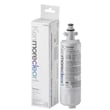
| Poor water flow | Filtration | Kenmore refrigerator water filter 9690 (ADQ36006114) AGF80300801 |
Cooling and frost issues often start as airflow or defrost problems; catching them early helps protect food, reduce energy use, and prevent ice buildup that can damage fans and airflow ducts.
Use the 79574032411 owner's manual troubleshooting guide for symptom-by-symptom checks (including power interruptions, water line connection, and diagnostic guidance).
Last updated: January 2026
How do you level a Kenmore Elite refrigerator?
To level your Kenmore Elite refrigerator model 79574032411, adjust the two front leveling legs until the cabinet is steady and the doors close easily. For best door closing, we set the front slightly higher than the rear; follow the step-by-step procedure in the 79574032411 owner's manual.
- Plug the refrigerator into a grounded 3-prong outlet, then slide it into its final position.
- Locate the two front leveling legs (left and right).
- Use an 11/16-inch wrench or a flat-blade screwdriver (as specified for this model).
- Turn a leveling leg left to raise that side.
- Turn a leveling leg right to lower that side.
- Recheck stability and door closing; adjust in small increments.
If the doors do not close easily after leveling, tilt the refrigerator slightly more to the rear by turning both leveling legs to the left the same amount.
On model 79574032411, the left refrigerator door has an adjustable nut at the bottom hinge for height adjustment.
| What you see | Likely adjustment | Where to adjust |
|---|---|---|
| Refrigerator rocks or vibrates | Leveling legs need adjustment | Two front leveling legs |
| Doors do not close smoothly | Front-to-back tilt needs fine-tuning | Turn both leveling legs evenly |
| Uneven gap between doors | Door height needs alignment | Left door bottom hinge nut |
Proper leveling reduces vibration and noise, helps the doors seal consistently, and prevents warm air leaks that can cause temperature swings and excess frost.
Last updated: January 2026