Installation guide
 Owner’s manual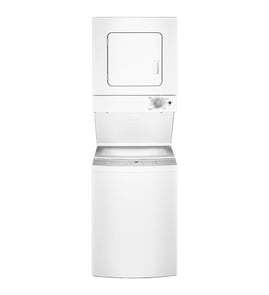





Are all washers and dryers 27 inches wide?
No. Washers and dryers are not all 27 inches wide; widths vary by style and capacity. For the GE WSM2700DAWWW stacked laundry center, the installation guide shows a 27-inch width, but many compact and some full-size models are different.
Common washer and dryer widths (what you will see most often)
- Compact laundry: often around 24 inches wide
- Full-size laundry: often around 27 inches wide
- Some high-capacity models: can be wider than 27 inches
- Stacked laundry centers: commonly 27 inches, but not always
Model-specific note for GE WSM2700DAWWW
The GE WSM2700DAWWW installation documentation lists the unit at 27 inches wide, which is typical for many full-size laundry centers. Use the WSM2700DAWWW installation guide when planning closet clearances, door swing, and vent routing.
Why it matters
Width affects whether your washer/dryer will fit through doorways, into an alcove or closet, and whether you can meet required clearances for safe operation and proper dryer exhaust airflow.
Quick fit check (before you buy or move a unit)
| What to measure | What to include | Why it helps |
|---|---|---|
| Space width | Side clearances (if required) | Prevents rubbing, vibration issues |
| Doorway/hallway width | Tight turns and trim | Avoids getting stuck during delivery |
| Depth | Vent duct and water hoses | Prevents kinks and crushed venting |
| Height | Overhead cabinets/shelves | Ensures the unit can stand upright |
Last updated: January 2026
How does the GE washer dryer combo work?
The GE WSM2700DAWWW is a stacked laundry center (washer on the bottom, dryer on top), not a single “combo” unit that washes and dries in the same drum. The washer cleans and spins clothes, then you move the load to the dryer, which dries using timed or automatic heat cycles (with proper venting). See the WSM2700DAWWW use & care manual for cycle and control details.
How the washer and dryer work on this model
Washer (bottom)
- You select wash temperature, water level, and a wash cycle.
- The washer fills, agitates to clean, then drains and spins to remove water.
- The lid must be closed for the washer to complete the spin portion of the cycle.
Dryer (top)
- You load the washed clothes into the dryer drum.
- You choose Timed Dry (runs for a set number of minutes) or Auto Dry (cycles heat on and off based on drum air temperature).
- You press the Start button; opening the door stops the dryer.
What “Auto Dry” means (and what it is not)
On the WSM2700DAWWW, Auto Dry is a traditional automatic drying control that cycles heat based on sensed temperature. It is not a ventless condenser or heat-pump drying system.
| Feature | WSM2700DAWWW laundry center | Typical ventless “combo” washer/dryer |
|---|---|---|
| Wash and dry in same drum | No | Yes |
| Dryer exhaust | Vented (recommended to outdoors) | Often ventless (condensing) |
| Drying control | Timed or automatic cycling | Condensing or heat-pump logic |
Key operating tips that prevent problems
- Clean the lint filter before every dryer load.
- Do not overload; clothes need room to tumble and move.
- Use the correct heat setting for fabric type (especially synthetics and delicates).
- Make sure the dryer exhaust duct is not kinked or restricted.
Why it matters
Understanding that the WSM2700DAWWW is a two-appliance stack helps you troubleshoot correctly. For example, long dry times are often caused by airflow or venting issues, not the washer.
Last updated: January 2026
What is the life expectancy of a GE dryer?
Most GE dryers (including the dryer section of the GE WSM2700DAWWW laundry center) commonly last about 10 to 13 years with normal household use and proper venting and maintenance. Actual life can be shorter or longer depending on load size, airflow, and how quickly wear parts are addressed.
What affects dryer lifespan the most
A dryer usually “dies early” from heat and airflow problems, or from normal wear items that were ignored too long. For the WSM2700DAWWW, focus on:
- Vent restriction (long dry times, overheating, nuisance thermal shutdowns)
- Lint buildup in the exhaust duct and inside the cabinet
- Overloading (extra strain on the drum support and belt system)
- Electrical supply issues (dryer tumbles but does not heat, intermittent operation)
- Delayed replacement of wear parts (glides, belt, idler components)
For model-specific operating and cleaning guidance, follow the maintenance and dryer exhaust sections in the WSM2700DAWWW use & care manual.
Quick maintenance checklist (best ROI)
These steps help you get closer to the high end of the lifespan range:
- Clean the lint screen before every load
- Inspect and clean the exhaust duct at least yearly (more often with heavy use)
- Keep loads “tumbling freely” (avoid packing the drum)
- If dry times increase, check airflow first (vent, hood flap, crushed duct)
- Address squealing, thumping, or scraping early (often a glide, bearing, belt, or idler issue)
Common “end-of-life” symptoms and what they often point to
| Symptom | What it often indicates | What we typically check first |
|---|---|---|
| Takes too long to dry | Restricted venting or weak airflow | Ducting and outside hood flap |
| Shuts off or overheats | Overheating protection opening | Airflow and thermal limiter |
| Loud squeal or rumble | Drum support wear | Glides and bearing points |
| Drum will not turn | Belt or idler problem | Belt and idler arm |
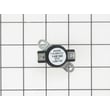
If overheating is suspected, a common protective device is the dryer thermal limiter WE04X10094.
Why it matters
A dryer that is running hot or drying slowly does more than waste time; it accelerates wear on the heater circuit, thermostats, drum supports, and motor. Keeping airflow strong is one of the simplest ways to extend the service life of a GE dryer.
Last updated: January 2026