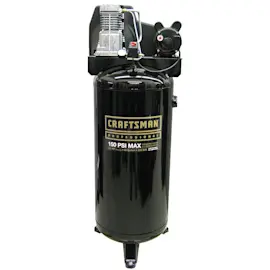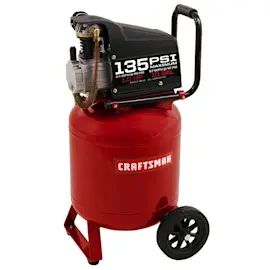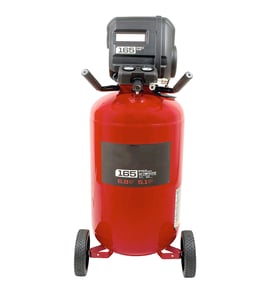

Are air compressor parts interchangeable?
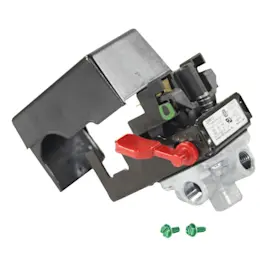
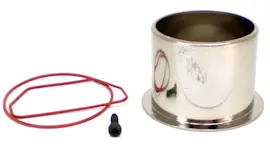
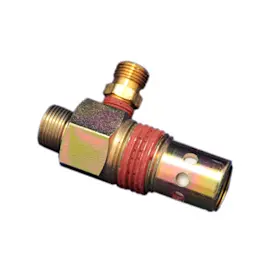
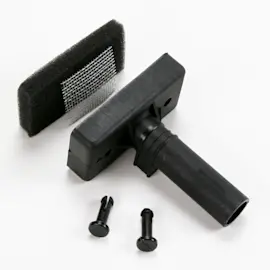
Most parts on a Jobsmart ZJ3040SA air compressor are not interchangeable across brands or even across similar-looking models. For safety and proper performance, we match replacement parts by the exact model and the original part’s specifications; only some common fittings and accessories may cross over.
What’s usually model-specific (not interchangeable)
These parts are typically engineered around the ZJ3040SA’s pressure range, mounting points, and airflow needs:
- Pump components (cylinder, piston, reed/valve plate)
- Motor and start components (capacitor, overload)
- Pressure switch and unloader setup
- Regulator and manifold assemblies
- Tank-mounted safety valve and check valve style
- Shrouds, brackets, and vibration isolators
What’s sometimes interchangeable
Some items can be compatible if the thread type, size, and pressure rating match:
- Quick-connect couplers and plugs (matching the same interchange “style”)
- Air hose fittings and adapters
- Thread sealants and some generic hardware
- Intake filter elements (only if dimensions and airflow match)
Quick compatibility checklist (before you buy)
Use this to avoid leaks, poor performance, or unsafe operation:
| Item to match | What to verify | Why it matters |
|---|---|---|
| Threads | NPT vs other thread types; size (for example 1/4 in.) | Prevents cross-threading and leaks |
| Pressure rating | PSI rating of the part/fitting | Avoids failures under pressure |
| Flow/port size | Port diameter and internal restriction | Impacts tool performance |
| Electrical specs | Voltage, amperage, capacitor ratings | Prevents motor damage |
Why it matters
Air compressors store high-pressure air; a “close enough” regulator, safety valve, or pressure switch can cause constant leaking, nuisance tripping, or dangerous over-pressurizing. We recommend using model-matched parts whenever the component affects pressure control or tank safety.
Helpful related DIY guidance
Last updated: January 2026
Can a 1 gallon air compressor run a nail gun?
Yes, a 1-gallon air compressor can run many nail guns for short, intermittent bursts, especially pin and brad nailers. For the Jobsmart ZJ3040SA air compressor, we cannot confirm 1-gallon capacity or its CFM at 90 PSI from model-specific information, so performance depends on the nailer’s CFM requirement and your firing pace.
What to match (compressor vs nailer)
To know if your ZJ3040SA will keep up, compare the nailer’s air demand to the compressor’s delivered air.
- Nailer CFM requirement at 90 PSI (often printed on the tool or packaging)
- Compressor delivered CFM at 90 PSI (not just maximum PSI)
- Recovery time (how quickly tank pressure rebuilds between shots)
- Duty cycle (small compressors can overheat if run continuously)
- Hose and fittings (undersized couplers or long, small hoses reduce airflow)
Typical results by nailer type (general guidance)
A small-tank compressor usually works best when you can pause between shots.
| Nailer type | Typical air demand | What you’ll usually see with a 1-gallon compressor |
|---|---|---|
| Pin nailer (23 ga) | Low | Usually runs well |
| Brad nailer (18 ga) | Low to moderate | Often OK for trim with pauses |
| Finish nailer (15 to 16 ga) | Moderate | More frequent refills, slower pace |
| Framing nailer | Higher | Often outpaces the compressor for continuous nailing |
Why it matters
If the compressor cannot supply enough CFM, tank pressure drops and nails may not set fully; the motor runs more often, which increases heat and wear on the pump, pressure switch, and check valve.
Safety and setup tips
- Set the regulator to the nailer’s recommended PSI range
- Never exceed the tool’s rated pressure
- Drain tank moisture after use to reduce internal corrosion
- Stop using the compressor if the safety valve pops repeatedly or the unit runs constantly
For safe operating practices and hazards to avoid, use the unseen dangers of air compressors.
Last updated: January 2026
Can you fix a broken air compressor?
Yes, we can often fix a broken air compressor, and many repairs on the Jobsmart ZJ3040SA are practical if the tank is sound and the problem is in serviceable components like the pressure switch, check valve, regulator, gauges, or fittings. If the pump is severely worn or the tank is damaged, replacement is usually the better option.
What we check first on a Jobsmart ZJ3040SA
- Power and controls: outlet, extension cord, on/off switch, pressure switch operation
- Air leaks: fittings, drain valve, safety valve, hose connections
- Pressure build issues: intake filter, check valve, unloader line, pump valves
- Pressure regulation: regulator knob, outlet gauge behavior, quick-connect coupler
- Safety concerns: unusual heat, burning smell, repeated breaker trips
Common symptoms and likely fixes
| What it’s doing | Common causes | Typical fix level |
|---|---|---|
| Won’t start | bad pressure switch, failed capacitor, seized pump/motor, low voltage | moderate to advanced |
| Runs but won’t build pressure | leaking check valve, reed/valves worn, head gasket leak | moderate |
| Tank won’t hold air | leaking drain valve, fittings, safety valve, tank corrosion | easy to moderate |
| Gauge reads wrong | failed tank gauge, clogged port, vibration damage | easy |
For targeted troubleshooting paths, we use resources like air compressor won't start and air compressor won't build tank pressure.
When repair is not the right call
Some failures are technically repairable but not cost-effective for this model:
- Pump rebuild needs specialized tools (pullers, torque tools, measuring tools) and careful reassembly
- Major pump wear (scored cylinder, damaged crank/bearing surfaces)
- Tank integrity issues (deep rust, pinhole leaks, damaged welds)
Why it matters
Air compressors store high-pressure air; choosing the right repair protects your tools, your workspace, and the compressor itself. We also recommend reviewing the unseen dangers of air compressors before any diagnosis or repair.
Last updated: January 2026
What PSI should I run my air compressor at?
For the Jobsmart ZJ3040SA air compressor, set the regulated outlet pressure to the PSI your tool calls for (many air tools are rated at 90 PSI). We cannot confirm the ZJ3040SA’s exact CFM-at-PSI rating from model-specific information here, so match PSI to the tool and verify performance by watching pressure drop under load.
Set PSI the right way (tank vs. regulator)
Your compressor effectively has two pressure settings:
- Tank pressure (unregulated): controlled by the pressure switch (cut-in and cut-out).
- Regulated outlet pressure: what you set on the regulator for the hose and tool.
- Tool requirement: the PSI printed on the tool label; this is the target for the regulator.
Practical starting points (regulator setting)
- Most impact tools, ratchets, air hammers: 90 PSI at the tool
- Nailers and staplers: follow the tool label (often 70 to 110 PSI)
- Blow gun/cleaning: 30 to 60 PSI
- Inflation: slightly above the target tire PSI for faster fill (never exceed the tire sidewall limit)
Why CFM matters (and how to check it without specs)
Even with the regulator set correctly, a tool can underperform if it needs more airflow than the compressor can supply.
| What you see | Likely cause | What to do |
|---|---|---|
| Pressure drops quickly while the tool runs | Tool CFM demand exceeds compressor output | Use shorter bursts, a larger hose fitting, or a higher-CFM compressor |
| Compressor runs constantly and can’t recover | High demand or leak | Check for leaks, reduce demand, let it recover |
| Regulated pressure hunts up and down | Regulator issue or restriction | Inspect regulator, quick-connects, and hose |
Why it matters
Correct PSI protects tools and improves results, but matching CFM to the tool prevents weak torque, inconsistent spray patterns, and long recovery times.
For safety basics (pressure, moisture, and safe operation), use the unseen dangers of air compressors.
Last updated: January 2026
What does 2.6 SCFM at 90 PSI mean?
On the Jobsmart ZJ3040SA air compressor, 2.6 SCFM at 90 PSI means the compressor can deliver about 2.6 standard cubic feet of air per minute while maintaining 90 PSI at the outlet. It is a performance rating used to match the compressor to air tools.
Breaking down the terms
- SCFM (standard cubic feet per minute): Airflow measured under standardized conditions so different compressors can be compared.
- 90 PSI: The pressure level the airflow rating is measured at (a common working pressure for many tools).
- 2.6: The amount of airflow available at that pressure.
How to use this rating when choosing tools
Use the tool’s required SCFM at its operating PSI and compare it to the compressor’s rating.
- If the tool needs less than 2.6 SCFM at 90 PSI, it should run more continuously.
- If the tool needs more than 2.6 SCFM at 90 PSI, the compressor will cycle frequently and you may see pressure drop during use.
- Short bursts (brad nailers, inflators) usually work with lower SCFM.
- Continuous-demand tools (DA sanders, some spray guns) typically need higher SCFM.
Quick comparison table
| What you compare | Where to find it | What it tells you |
|---|---|---|
| Tool SCFM requirement | Tool label/spec sheet | How much air the tool consumes |
| Compressor SCFM at 90 PSI | Compressor spec | How much air the compressor can supply |
| Tank size (gallons) | Compressor spec | How long you can run before pressure drops |
Why it matters
SCFM at a given PSI is the best single number for predicting real-world performance. It helps prevent slow tool operation, pressure sag, and excessive run time that can overheat the pump.
Safety note
Before connecting or adjusting regulators, drain moisture and verify gauges and safety devices are working; our the unseen dangers of air compressors article covers key hazards and safe habits.
Last updated: January 2026
What is the common problem with an air compressor?
On the Jobsmart ZJ3040SA air compressor, the most common problem is loss of air pressure or slow pressure build. That is usually caused by air leaks at fittings or the tank drain, a leaking check valve/unloader, or a restricted intake filter; starting issues are also common.
Most common issues (and what they look like)
- Air leaks: hissing sound, tank pressure drops while sitting, frequent cycling
- Won’t build tank pressure: runs continuously, stalls at low PSI, weak tool performance
- Won’t start: hums, trips breaker, or does nothing when pressure is low
- Hard restart with a full tank: starts only after bleeding air off
- Gauge/regulator confusion: tank may be full but outlet pressure seems wrong
Quick checks we recommend first
- Unplug the compressor and let it cool before inspecting.
- Soap-test for leaks (dish soap and water) at couplers, fittings, regulator, and tank drain.
- Compare tank vs. outlet pressure: tank gauge shows stored pressure; regulator gauge shows tool pressure.
- Check the intake path: a dirty intake filter or blocked inlet reduces output.
- If it struggles to restart, focus on the check valve and unloader system.
Symptom-to-likely-cause guide
| Symptom | Most likely causes | Typical next step |
|---|---|---|
| Tank won’t hold air | Drain valve leak, fitting leak, hose/coupler leak | Leak test, tighten, reseal, replace leaking parts |
| Won’t build pressure | Intake restriction, check valve leak, worn pump seals | Inspect intake, then test check valve/pump condition |
| Won’t start | Pressure switch, capacitor, motor, power supply | Verify power, then test electrical components |
| Safety valve pops | Control problem or faulty safety valve | Stop using, diagnose controls and valve |
Why it matters
Low pressure and frequent cycling can overheat the motor and shorten pump life. Fixing leaks and intake restrictions early improves PSI stability, reduces run time, and helps protect the tank and pump.
For targeted troubleshooting, we use guides like air compressor air leaks and air compressor won't build tank pressure.
Last updated: January 2026
Who makes JobSmart air compressors?
Jobsmart air compressors are sold under the Jobsmart brand, which is an exclusive brand of Tractor Supply Co. For your specific Jobsmart ZJ3040SA air compressor, the actual factory manufacturer is not identified in the model information we use for parts lookup, so we treat Jobsmart as the brand when selecting compatible replacement parts.
What this means for parts and repairs
When a tool is sold as a store brand, the “brand” on the label (Jobsmart) is often the most reliable identifier for parts matching, along with the full model number.
- Use the complete model number ZJ3040SA when searching parts diagrams and replacements
- Match by component type (pressure switch, regulator, check valve, safety valve, gauge)
- Compare port sizes and pressure ratings before ordering
- If a part looks similar but fittings differ, it may not be compatible
- Keep the data plate information handy (model, serial, voltage, max PSI)
Quick ID checklist (before ordering)
| Item to confirm | Where to find it | Why it matters |
|---|---|---|
| Model number: ZJ3040SA | Data plate on tank/frame | Ensures correct parts match |
| Voltage and phase | Data plate | Prevents wrong motor/switch selection |
| Max tank pressure (PSI) | Data plate | Confirms gauge/safety valve suitability |
| Fitting/port size | On the part or measured | Avoids leaks and cross-threading |
Why it matters
Many air compressor issues are solved by replacing the correct wear part, but store-brand manufacturing can vary by production run. Using the exact ZJ3040SA model identifier helps us narrow to the right diagrams and compatible components even when the factory name is not listed.
Related safety guidance
For safe operation and maintenance practices, review the unseen dangers of air compressors.
Last updated: January 2026