 Owner’s manual




How to hard reset kenmore washer?
To hard reset your Kenmore washer model 79641262610, unplug it (or switch off the breaker) for 60 seconds, then restore power and try a cycle again. This clears many control glitches and is the reset method we use first for control-related errors.
Hard reset steps (power reset)
- Press POWER to turn the washer off.
- Unplug the washer (or turn the dedicated breaker off).
- Wait 60 seconds.
- Plug back in (or turn breaker on).
- Press POWER, then start a normal cycle to test.
If you are resetting after an error code, follow the troubleshooting guidance in the 79641262610 owner's manual.
If the washer is stuck and the door will not unlock
The door stays locked if the water level or temperature is too high. Use this safe drain method:
- Press POWER.
- Press SPIN SPEED (do not select a full cycle).
- Press START/PAUSE to drain and spin out.
- Wait for the door lock indicator to turn off before opening.
What a hard reset fixes (and what it does not)
| Symptom | Hard reset helps? | What to check next |
|---|---|---|
| Control panel frozen, cycle won’t start | Yes | Power supply, door fully closed |
| PF (power failure) message | Yes (clears after selecting a cycle) | Run a test cycle |
| Repeating “control error” | Sometimes | Retry reset; then inspect wiring and controls |
| LE or motor-related error | No (usually) | Let washer sit 30 minutes; retry cycle |
When to suspect a part problem
If the washer repeatedly fails right after resetting, a component may be causing the control to stop. Common examples:
- Won’t drain or stops mid-cycle: drain pump or a restriction in the tub-to-pump hose
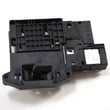
- Door won’t lock or unlock correctly: door lock system
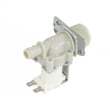
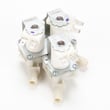
- Won’t fill or fills incorrectly: water inlet valve
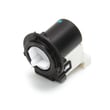
For drain-related failures on this model, the drain pump motor (4681EA2001T) - washer part by lg electronics 4681EA2001T is a common repair part.
Why it matters
A proper 60-second power reset clears the control’s temporary memory and restores normal operation after minor glitches. If the same error returns immediately, the washer is usually protecting itself from a real issue (drain, door lock, fill, or motor).
Last updated: February 2026
How to identify a Kenmore washer model?
For Kenmore washer model 79641262610, the model and serial number are printed on the identification plate inside the washer door (door opening area). On many washers, you may also find the model tag on the back of the control panel or on the cabinet, but this model’s primary location is inside the door.
Where to look on model 79641262610
Check these common label locations in this order:
- Inside the washer door opening: look on the identification plate around the door frame (most reliable for this model)
- Door jamb area: along the inner front panel where the door closes
- Back of the control panel: sometimes a second label is placed behind the console
- Lower cabinet side: near the bottom edge of the main cabinet on some builds
What to write down (and why)
Record both numbers exactly as shown:
- Model number (example format in the manual: 796.4126*; your full model is 79641262610)
- Serial number
- Date of purchase (helpful for service history and matching parts)
Quick ID checklist
| Item | What it’s used for | Tip |
|---|---|---|
| Model number | Matching parts diagrams and compatible replacement parts | Copy every digit; do not shorten it |
| Serial number | Production run details and service reference | Take a clear photo for accuracy |
| Product type | Confirms you are shopping in the right category | This is a Kenmore front-load washer |
Why it matters
Kenmore model numbers can look similar across different washer series. Using the exact model number (79641262610) prevents ordering the wrong door lock, drain pump, or water inlet valve and helps you follow the correct troubleshooting steps.
For the official label location and how Kenmore formats the model number, use the 79641262610 owner's manual.
Last updated: February 2026
How to tell if a washing machine drain pump is bad?
On Kenmore washer model 79641262610, a bad drain pump usually shows up as slow or no draining, a loud grinding noise, or a pump that only hums but does not move water. Before replacing parts, we always rule out a clogged drain pump filter or a kinked drain hose (both are common).
Quick checks first (most common causes)
- Unplug the washer.
- Check the drain hose for kinks, pinches, or clogs behind/under the washer.
- Confirm the standpipe drain height is not too high (this model’s maximum drain height is 96 in.).
- Clean the drain pump filter using the steps in the 79641262610 owner's manual.
- After cleaning, run a Drain/Spin cycle and listen for normal pump “humming/gurgling” versus harsh grinding.
Symptoms that point to a failing drain pump
| What you notice | What it usually means | What to do next |
|---|---|---|
| Washer drains slowly or not at all | Filter clogged, hose restricted, or weak pump | Clean filter; inspect hose; then test drain again |
| Loud grinding during drain/spin | Debris in pump or worn impeller/motor | Clean filter; if noise remains, replace pump |
| Hums but won’t drain | Pump motor stuck or impeller damaged | Verify filter/hose clear; replace pump if still humming |
| Leaks near pump area | Loose hose clamp, cracked hose, or pump leak | Inspect hoses/clamps; replace leaking component |
Parts that commonly fix a no-drain problem
If the filter and hose are clear and the washer still will not drain, the drain pump motor is the most common repair.
- Drain pump motor (4681EA2001T) - washer part by lg electronics 4681EA2001T
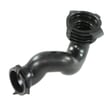
- Washer tub-to-pump hose 4738ER1002A (if the hose is split or collapsing)
- Washer hose clamp 4861FR3068A (if a connection is seeping)
Why it matters
A washer that cannot drain leaves clothes soaking wet and can trigger repeated drain attempts that strain the pump. Cleaning the drain pump filter and correcting the drain hose setup often restores normal draining without replacing parts.
Last updated: February 2026
Is it worth replacing the pump on a washing machine?
Yes, it’s usually worth replacing the drain pump on a Kenmore 79641262610 when the washer is otherwise in good shape and the problem is truly a drain issue; a pump repair is typically far less expensive than replacing the entire washer, especially when the failure is caused by a clogged filter or a worn pump motor.
Quick decision checklist
- The washer won’t drain or drains very slowly (often tied to a clogged pump filter or drain path).
- The drain hose is not kinked, pinched, or clogged.
- The drain height is within the typical limit (this model’s manual notes a maximum drain height of 96 inches).
- You’ve cleaned the drain pump filter and removed coins, buttons, lint, or debris.
- The washer otherwise washes, fills, and spins normally.
Try these steps before buying a pump
The manual for this model points to a few common causes of “won’t drain” that do not require a new pump.
- Unplug the washer and let water cool if needed.
- Check the drain hose for kinks or clogs.
- Drain the tub using the small drain hose at the pump area, then clean the pump filter.
- Re-test a Drain/Spin cycle after cleaning.
Reference steps and diagrams in the 79641262610 owner’s manual.
When a pump replacement makes sense
If the filter is clean and the drain hose is clear but the washer still won’t drain (or you hear the pump hum without moving water), replacing the pump motor is a practical next step.
Model-matched part to consider: Drain pump motor (4681EA2001T) - washer part by lg electronics 4681EA2001T.
Repair vs replace: simple comparison
| Situation | Usually best choice | Why |
|---|---|---|
| Clogged pump filter or blocked hose | Clean/clear | Fast, low cost, common cause |
| Washer drains slowly, hose height too high | Correct drain setup | Prevents repeat drain problems |
| Pump runs noisy, won’t evacuate water | Replace pump | Restores draining without replacing washer |
| Multiple major failures (leaks, control issues, tub damage) | Replace washer | Total repair cost adds up quickly |
Why it matters
A draining problem can stop the cycle, leave water in the drum, and strain the motor and control system. Fixing the drain path first (filter, hose routing, drain height) prevents unnecessary parts replacement and helps the washer run normally.
Last updated: February 2026
What is the average lifespan of a Kenmore washer?
A Kenmore washer typically lasts 10 to 15 years. For the Kenmore 79641262610 front-load washer, consistent care (monthly cleaning, correct HE detergent, and avoiding overloads) helps you reach the longer end of that range; see the 79641262610 owner's manual for the recommended cleaning routine.
Typical lifespan by washer type
Most washers fall into a similar life range, but front-loaders are more sensitive to detergent choice and seal care.
| Washer type | Typical lifespan | What most often shortens life |
|---|---|---|
| Front-load (like 79641262610) | 10 to 15 years | Excess suds, door seal moisture, drainage issues |
| Top-load (agitator or impeller) | 10 to 15 years | Overloading, suspension wear, drive issues |
Maintenance that extends life
The Use & Care guidance for this model emphasizes HE detergent and routine cleaning. These habits reduce odor, leaks, and premature wear.
- Use low-sudsing HE detergent and do not over-dose.
- Wipe the door opening, door seal, and door glass after use to keep a watertight seal.
- Remove laundry promptly so moisture does not sit in the drum.
- Run the CLEAN WASHER cycle once a month (or more if needed).
- Turn off water faucets and unplug the washer if it will sit unused for an extended time.
Parts that commonly affect longevity
When a washer is near end-of-life, the “big” failures are often water handling or door-lock related. If your 79641262610 is not draining, a common repair is replacing the drain pump motor (4681EA2001T) - washer part by lg electronics 4681EA2001T.
Quick symptom-to-part check
- Won’t drain / standing water: drain pump, tub-to-pump hose, clogs
- Won’t fill / fills slowly: water inlet valve screens, inlet valve
- Door won’t lock / won’t start: door lock, door lock strike
Why it matters
A washer that is maintained correctly runs with fewer suds, better drainage, and a tighter door seal. That reduces leak risk, odor buildup, and strain on components like the pump and bearings.
Last updated: February 2026


