 Owner’s manual


What is the most common problem with Samsung dishwashers?
The most common Samsung dishwasher complaint is poor cleaning (dishes come out dirty or gritty). On the Samsung DW80N3030US, this usually traces back to loading issues, clogged spray arm holes, or a wash system problem that reduces water flow and spray pressure; check the DW80N3030US manual first.
What we see most often (and what to check first)
- Improper loading: items block the spray arms or prevent water from reaching surfaces.
- Clogged spray arm holes: food debris or hard-water scale restricts spray.
- Low fill or weak wash action: can be related to the inlet valve, float, or circulation system.
- Drain issues: standing water can redeposit soil and cause odor.
- Heating/drying complaints: water not reaching temperature can reduce cleaning performance.
Quick checks you can do in 10 minutes
- Confirm the spray arms spin freely and are not hitting tall pans.
- Inspect spray arm holes; rinse and clear debris with a toothpick if needed.
- Verify the float moves freely; the manual warns the floater is critical and should not be tampered with.
- Run hot water at the sink before starting the cycle to improve wash temperature.
- Use fresh detergent and avoid overfilling the dispenser.
Common symptoms and likely causes (DW80N3030US)
| Symptom | Most likely cause | What to do next |
|---|---|---|
| Dishes still dirty | Blocked spray, poor loading | Re-load, clean spray arms, avoid blocking the middle nozzle |
| Grit on glasses | Filter or wash water recirculating soil | Clean sump area and confirm proper draining |
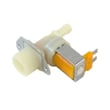
| Not filling enough | Water supply or inlet control | Check supply valve; consider dishwasher water inlet valve DD81-02265A if fill is weak |
| Won’t drain | Drain path restriction | Check drain hose routing; consider dishwasher drain hose DD82-01603A if kinked or damaged |
| Error lights/codes | System detected a fault | Use Samsung dishwasher error codes to match the code to the fix |
Why it matters
Poor cleaning is usually a water movement problem: if the dishwasher cannot fill correctly, heat properly, or spray freely, detergent cannot do its job. Fixing the root cause also helps prevent repeat clogs, odors, and premature wear on the circulation pump and sump.
Last updated: February 2026
Does the DW80N3030US have a food disposer?
The Samsung DW80N3030US dishwasher does not use a traditional hard food disposer (grinder). It uses a filter-based wash system, so we recommend scraping large food scraps off dishes and cleaning the filter regularly for best cleaning and draining performance. See the DW80N3030US user manual for your model’s cleaning and maintenance steps.
How to tell which system you have
Dishwashers generally use one of these two designs:
- Filter system (most common today): a removable filter traps food soil; you rinse/clean it periodically.
- Hard food disposer: a small grinder chops food; it is louder and still benefits from scraping heavy soil.
- Hybrid designs: a filter plus a chopper screen; still requires filter cleaning.
What to do if you are seeing food left in the tub
If you are finding grit or food debris after a cycle, these checks fix most issues:
- Clean the filter and sump area; remove labels, glass, and seeds.
- Make sure the lower spray arm spins freely and the holes are not clogged.
- Avoid blocking the detergent dispenser with large pans.
- Run hot water at the sink before starting the cycle (improves detergent activation).
- Use the correct detergent amount for your water hardness.
Quick symptom guide
| What you notice | Most likely cause | Best first step |
|---|---|---|
| Grit on glasses | Dirty filter or low water temp | Clean filter; run hot water first |
| Food on lower rack | Spray arm blocked | Re-load; clear spray arm holes |
| Standing water with debris | Drain restriction | Check drain path and filter area |
Why it matters
A filter-based system is efficient and quiet, but it depends on routine filter cleaning. Keeping the filter and spray arms clear helps prevent poor cleaning, odors, and drain problems.
Last updated: February 2026
Is the DW80N3030US a good dishwasher?
Yes; the Samsung DW80N3030US is a solid built-in dishwasher for most households when it’s installed correctly, loaded well, and maintained. Like many dishwashers, real-world satisfaction depends most on cleaning habits (filters, spray arms, detergent) and using the right cycle options for tough loads.
What “good” looks like on this model
We consider the DW80N3030US a good choice when you want dependable everyday cleaning and standard built-in sizing. The DW80N3030US user manual includes cycle guidance, loading rules, and maintenance steps that directly impact performance.
Common strengths customers notice
- Quiet operation compared to older dishwashers
- Good results on normal mixed loads when racks are loaded correctly
- Built-in design with standard household electrical requirements (120 V, 60 Hz)
- Straightforward controls and cycle selection
Common complaints (usually fixable with setup or habits)
- Some items need a heavier cycle or added options for baked-on soil
- Plastics can hold water or flip if not secured
- Performance drops when filters or spray nozzles are dirty
Quick performance checklist (best ROI steps)
- Clean the filter regularly (a clogged filter is a top cause of poor cleaning)
- Make sure the lower spray arm spins freely and holes are clear
- Do not block the detergent dispenser with large pans
- Use fresh detergent and the correct amount for your water hardness
- Run hot water at the sink before starting a cycle for better wash temperature
When to use heavier options vs. normal cycles
| Situation | Best approach | Why |
|---|---|---|
| Everyday dishes | Normal cycle | Balanced time, water, and cleaning |
| Baked-on or greasy loads | Use a heavier cycle or added wash option | More heat and spray action |
| Lightly soiled, quick turnaround | Shorter cycle | Saves time, may reduce drying |
Why it matters
A “good dishwasher” is mostly about consistent wash action, correct water temperature, and unobstructed drainage. On the DW80N3030US, keeping filters and spray paths clean is the difference between “just OK” and “excellent” cleaning.
Last updated: February 2026
How do I do a hard reset on my Samsung dishwasher?
For a Samsung DW80N3030US dishwasher, a hard reset is a full power cycle: turn the dishwasher’s power OFF at the circuit breaker (or unplug it if it has a cord), wait 5 minutes, then restore power and start a new cycle. Use the DW80N3030US manual for model-specific control steps.
Hard reset steps (power cycle)
- Turn the dishwasher OFF.
- Switch the dishwasher circuit breaker OFF (preferred) or unplug the power cord.
- Wait 5 minutes so the control fully powers down.
- Restore power at the breaker (or plug back in).
- Select a cycle and start it.
If it still will not start after the reset
The DW80N3030US troubleshooting guidance focuses on basic start conditions. Check these items before assuming a control failure:
- Door is latched and fully closed.
- A wash cycle is selected.
- Power cable is connected (if applicable) and the breaker is not tripped.
- Control panel lock (child lock) is not enabled.
- If an information code is showing, match it to the symptom using Samsung dishwasher error codes.
What a reset fixes vs. what it does not
| Action | Typically helps with | Does not correct |
|---|---|---|
| Power cycle (hard reset) | Temporary control glitch, unresponsive keypad | Leaks, no-fill, no-heat, drain problems, failed parts |
Why it matters
A hard reset clears a stuck control state so you can confirm whether the issue is a one-time electronics glitch or a real problem such as no power, a door latch issue, or an active fault code.
Last updated: February 2026





