Installation guide
 Owner’s manual


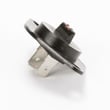
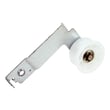
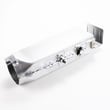
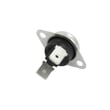
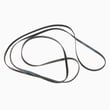
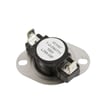
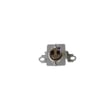
How do I know if my Kenmore dryer thermal fuse is blown?
If your Kenmore dryer model 40289032012 won’t start or it runs but won’t heat, a blown thermal fuse is a top suspect. The sure way to know is to unplug the dryer and test the fuse with a multimeter for continuity; no continuity means the fuse is blown.
Quick symptoms to watch for
- Dryer will not start (no motor run)
- Dryer tumbles but produces no heat (on many designs)
- Cycle stops early or acts “dead” after a few minutes
- Burning smell or very hot cabinet (often tied to restricted venting)
- Repeated overheating issues after long dry times
How we recommend testing the thermal fuse (continuity test)
- Unplug the dryer (or switch off the breaker for electric models).
- Access the fuse location using the disassembly steps in the 40289032012 owner’s manual.
- Remove at least one wire from the fuse terminal.
- Set your multimeter to continuity or lowest ohms.
- Touch probes to the fuse terminals.
- Good fuse: meter beeps or reads near 0 ohms
- Blown fuse: no beep or “OL” (open)
Don’t replace the fuse until you address the cause
A thermal fuse usually blows because the dryer overheats, and the most common reason is poor airflow. The installation instructions stress using rigid or semi-rigid metal duct and keeping the vent run within the allowed length; crushed duct, lint buildup, or a stuck outside damper can overheat the dryer. Use the installation guide venting checklist to correct airflow before running the dryer again.
Airflow checklist (most important first)
- Clean the lint screen and the lint screen housing
- Inspect and clean the entire vent duct to the outside
- Confirm the outside hood damper opens freely
- Replace vinyl or foil duct with rigid or semi-rigid metal duct
- Keep the transition duct as short and straight as possible
Related heat parts you may also check
If the dryer still has no heat after airflow is corrected, these heating circuit parts are commonly involved:
| Part | What it does | Common symptom when failed |
|---|---|---|
| Thermal cut-off thermostat | Opens on overheat | No heat, may trip repeatedly |
| High-limit thermostat | Limits heater temperature | No heat or overheating |
| Heating element | Produces heat (electric) | No heat |
Why it matters
A blown thermal fuse is a safety device; replacing it without fixing venting or overheating can lead to repeat failures and long dry times.
Last updated: February 2026
How do I tell what model my Kenmore dryer is?
Your Kenmore dryer’s model number is printed on the appliance ID label (a sticker or metal plate). For Kenmore model 40289032012, check the label first in the door opening area; if it is not there, check the back panel area.
Where to look for the model number label
We typically see the model/serial label in one of these spots:
- Inside the dryer door opening (around the door frame)
- On the back of the dryer cabinet
- Along the door opening edge near the lint screen housing
- On the inside of the front panel area (visible when the door is open)
For diagrams and the exact label location notes for this unit, use the 40289032012 owner's manual.
How to read the label (and why it matters)
Once you find the label, copy the model number exactly as shown (letters and numbers). That exact model number is what we use to match the correct parts list, wiring, and installation requirements.
What the model number helps you do
- Order the correct replacement parts (belt, heater, thermostats, motor)
- Confirm whether you have a gas or electric configuration
- Use the right installation and venting requirements
- Match troubleshooting steps and error code info to your dryer
Quick checklist before you order parts
Use this checklist so you do not end up with a mismatch:
- Write down the full model number and serial number
- Confirm the fuel type (gas vs. electric) from the label
- Compare your dryer’s control panel layout to the parts diagrams
- Use the installation steps in the 40289032012 installation guide if you are also checking venting and power cord setup
Common label locations at a glance
| Location | What you do | When it’s most likely |
|---|---|---|
| Door opening | Open door and inspect the frame | Most common on many Kenmore dryers |
| Back panel | Look near the upper rear cabinet | Common if not in the door area |
| Lint screen area | Check around the lint screen housing | Some designs place it nearby |
Why it matters
Kenmore uses many different manufacturers and designs across model families, so the exact model number is the fastest way to get the right dryer parts and the right repair instructions the first time.
Last updated: February 2026
What are common problems with Kenmore dryers?
Common problems we see on Kenmore dryers like model 40289032012 are no heat, long dry times, drum not turning, and loud thumping/squealing. Most of these trace back to airflow restrictions (lint or venting), worn drive parts (belt or rollers), or failed heat-safety components (thermal cut-off or thermostat). For model-specific checks and safe access steps, use the 40289032012 owner's manual.
Most common symptoms and likely causes
- Dryer runs but won’t heat: heating circuit issue (heating element, high-limit thermostat, thermal cut-off)
- Takes too long to dry: restricted exhaust duct, crushed vent, clogged lint screen or hood damper
- Drum won’t tumble: broken belt, worn drum support rollers, failed drive motor, belt switch issue
- Loud noise (thump, squeal, rumble): worn drum rollers, damaged belt, blower wheel problems
- Stops mid-cycle or overheats: poor airflow causing safety devices to open
Quick checks we recommend first (fast, high-impact)
- Clean the lint screen and confirm strong airflow at the outside vent hood.
- Inspect venting: use rigid or semi-rigid metal duct; avoid vinyl or foil duct; keep the run as short as possible.
- If you suspect a heat problem, perform the basic heater check described in the 40289032012 installation guide (start a heated cycle and check for heat after about a minute).
Parts that commonly fix these issues on this model
| Symptom | Common part involved | What it affects |
|---|---|---|
| No heat | Thermal cut-off thermostat, high-limit thermostat, heating element | Heater safety and heat output |
| Drum not turning | Belt, roller, drive motor, belt switch | Drum rotation |
| Loud noise | Drum support roller, blower wheel | Smooth tumbling and airflow |
Why it matters
A restricted vent can cause long dry times, overheating, and repeated failure of heat-safety parts. Fixing airflow first often prevents repeat repairs and helps the dryer dry faster with less wear.
Last updated: February 2026
What is an F1 code on a Kenmore dryer?
On a Kenmore dryer, an F1 code typically points to a control problem (often the electronic control board or its wiring). On Kenmore model 40289032012, start by resetting power, then check for loose connections; if the code returns, the control system usually needs service or replacement.
What to do first (quick checks)
- Unplug the dryer (or switch off the breaker) for 2 to 5 minutes, then restore power.
- If the code comes back, stop the cycle and unplug the dryer before inspecting anything.
- Confirm the dryer is on a dedicated, properly grounded outlet and the cord is secured at the terminal block.
- Check that the terminal block cover is installed correctly after any cord work.
- If the dryer was recently installed or moved, re-check venting and power connections.
For model-specific access, wiring, and diagnostic guidance, use the 40289032012 owner's manual.
Common causes of an F1 code
In most Kenmore dryers, an F1 error is triggered when the control detects an internal fault or an abnormal signal.
| Likely cause | What you may notice | Typical fix |
|---|---|---|
| Electronic control board fault | Code appears immediately or mid-cycle | Replace control board (service-level repair) |
| Loose or damaged wire harness | Intermittent code, random beeping | Reseat connectors; repair wiring |
| Power/terminal block issue | Code after install, burning smell, dead display | Correct cord/terminal block connections |
| Moisture/heat stress at console | Code after long runs, warm console | Improve airflow; inspect console wiring |
Why airflow and heat still matter
Even when the code is control-related, poor venting can overheat the dryer and contribute to repeated faults. We recommend rigid or semi-rigid metal ducting, keeping the transition short, and making sure the outside hood damper moves freely. The 40289032012 installation guide covers venting best practices and final checks.
When parts are involved
If the dryer also has heat problems, address airflow first, then test heating components. For example, a failed heater circuit can cause abnormal operation that looks like a control issue.
- Heating circuit parts commonly checked include the heating element, high-limit thermostat, and thermal cut-off.
- If you’re diagnosing a no-heat condition, the samsung dryer heating element DC47-00019A is one of the model’s listed heating parts.
Last updated: February 2026