Owner’s manual
 Error Codes


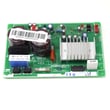
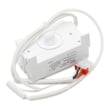
Why is my Samsung bottom freezer not freezing?
If your Samsung RF20HFENBBC bottom freezer is not freezing, the most common causes are an incorrect freezer setting, Cooling Off (demo) mode being enabled, airflow blocked by frost or overpacked food, or a cooling-system failure. Start by confirming the control settings and listening for fan and compressor operation.
Quick checks for RF20HFENBBC controls
Use the freezer controls described in the RF20HFENBBC user manual. On this model, the freezer setpoint can be adjusted and Power Freeze can be turned on to boost freezing.
- Confirm the freezer temperature is set cold enough (typical target is 0°F).
- Turn Power Freeze on for a short-term boost (it runs for a limited time).
- Make sure Ice Off is not being confused with cooling; it only stops ice production.
- Check for Cooling Off mode (store display mode). If enabled, the unit runs but does not cool.
Airflow and frost issues (very common)
Poor airflow can keep the freezer warm even when the refrigerator section seems OK.
- Make sure packages are not blocking vents in the freezer drawer.
- Check for heavy frost on the back wall or inside panels (a sign of a defrost problem).
- Verify the freezer drawer closes fully and seals all the way around.
- Avoid frequent door openings while troubleshooting.
What to listen and feel for
These observations help narrow the problem quickly.
| What you notice | What it often points to | What we do next |
|---|---|---|
| No fan sound in freezer | Evaporator fan issue or ice blockage | Defrost/inspect fan area |
| Compressor runs but freezer warm | Airflow restriction or sealed-system issue | Check frost pattern, vents, coils |
| Compressor clicks on/off | Start device or compressor problem | Test components, consider compressor |
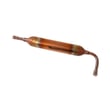
If the compressor is not running properly or is failing, the compatible replacement for this model is the refrigerator compressor MKV172CL2JSJ1.
Why it matters
A freezer that cannot reach 0°F will thaw food and can also cause the refrigerator section to struggle because the cooling system cannot move heat effectively.
Last updated: January 2026
How do I stop my Samsung freezer from frosting up?
To stop frost buildup in the freezer on your Samsung RF20HFENBBC, focus on preventing warm, moist air from leaking in and make sure airflow is not restricted. Start by confirming the doors seal tightly and the refrigerator has proper clearance for ventilation; see the RF20HFENBBC user manual.
Quick fixes that usually work
- Make sure the freezer drawer closes fully every time; remove packages that block the rails.
- Keep food from blocking interior vents; blocked airflow can cause uneven temps and frost.
- Avoid frequent, long door openings; moisture enters and freezes on cold surfaces.
- Let hot foods cool before loading; steam becomes frost.
- Confirm the refrigerator is not pushed tight to the wall; it needs space for air circulation.
Check these common causes (and what to do)
| Likely cause | What you may notice | What we recommend |
|---|---|---|
| Door or drawer not sealing | Frost near the front, ice on bins | Clean the gasket area; remove obstructions; verify alignment |
| High humidity or frequent openings | Frost returns quickly after defrost | Reduce open time; keep items organized for quick access |
| Airflow blocked inside freezer | Some items soft, others icy | Repack so vents are clear; do not overfill |
| Refrigerator not ventilating well | Longer run times, warm cabinet sides | Pull unit forward slightly; keep rear area dust-free |
If frost is heavy (manual defrost reset)
- Move food to a cooler.
- Unplug the refrigerator.
- Leave the freezer drawer open and let ice melt naturally (use towels for water).
- Dry everything completely, then restore power.
Why it matters
Frost buildup acts like insulation on cold surfaces and can reduce cooling efficiency, increase run time, and lead to temperature swings that affect food quality.
Last updated: January 2026
Why is ice forming in the bottom of my Samsung fridge?
Ice at the bottom of your Samsung RF20HFENBBC is almost always caused by water that should drain during defrost but instead leaks into the freezer bottom and refreezes. The most common triggers are warm, humid air leaks at the door seal, blocked airflow, or a restricted/iced-over defrost drain.
Quick checks we recommend first
- Make sure the freezer drawer closes fully and nothing is holding it open.
- Inspect the door gasket for gaps, tears, or areas that are not sealing.
- Confirm vents are not blocked by food packages (poor ventilation can increase frost and meltwater).
- Look for a sheet of ice on the freezer floor or a frozen puddle under the lower bin.
- Verify temperatures are reasonable (very cold settings can worsen icing).
What to do if the defrost drain is iced up
A partially blocked drain can cause defrost water to overflow and freeze at the bottom.
- Unplug the refrigerator.
- Remove the freezer drawer/bin so you can see the bottom panel.
- Melt the ice with a hair dryer on low (keep heat moving; do not overheat plastic).
- Clear the drain opening with warm water (a turkey baster works well).
- Reassemble and monitor for 24 to 48 hours.
For model-specific disassembly and safety notes, follow the steps in the RF20HFENBBC user manual.
Door seal and humidity: how to confirm
Use this simple test to spot air leaks.
| Test | What you do | What it means |
|---|---|---|
| Dollar-bill test | Close the door on a bill and pull | Easy pull = weak seal in that spot |
| Visual check | Look for ripples, tears, or debris | Dirt or damage can prevent sealing |
| Condensation clue | Check for moisture near the gasket | Often indicates humid air intrusion |
When it could be a cooling system issue
If you also notice warm temps, long run times, or poor cooling, we treat that as a separate problem from “ice on the floor.” In that case, a sealed-system or compressor issue is possible; the compatible compressor for this model is the refrigerator compressor MKV172CL2JSJ1.
Why it matters
Ice buildup at the bottom can block the freezer drawer, cause water leaks during defrost, and force the refrigerator to run longer. Fixing the air leak or drain restriction early helps protect food temperatures and reduces energy use.
Last updated: January 2026