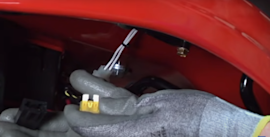
Installation guide
 Owner’s manual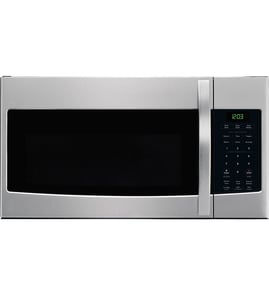




What causes Kenmore's microwave to stop working?
For Kenmore microwave/hood combo model 72180043700, the most common causes of a sudden “dead” microwave (no display, no response) are a blown internal fuse, a failed door interlock switch, or an overheated safety thermostat opening the power circuit.
Quick checks we recommend first
- Confirm the outlet has power (test with a lamp or small appliance).
- Reset the kitchen circuit breaker (or replace a tripped fuse at the panel).
- If it’s on a GFCI circuit, press Reset on the GFCI outlet.
- Make sure the door closes firmly; a misaligned latch can prevent operation.
- Unplug the microwave for 2 minutes, then plug it back in to reset the control.
Model-specific parts that commonly stop power
If the outlet and breaker are good, these parts are frequent culprits on model 72180043700:
| Symptom | Likely cause | Common next step |
|---|---|---|
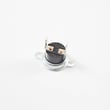
| Completely dead, then returns later | Overheat condition | Test/replace microwave thermostat 6930W1A003E |
| Completely dead after a pop or surge | Open fuse | Inspect/replace microwave fuse 3B74133Q |
| Dead or intermittent when closing door | Door switch not making contact | Test/replace microwave door interlock switch 6600W1K001R |
Safety note before troubleshooting
Microwaves contain high-voltage components that can store a dangerous charge even when unplugged. If you need to access internal electrical parts (fuse, interlock switches, wiring), we recommend using a qualified technician.
Why it matters
A “no power” microwave is often a simple power-interruption issue (breaker, GFCI, fuse), but it can also be a safety circuit doing its job (door interlock or thermostat). Identifying the right cause helps avoid repeat failures and prevents unsafe operation.
Helpful references for this model
- Use the 72180043700 use & care manual for operating notes, safety guidance, and troubleshooting basics.
- If you suspect a blown fuse, follow a proven process like how to replace a microwave fuse.
Last updated: January 2026
Can a Kenmore microwave be repaired?
Yes, a Kenmore microwave can often be repaired, and that includes the Kenmore 72180043700 microwave/hood combo. Many common fixes are straightforward (filters, light, fuse), but any repair involving high voltage components should be handled by a qualified technician for safety.
What we recommend for Kenmore 72180043700
Start with the safest, most common checks and repairs first, using the wiring and safety guidance in the 72180043700 use & care manual.
- Verify the outlet has power and the breaker is not tripped.
- If the unit is dead, a blown fuse is a common cause; see microwave fuse 3B74133Q.
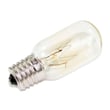
- If the cooktop light is out, replace the bulb; see microwave light bulb 6912W1Z004B.
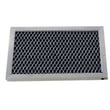
- If the venting performance is poor, clean or replace the grease filter; see microwave grease filter 5230W1A012E.
- If the turntable does not rotate, the motor can be the issue; see microwave turntable motor 6549W1S013K.
DIY-friendly vs. technician-only repairs
Microwaves contain high-voltage parts that can store dangerous energy even when unplugged. We treat these as technician-only.
| Repair type | Examples | DIY? |
|---|---|---|
| Basic maintenance | Grease filter, charcoal filter, cleaning | Yes |
| Simple electrical | Fuse, light bulb, door latch pieces | Often |
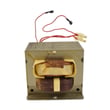
| High voltage system | Magnetron, capacitor, transformer, diode | No |
Why it matters
Choosing the right repair path protects you and prevents repeat failures. For example, replacing a fuse without addressing the underlying short can cause the new fuse to blow again.
Helpful repair resources
Last updated: January 2026
Who makes Kenmore replacement parts?
Kenmore is a brand name, so replacement parts for Kenmore model 72180043700 are typically manufactured by the original equipment manufacturer (OEM) that built that specific microwave/hood combo, then sold as compatible Kenmore parts. For this model, many part numbers and formats align with LG-built components, so you will often see LG-style part IDs on compatible replacements.
How we identify the maker for a Kenmore part
Kenmore appliances are produced by different OEMs across product lines and years; the most reliable way to confirm the correct replacement is to match by model number and the exact part ID.
- Use the full model number 72180043700 when searching parts
- Match the exact part ID (not just a description)
- Cross-references on a part listing can indicate the OEM family
- Manuals can confirm features and configurations that affect part fit
- For installation-related components, follow the venting and mounting requirements in the install instructions
Examples of OEM-style parts you may see for this model
These are compatible replacement parts listed for Kenmore 72180043700 and are typical of the OEM supply chain for this unit:
| Component type | Example part from this model | What it does |
|---|---|---|
| Heating system | Microwave magnetron 2B71165R | Generates microwave energy for heating |
| Venting/hood | Microwave grease filter 5230W1A012E | Captures grease from cooktop airflow |
| Electrical protection | Microwave fuse 3B74133Q | Protects the microwave from overcurrent |
Why it matters
Kenmore branding can make it confusing to shop by “manufacturer.” Matching the exact model number and part ID helps ensure proper fit, safe operation, and correct performance for your microwave/hood combo.
Best next step
Use the 72180043700 use & care manual to confirm your unit’s features (fan, lights, filters, turntable) and then select parts by exact part ID to avoid ordering a similar-looking but incompatible component.
Last updated: January 2026
How to silence Kenmore 721 microwave?
On the Kenmore 72180043700 microwave/hood combo, the official Use & Care information describes what the audible signals mean, but it does not provide a control-panel setting or key sequence to turn beeps off or lower the volume. Use the tone descriptions in the 72180043700 use & care manual to confirm which sounds you are hearing.
What the manual confirms about beeps
The manual identifies these audible signals for the 72180043700:
- A programming tone sounds each time you touch a pad
- Seven tones signal the end of a Kitchen Timer countdown
- Four tones signal the end of a cooking cycle
What you can try safely (without guessing hidden key sequences)
Because this model’s documented keypad functions do not include a sound on/off option, we recommend these practical steps instead:
- Use the Kitchen Timer only when needed (it ends with seven tones)
- Stay nearby near the end of cooking so you can stop the cycle promptly
- Press STOP to cancel a program when you are done (STOP is documented as cancel/clear)
- If the beeping is new or unusually loud, check for a stuck key or a control issue
If the beeping started after a problem
If the microwave is beeping due to an electrical fault (for example, it went dead and came back, or it will not run), a failed internal fuse can be involved. Microwave internal components can retain dangerous voltage even when unplugged, so we recommend professional service for internal diagnosis.
If you are troubleshooting a no-power or intermittent-power symptom, the microwave fuse 3B74133Q is one of the model-matched parts commonly involved.
| Sound you hear | Most likely meaning | Where it’s described |
|---|---|---|
| Single beep per keypress | Normal programming tone | Audible signals section |
| 7 beeps | Kitchen Timer finished | Audible signals section |
| 4 beeps | Cooking cycle finished | Audible signals section |
Why it matters
Using only the documented functions helps you avoid accidental lockouts or unintended settings changes, and it keeps troubleshooting focused on real control or electrical issues when the beeping behavior changes.
Last updated: January 2026
What is the code e12 on a Kenmore microwave?
On the Kenmore 72180043700 microwave/hood combo, the exact meaning of error code E12 cannot be confirmed from the model-specific Use & Care information available for this unit. A safe first step is a power reset; if E12 returns, the issue typically requires sensor or control-circuit diagnosis by a technician.
What we recommend first (safe reset)
- Press STOP/CLEAR to cancel the cycle.
- Turn power OFF at the circuit breaker for 1 minute.
- Restore power and set the clock if prompted.
- Run a short timed heat test (not Sensor Cook) with a cup of water.
- If E12 reappears, stop using the microwave until it’s checked.
Why E12 can be hard to pin down
Kenmore microwave error codes can vary by internal platform and control board version, even within similar model families. For operating and safety guidance specific to this unit, use the 72180043700 use & care manual.
What to check if E12 keeps coming back
If the microwave still heats on timed cooking but E12 appears during Sensor Cook, the problem is often in the sensor feedback path (sensor, wiring, or control). If the unit is dead or resets, check the power path.
- Try timed cooking instead of sensor programs.
- Clean grease buildup around the vent area and ensure airflow is not blocked.
- If the display goes blank or the unit loses power, inspect the fuse.
- If the code appears immediately at start, wiring or the control may be involved.
- Have a technician test components with power safely disconnected.
Parts that may be involved (when symptoms match)
These parts are compatible with model 72180043700 and are commonly checked when troubleshooting related symptoms:
| Symptom you see | Part commonly inspected | Why it’s checked |
|---|---|---|
| Microwave completely dead | Microwave fuse 3B74133Q | Opens if there’s a power surge or internal fault |
| E12 mainly on sensor programs | Microwave humidity sensor 6501W1A013A | Provides feedback used by Sensor Cook features |
Why it matters
Repeated error codes usually mean the control is detecting an abnormal signal. Continuing to run the microwave can lead to inconsistent cooking or unexpected shutdowns.
Last updated: January 2026
Where is the fuse on a Kenmore microwave hood combination?
On Kenmore microwave/hood combo model 72180043700, the fuse you can identify from the model-specific documents is the home electrical supply fuse or circuit breaker feeding the outlet in the cabinet above the microwave. The installation instructions place the power connection there; they do not specify an internal, user-accessible fuse location.
What you can check safely first
Before removing any covers, we recommend these basic checks:
- Confirm the microwave is plugged into the upper-cabinet outlet
- Check the kitchen breaker panel for a tripped breaker
- If your home uses fuses, check the fuse for the microwave circuit
- Test the outlet with a small lamp or meter (power off first if opening the box)
- If the breaker trips again, stop and have the circuit and microwave checked
About an internal microwave fuse
Many over-the-range microwaves also have an internal line fuse, but the provided documentation for 72180043700 does not identify its access location. Accessing internal components can expose you to stored high voltage, even when unplugged.
If you’re replacing an internal fuse as part of a repair, use a model-compatible part such as the microwave fuse 3B74133Q. For general repair steps, see how to replace a microwave fuse.
Quick comparison: “which fuse are we talking about?”
| Fuse/breaker type | Where it is | What it affects |
|---|---|---|
| Home breaker or house fuse | Home electrical panel | Microwave completely dead (no display/lights) |
| Outlet in upper cabinet | Cabinet above microwave | Same symptoms as above if outlet is dead |
| Internal microwave fuse (if equipped) | Inside microwave cabinet | Often dead display; may blow from a short |
Why it matters
A “dead” microwave can be caused by the house circuit, the upper-cabinet outlet, or an internal failure. Checking the supply side first prevents unnecessary disassembly and helps avoid repeat fuse failures.
For model-specific electrical connection details, refer to the 72180043700 installation instructions.
Last updated: January 2026