- Kenmore refrigerator water filters
- Whirlpool refrigerator water filters
- Samsung refrigerator water filters
- GE refrigerator water filters
- LG refrigerator water filters
- Frigidaire refrigerator water filters
- KitchenAid refrigerator water filters
- Maytag refrigerator water filters
- Kenmore Elite refrigerator water filters
- Estate refrigerator water filters
- GE Profile refrigerator water filters
- Amana refrigerator water filters
- Bosch refrigerator water filters
- Dacor refrigerator water filters
- Electrolux refrigerator water filters
Top DIY repair help
View All Repair Categories
Appliances
Lawn & Garden
Power Tools
Home Improvement
Sports & Leisure
Heating & Cooling
Quick Links
How to replace an electronic control board on the back of a refrigerator
less than a minute readMar 19Lyle Weischwill
Repair time and Difficulty
15 minutes or less
Tools Required
- Phillips screwdriver
- Slot screwdriver
- Needle-nose pliers
- Work gloves
- Grounding strap (optional)
This refrigerator DIY repair guide shows how to replace an electronic control board in bottom-freezer, top-freezer and side-by-side refrigerators. The electronic control board is the "brains" of the refrigerator that controls major components such as the compressor and fans. During a refrigerator electronic control board failure, the refrigerator can't cool correctly. It won't cool at all if the control board relay that turns on the compressor fails, which is the most common problem with a refrigerator control board (other failed parts can prevent the control board from running, such as the start device or overload fuse). Another symptom of a refrigerator control board failure is that fans, lights or other components aren't working.
For a reliable diagnosis, have a local refrigerator repair expert test the refrigerator electronic control board. If you need to replace it, use the manufacturer-approved fridge part that fits your model.
This repair procedure works for Kenmore, LG, Samsung, Whirlpool, KitchenAid, Maytag, Amana, Frigidaire, Electrolux, GE, Bosch, JennAir and Daewoo refrigerators that have the electronic control board mounted on the back cabinet panel.
Use our repair guide/video How to replace the electronic control board inside a top-freezer refrigerator if your top-freezer fridge’s control board is in the control box at the top of the refrigerator section.
Instructions
- 1. Disconnect the electrical power
Carefully pull the refrigerator forward and unplug the refrigerator. The refrigerator will be without power for about 30 minutes, which shouldn't affect most refrigerated or frozen foods. However, you may want to move highly perishable food to a cooler. Move the refrigerator so you can easily reach the control board cover on the back of the refrigerator.
Tip: If the water supply line for the ice maker isn’t long enough for you to pull the refrigerator out, shut the valve and disconnect the line.
- 2. Remove the cover on the electronic control board
Locate the control board cover—depending on the model, it could be on the back of the refrigerator, or inside the refrigerator on a side wall or the ceiling.
Using a Phillips screwdriver, remove the screws from the control board cover. Support the cover as you remove the last screw so it doesn’t fall. Remove the cover.
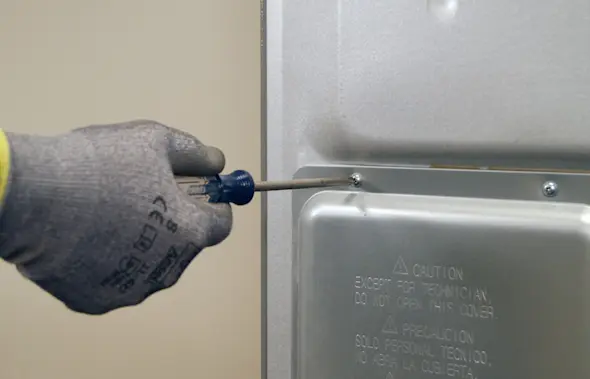
PHOTO: Remove the electronic control board cover screws. 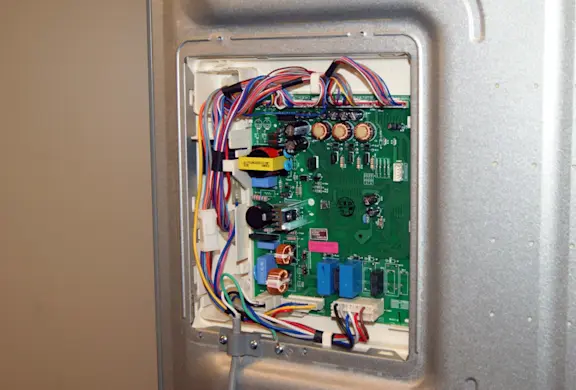
PHOTO: Remove the control board cover.
- 3. Detach the wires
Label the wires or take a digital picture before detaching them so you can reconnect them correctly later.
Depending on the connector type, you might have to pry the connectors off with needle-nose pliers or release a locking tab with a slot screwdriver. Detach all the wires from the electronic control board.
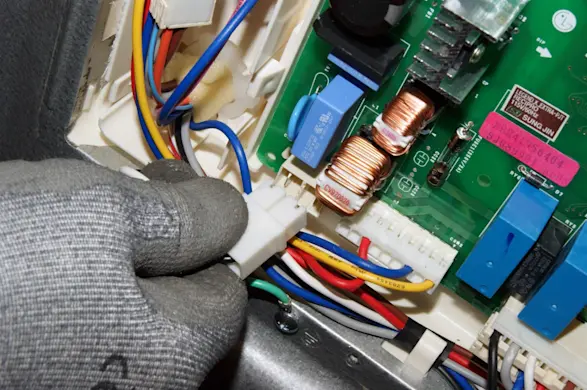
PHOTO: Disconnect the control board wires.
- 4. Remove the electronic control board
Using a slot screwdriver, release the plastic locking tabs that secure the electronic control board and then remove the electronic control board.
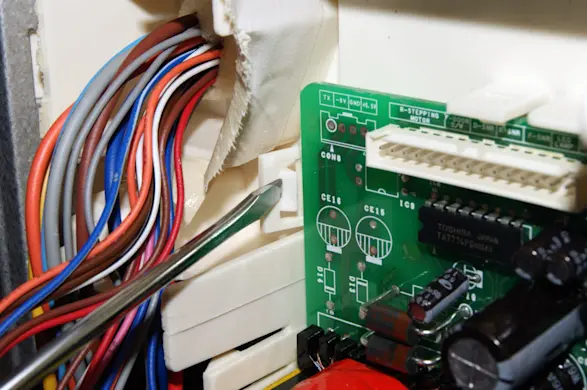
PHOTO: Release the locking tabs. 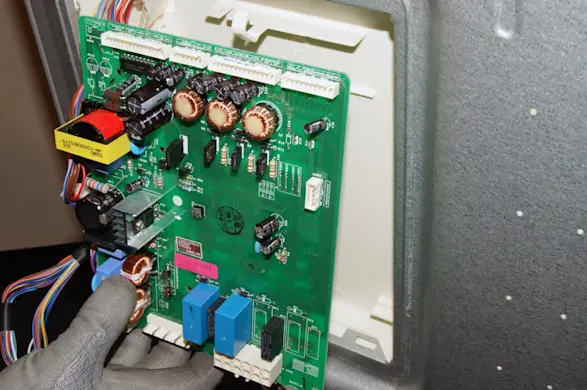
PHOTO: Remove the control board.
- 5. Install the new electronic control board
Insert the new electronic control board and snap it into the locking tabs. Referring to your notes or digital photo, connect the wires to the new control board.
Tip: To dissipate static discharge that can damage to the new control board, touch the metal cabinet or wear a grounding strap.
- 6. Reinstall the cover
Position the cover on the control board compartment and line up the screw holes. Insert the screws and tighten them firmly.
- 7. Restore electrical power and connect water
Plug the power cord into the wall outlet. Reattach the water supply line and turn on the water valve.