Owner’s manual
 Error Codes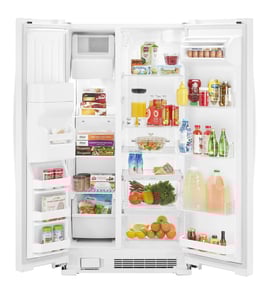


How to read Kenmore model numbers?
Kenmore model numbers are read left to right: the first 3 digits identify the manufacturer, and the remaining digits narrow down the exact product design and version. For your Kenmore side-by-side refrigerator model 10658029800, the 106 prefix is the key identifier to match the correct parts and manual.
Where to find the model number on a refrigerator
We recommend checking these common locations first:
- Inside the fresh food compartment on a side wall
- On the ceiling of the refrigerator compartment near the light
- On the door frame (hinge side) when the door is open
- Behind the toe grille or lower front kickplate area
- On the back of the cabinet near the power cord
For diagrams and model-specific identification details, use the 10658029800 owner's manual.
How the number is structured (what each section means)
Most Kenmore model numbers follow this pattern:
- Prefix (first 3 digits): manufacturer code (most important for parts matching)
- Middle digits: product platform or base design
- Last digits: feature set, color, engineering revision, or production variation
Quick example
| Example model number | What to focus on first | Why it matters |
|---|---|---|
| 10658029800 | 106 | Identifies the manufacturer family used for parts lookup |
| 253.XXXXXXX | 253 | Different manufacturer family; parts are not interchangeable |
Why it matters for parts and troubleshooting
Using the full model number prevents ordering the wrong refrigerator water filter, ice maker, or control parts. Even small suffix changes can affect fit, wiring connectors, and mounting points.
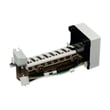
If you are ordering ice system parts for this model, match by model number first, then confirm the part ID, for example the refrigerator ice maker 2198597.
Tips to avoid mix-ups
- Copy the model number exactly, including all digits
- Use the full model number (not just the first 3 digits) when ordering parts
- If a label is hard to read, take a photo and zoom in to confirm characters
- Keep the serial number handy; it helps date the unit for service and compatibility checks
Last updated: February 2026
How to tell if a Kenmore refrigerator compressor is bad?
On Kenmore model 10658029800, a “bad compressor” usually shows up as poor cooling with long run times, unusual clicking or repeated start attempts, or the compressor staying silent when it should be running. First rule out normal operating sounds and basic power or control issues listed in the 10658029800 owner's manual.
Quick checks before blaming the compressor
Many “compressor problems” are actually power, airflow, or control issues.
- Confirm the refrigerator has power and the outlet works (test with a lamp).
- Make sure the temperature controls are turned on and set correctly.
- If it is a new install or was recently unplugged, allow 24 hours to cool fully.
- Listen for normal sounds: buzzing (ice maker fill), pulsating/high-pitched (compressor and fans adjusting).
- Check that doors are closing fully; frequent door openings can make the unit run much longer.
Symptoms that point to a compressor or start problem
These signs are strong indicators the sealed system or compressor start circuit needs attention.
- Fridge and freezer both warm, and the unit runs almost constantly.
- Repeated clicking every few minutes (often a start device overload cycling).
- Compressor is very hot to the touch after trying to run, but cooling does not improve.
- Compressor is not running at all, and you do not hear the typical hum or vibration.
What “normal” vs “not normal” can sound like
| What you hear | Often normal on 10658029800 | When it suggests a problem |
|---|---|---|
| Pulsating or high-pitched sound | Compressor/fans optimizing performance | Cooling is poor and sound is paired with repeated clicking |
| Buzzing | Water valve filling ice maker | Buzzing with no ice production and no water flow |
| Long run times | High-efficiency compressor, warm room, doors opened often | Runs constantly and temperatures never reach setpoint |
Parts that are commonly involved (when cooling is weak)
If diagnosis confirms a compressor or sealed-system issue, replacement is typically a professional repair. For related cooling symptoms, these parts are often checked first:
- Refrigerator compressor W10139462 (compressor itself)
- Refrigerator evaporator fan motor WP2315549 (moves cold air through compartments)
- Refrigerator defrost heater WP2323198 and refrigerator bi-metal thermostat WPW10225581 (defrost system; frost buildup can block airflow)
- Refrigerator temperature control WP2315562 (control input that can affect run behavior)
Why it matters
A compressor that cannot start or cannot pump refrigerant will leave both compartments warm, and the refrigerator may run excessively. Catching the difference between normal high-efficiency run time and true no-cool symptoms prevents unnecessary parts replacement.
Last updated: February 2026
How wide is a Kenmore side by side refrigerator?
For Kenmore side-by-side refrigerators like model 10658029800, the most common overall width is about 36 inches. In the installation requirements for this model, the manual lists a 36-inch minimum cabinet cutout width, which is the key number to use when planning space.
What to use for planning space (model 10658029800)
Use these measurements as your starting point when measuring your kitchen opening:
- Minimum cabinet cutout width: 36 in (91.44 cm)
- Side and top clearance for ventilation: 1/2 in (1.25 cm)
- Clearance next to a fixed wall for door swing: 2 in (5.08 cm) minimum (varies by setup)
- Extra space behind unit: needed if you have an ice maker water line
- If placed against an extended wall: a wider opening can be needed to fully remove crisper pans
For the exact installation notes and clearances, follow the 10658029800 owner's manual.
Quick reference table
| What you are measuring | Typical number to use | What it means |
|---|---|---|
| Cabinet opening (cutout) width | 36 in | Minimum opening needed to fit the refrigerator |
| Refrigerator width | About 36 in | Common overall width for this style |
| Door swing clearance at wall | 2 in minimum | Helps doors open without hitting a fixed wall |
Why it matters
A side-by-side refrigerator can physically fit in a 36-inch opening but still be hard to use if the doors cannot swing fully or if drawers (like crispers) cannot slide out. Planning for door swing and drawer removal prevents installation headaches.
Last updated: February 2026
What are the most common problems with Kenmore refrigerators?
The most common problems we see on Kenmore refrigerators like model 10658029800 are cooling issues, water leaks, ice maker and dispenser troubles, and unusual noises. These typically trace back to airflow restrictions, defrost system failures, water supply problems, or worn door seals; the 10658029800 owner's manual troubleshooting section helps narrow it down fast.
Most common symptoms and what usually causes them
- Not cooling or warm temperatures: dirty condenser coils, evaporator fan not running, defrost failure causing frost buildup
- Water leaking or puddles: clogged defrost drain, loose water line, leaking valve
- Ice maker not making ice: water supply shutoff, frozen fill tube, failed ice maker module
- No water from dispenser: clogged filter, frozen reservoir/line, weak inlet valve
- Buzzing, rattling, or clicking: fan blade hitting ice, condenser fan noise, compressor start components
Quick checks we recommend before replacing parts
- Confirm the unit has power after an outage; check settings and allow 24 hours to stabilize.
- Set temperatures to typical targets: 37°F fresh food and 0°F freezer.
- Clean condenser coils and make sure vents inside are not blocked by food packages.
- Verify the refrigerator is connected to a cold water pipe and the shutoff valve is fully open (not partially).
- Inspect door gaskets for gaps, tears, or areas not sealing.
Parts that commonly solve these problems on model 10658029800
| Symptom | Common suspect part | Example part for this model |
|---|---|---|
| No ice or slow ice | Ice maker assembly | Refrigerator ice maker 2198597 |
| No water or weak flow | Water inlet valve | Refrigerator inlet valve W10408179 |
| Frost buildup, warm fridge | Defrost heater or thermostat | Refrigerator defrost heater WP2323198, refrigerator bi-metal thermostat WPW10225581 |
| Warm temps, noisy freezer | Evaporator fan motor | Refrigerator evaporator fan motor WP2315549 |
Why it matters
Cooling, ice, and water problems often share the same root causes: poor airflow, ice buildup from a defrost issue, or inconsistent water supply. Fixing the underlying cause protects food temperatures, prevents repeat leaks, and reduces strain on the compressor.
Helpful DIY guidance
- Kenmore 106 model refrigerator error codes
- How to prevent water dispenser and ice maker problems
- How to diagnose a faulty refrigerator water inlet valve
Last updated: February 2026
What causes a side-by-side refrigerator to stop cooling?
On Kenmore side-by-side refrigerator model 10658029800, “stopped cooling” is most often caused by a control being set to OFF, a power problem, or airflow being blocked. Next most common are defrost-system failures (ice buildup) or an evaporator fan issue that prevents cold air from circulating.
Quick checks we recommend first
- Confirm the refrigerator is plugged into a grounded 3-prong outlet and the outlet works.
- Check the house fuse or circuit breaker.
- Make sure the Refrigerator Control is not set to OFF (the unit will not cool in OFF).
- If it was just installed or moved, allow 24 hours to cool fully.
- Make sure vents are not blocked by food packages; keep airflow paths open.
- Verify doors are closing fully and not being held open by bins or containers.
Cooling problem causes and what you typically see
| Likely cause | Common symptom | What to do next |
|---|---|---|
| Control set to OFF or too warm | Both sections warm | Reset to mid-settings; wait 24 hours |
| Power issue | No lights, no fan/compressor sound | Restore power; test outlet/breaker |
| Airflow blocked | Some areas warm, others cold | Clear vents; avoid overpacking |
| Defrost system problem | Frost/ice on freezer back wall, weak airflow | Check defrost heater/thermostat |
| Evaporator fan problem | Freezer cold but fridge warm, little air movement | Inspect fan motor/blade |
Parts that commonly fix “not cooling” symptoms
If you find heavy frost buildup or no airflow from the freezer, these model-compatible parts are common suspects:
- Refrigerator defrost heater WP2323198
- Refrigerator bi-metal thermostat WPW10225581
- Refrigerator evaporator fan motor WP2315549
- Refrigerator evaporator fan blade WP2169142
Why it matters
A refrigerator cools by moving cold air from the freezer through vents into the fresh-food section. If power, controls, or airflow are interrupted, temperatures rise quickly and food safety becomes a concern.
Model-specific notes from the manual
- The controls are typically preset to mid-settings; moving colder than recommended will not cool faster.
- The refrigerator will not cool if the Refrigerator Control is set to OFF.
- For setup, spacing, and control guidance, follow the 10658029800 owner's manual.
Last updated: February 2026
What is the cubic foot of my Kenmore refrigerator model 10658029800?
Your Kenmore side-by-side refrigerator model 10658029800 has a total capacity of about 21.9 cubic feet. For the exact capacity listing and any model-specific notes, we recommend confirming it in the 10658029800 owner's manual.
How to interpret “cubic feet” on a refrigerator
Cubic feet is the total interior storage volume (fresh food section plus freezer). It is not the same as usable shelf space because bins, shelves, and the ice maker take up room.
Common capacity breakdown for a 21 to 23 cu. ft. side-by-side:
- Fresh food section is typically the larger share
- Freezer section is typically the smaller share
- Door bins and the ice bucket reduce usable space
- Adding an ice maker can reduce freezer storage
Quick reference: capacity vs. what it means day to day
| Total capacity | Typical household fit | Notes |
|---|---|---|
| 20 to 22 cu. ft. | 2 to 4 people | Good balance of freezer and fridge space |
| 22 to 25 cu. ft. | 3 to 5 people | More room for bulk items and frozen foods |
Why it matters
Knowing the cubic feet helps when you are comparing replacement refrigerators, planning kitchen fit, or deciding whether storage issues are caused by organization versus a cooling problem.
Related parts that can affect usable space
If you are losing usable space due to broken storage components, these model-matched parts are common fixes:
- Refrigerator ice container WP2198573 (cracked or missing bucket reduces freezer organization)
- Refrigerator slide-out glass shelf WPW10141748 (damaged shelf limits safe storage)
- Refrigerator cantilever bin WPW10321304 (broken bin reduces door storage)
Last updated: February 2026
What's the average lifespan of a Kenmore refrigerator?
Most Kenmore refrigerators average 10 to 15 years of service life. For a Kenmore side-by-side like model 10658029800, regular maintenance (cleaning, airflow, and sealing) and timely repairs are what most directly determine whether it reaches the high end of that range.
Typical lifespan ranges (what to expect)
These are practical, real-world averages for household refrigerators:
- 10 to 15 years: typical lifespan for most Kenmore refrigerators
- 15+ years: common when condenser coils stay clean and doors seal tightly
- Shorter lifespan: more likely with poor ventilation, dirty coils, or frequent power interruptions
| Condition | What usually happens | What we recommend |
|---|---|---|
| Coils kept clean | Compressor runs less | Clean coils on a routine schedule |
| Door seals tight | Stable temps, less frost | Inspect and correct gaps |
| Ice/water system maintained | Fewer leaks and clogs | Replace filters and address slow fill early |
Maintenance that extends life the most
We see these steps make the biggest difference on side-by-side refrigerators:
- Vacuum and brush condenser coils and the base grille area
- Keep door gaskets clean; confirm the door closes and seals evenly
- Maintain steady temperatures (about 37°F fresh food, 0°F freezer)
- Replace water filters on schedule; flush the dispenser after changes
- Avoid overpacking; blocked vents cause warm spots and longer run times
- After a power outage, let temperatures stabilize before adjusting controls
For model-specific care and cleaning intervals, use the 10658029800 owner's manual.
Why it matters
A refrigerator usually fails early from heat and overwork: dirty coils, restricted airflow, and leaky door seals force the compressor to run longer. Preventive care reduces run time, helps food stay at safe temperatures, and delays expensive sealed-system repairs.
Last updated: February 2026
Where is the model number on a Kenmore side by side refrigerator?
On Kenmore side-by-side refrigerator model 10658029800, the model number is printed on the appliance identification label. We typically find that label inside the fresh food (refrigerator) compartment, most often on a side wall near the crisper area or along the door frame; confirm the exact label location in the 10658029800 owner's manual.
Common places to check first
- Inside the refrigerator compartment on the left or right side wall
- On the ceiling of the fresh food compartment (near the light housing)
- Along the door frame (hinge side) when the refrigerator door is open
- Behind the crisper drawers (you may need to slide drawers out)
- On the back exterior panel (less common, but worth a quick look)
What you should see on the label
The ID label usually lists both the model number and serial number. Use the model number when ordering parts such as a water inlet valve, ice maker, or door gasket.
| Label item | What it’s used for | Example format |
|---|---|---|
| Model number | Matching parts to your exact refrigerator | 10658029800 |
| Serial number | Manufacturing details and service identification | Letters and numbers |
Why it matters
Kenmore 106 model refrigerators can look similar across multiple revisions. Using the exact model number helps us match the correct replacement parts and avoid fit or wiring differences (especially for ice maker and water system components).
Last updated: February 2026