Owner’s manual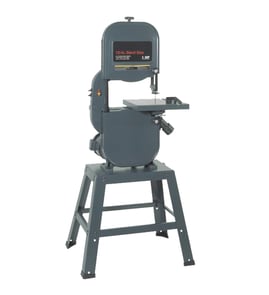


How do I know what size my bandsaw blade is?
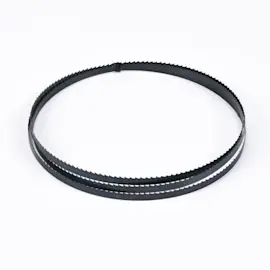
For your Craftsman 119224000 band saw, the most reliable way to confirm blade size is to check the blade specifications listed in the 119224000 owner's manual. If the blade is missing or the markings are worn off, you can still identify the correct blade by measuring length, width, and tooth pitch (TPI).
What to measure on a band saw blade
Measure these three items; they determine fit and cutting performance:
- Blade length: total loop length (must match your saw’s wheel spacing)
- Blade width: from tooth tip to the back edge (affects curve cutting and stability)
- TPI (teeth per inch): tooth count per inch (affects speed and cut finish)
How to measure blade length (two practical methods)
If you have the blade:
- Unplug the saw.
- Mark one tooth with a marker.
- Roll the blade along a tape measure until the mark returns.
If you do not have the blade:
- Unplug the saw and open the wheel doors.
- Wrap a non-stretch string around both wheels along the blade path.
- Mark and measure the string length.
Where to find width and TPI
Most blades have the width and TPI printed or stamped on the blade. If not, use these checks:
- Measure width with a ruler or caliper across the blade (tooth tip to back).
- Count teeth across 1 inch to estimate TPI.
- Match blade choice to the cut (curves, straight ripping, thick stock).
Quick blade selection guide
| Task | Typical blade width | Typical TPI |
|---|---|---|
| Tight curves | 1/8 to 1/4 inch | 10 to 18 |
| General woodworking | 1/4 to 3/8 inch | 6 to 10 |
| Straight cuts, resawing | 1/2 inch (if your saw supports it) | 3 to 6 |
Why it matters
Using the correct blade length keeps tensioning and tracking adjustments in range, and choosing the right width and TPI helps your Craftsman band saw cut faster, straighter, and with less burning or ragged edges.
If you’re also troubleshooting performance, our band saw common questions article helps connect blade size and setup to symptoms.
Last updated: February 2026
What are the two types of bandsaws?
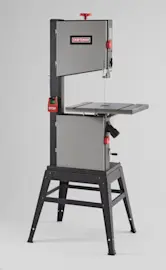
The two main types of band saws are vertical band saws and horizontal band saws. Your Craftsman 119224000 is a vertical band saw style (the blade runs vertically through a table), which is designed for straight cuts, curves, and bevel cuts when the table is tilted; see the Craftsman 119224000 owner’s manual.
Vertical vs. horizontal band saws (quick comparison)
| Feature | Vertical band saw | Horizontal band saw |
|---|---|---|
| Blade orientation | Vertical | Horizontal |
| Typical use | Woodworking, curves, resawing, general shop cutting | Metal cutting, stock cut-off, repetitive straight cuts |
| Work handling | You guide the workpiece on a table | The saw head feeds through the material |
| Common setup items | Rip fence, guide rail, blade guides, tilting table | Vise/clamp, coolant (often), downfeed control |
How to tell which type you have
- Table with a blade slot: vertical band saw (like model 119224000).
- Built-in vise or clamp holding the material: horizontal band saw.
- You push the workpiece into the blade: vertical.
- The saw head lowers into the material: horizontal.
Why it matters
Choosing the right type affects cut quality and safety. A vertical band saw like the Craftsman 119224000 is built for controlled feeding on a table and can do curves and bevels; the manual also notes safe feeding practices and using the rip fence correctly when the table is tilted.
Helpful related DIY topics
Last updated: February 2026
What is the 3-tooth rule for bandsaws?
The 3-tooth rule means you choose a band saw blade so at least three teeth are in the cut at all times. On the Craftsman 119224000 band saw, this helps prevent snagging, tooth stripping, and rough cuts by matching blade TPI to the material thickness (as covered in the 119224000 owner's manual).
How to use the 3-tooth rule (quick method)
- Measure the material thickness (the direction the blade teeth travel through).
- Pick a blade TPI so that thickness spans 3 or more teeth.
- If you are cutting curves, keep the rule but go finer tooth for control.
Practical tips we use in the shop
- Thin stock needs higher TPI so the teeth do not “hook” and chatter.
- Thick stock needs lower TPI so gullets can clear sawdust and the blade does not bog down.
- Feed at a moderate speed; forcing the cut overheats the blade and worsens drift.
- Keep the blade sharp; a dull blade makes slow cutting and ragged edges more likely.
- Set blade tension and tracking correctly before blaming the blade choice.
Simple TPI selection table (rule-of-thumb)
| Material thickness | Typical blade choice | Why it works |
|---|---|---|
| 1/8 to 1/4 in. | 14 to 24 TPI | Keeps 3+ teeth engaged on thin stock |
| 1/4 to 1 in. | 6 to 10 TPI | Balanced speed and cut quality |
| Over 1 in. | 3 to 6 TPI | Better chip clearance in thick cuts |
Why it matters on the Craftsman 119224000
Your manual emphasizes selecting the right blade for the job, feeding the workpiece steadily, and keeping hands safely positioned. Following the 3-tooth rule supports those goals by improving stability, reducing blade bounce, and helping the saw cut straighter with less effort.
Related DIY help
- If the saw feels like it is bogging down, see band saw cutting slowly.
- If the cut wanders, see band saw not cutting straight.
Last updated: February 2026
What length blade for Craftsman 12 bandsaw?
For the Craftsman 12-inch band saw model 119224000, the correct blade length is the one specified in the Craftsman 119224000 owner's manual. Use that manual spec when buying blades so the blade tracks correctly on the bandwheels and the tension knob indicator stays in a usable range.
How to confirm you have the right blade length
We recommend verifying blade length using the model-specific spec, then matching blade width and tooth count (TPI) to your material.
- Check the blade length listed in the Craftsman 119224000 owner's manual.
- Match blade width to the type of cut (narrower for tight curves, wider for straighter cuts).
- Choose TPI based on material thickness (more TPI for thinner stock and smoother cuts).
- Avoid forcing a “close” length; an incorrect length can cause poor tracking and frequent blade derailment.
- After installing, set blade tension and guide bearings per the manual before cutting.
Typical blade selection guide (width and TPI)
These are common band saw blade choices for a 12-inch woodworking band saw like the Craftsman 119224000.
| What you’re cutting | Common blade width | Common TPI range | What you’ll notice |
|---|---|---|---|
| General wood cutting | 1/4 in. to 3/8 in. | 4 to 6 TPI | Faster cuts, good chip clearing |
| Curves and scroll-style work | 1/8 in. to 1/4 in. | 6 to 10 TPI | Tighter turning radius |
| Thin stock, smoother finish | 1/4 in. to 3/8 in. | 10 to 14 TPI | Less tear-out, slower feed |
Why it matters
Blade length controls how the blade fits the wheels and how the tensioning system works. If the blade is too long or too short, you can end up with blade slip-off, wandering cuts, or premature blade wear even if the motor and belt are fine.
Related DIY help
If the saw is cutting poorly after you install a new blade, these guides help you dial it in:
Last updated: February 2026