Owner’s manual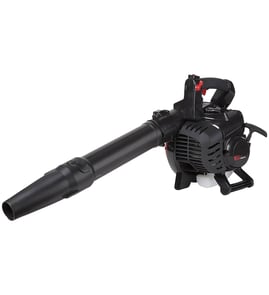
Why are gas-powered leaf blowers bad?
Gas-powered leaf blowers can be “bad” mainly because they create exhaust fumes, can kick up dust and debris, and are often loud enough to disturb neighbors. With the Craftsman 358794961, safe operation and smart technique reduce these downsides significantly; our owner's manual covers the key safety rules.
The main downsides people mean
- Exhaust exposure: Running a gas engine creates fumes; using it in unventilated areas can allow carbon monoxide to build up.
- Noise: Gas blowers can be disruptive; many areas limit operating hours.
- Dust and flying debris: The air stream can throw rocks, sticks, and dirt, which can injure people or damage property.
- Fire risk during fueling: Gasoline is highly flammable; spills and ignition sources are a real hazard.
- Clogging and mess in vacuum mode: Forcing the unit into piles can clog tubes and reduce airflow.
What we recommend for safer, less annoying use
- Operate outdoors only; avoid enclosed or poorly ventilated areas.
- Keep bystanders, children, and pets at least 30 feet away.
- Use the lowest throttle that still gets the job done.
- Lightly dampen dusty surfaces (when water is available) to reduce dust clouds.
- Blow debris away from windows, cars, glass, and solid objects to prevent ricochet.
Quick “problem to fix” guide
| Concern | What to do | Why it helps |
|---|---|---|
| Fumes | Never run in unventilated areas | Reduces carbon monoxide risk |
| Noise complaints | Use reasonable hours (often 9 a.m. to 5 p.m.) | Minimizes disturbance |
| Debris injuries | Wear eye protection; clear rocks/wire first | Prevents ricochet injuries |
| Dust | Dampen surfaces; use nozzle close to ground | Cuts airborne dust |
Why it matters
Most complaints about gas leaf blowers come down to air quality, noise, and safety. Using correct operating position, controlling throttle, and keeping the work area clear makes the blower more effective and reduces risk.
Last updated: February 2026
Are gas leaf blowers being phased out?
Yes. Gas leaf blowers are being phased out in many areas through local noise and emissions rules, and some places restrict when you can run them. Your Craftsman 358794961 can still be used where allowed; always follow local ordinances and the operating guidance in the owner's manual.
What “phased out” usually means
Most phase-outs are not a nationwide ban; they are city, county, or state rules that typically focus on one or more of these:
- Bans on new sales of certain gas-powered outdoor equipment
- Restrictions on commercial landscaping use first, then residential use later
- Noise limits (decibel caps) and hours-of-use rules
- Emissions-focused rules that encourage switching to battery-electric tools
What your 358794961 manual already recommends (and why it matters)
Your manual emphasizes operating at reasonable hours and using the lowest throttle that still gets the job done. That guidance helps reduce complaints and can help you stay compliant in areas with stricter noise enforcement.
- Operate only at reasonable hours (many ordinances mirror daytime windows)
- Use the lowest effective throttle to reduce noise
- Keep bystanders away; debris can be thrown at high speed
- Never run without the proper tubes or vacuum bag attached
Quick compliance checklist before you run it
Use this short checklist each season, especially if you moved or your city updated rules:
- Check your city or HOA rules for leaf blower restrictions and allowed hours
- Confirm whether rules differ for homeowners vs. landscaping crews
- Inspect for exhaust leaks and keep the muffler area intact
- Use fresh, properly mixed fuel (2-cycle mix) to reduce smoke and hard starting
- Keep the air intake clear so the engine does not run hotter and louder
Common restrictions at a glance
| Rule type | What you may see | What to do with a gas blower |
|---|---|---|
| Hours-of-use | Limited daytime windows | Run only during allowed hours |
| Noise limit | Decibel cap or “nuisance” standard | Use low throttle, avoid hard surfaces |
| Sales restriction | No new sales after a date | Existing units may still be allowed |
| Use restriction | Commercial use restricted first | Verify rules if you hire a service |
If you need parts to keep it running cleanly
A poorly running 2-cycle engine can smoke more, surge, or get louder. If you are troubleshooting fuel delivery issues, common maintenance parts include the poulan lawn & garden equipment fuel line, small 530069247 and the Craftsman lawn & garden equipment engine fuel filter 530095646.
Last updated: February 2026
What company makes Craftsman leaf blowers?
Craftsman leaf blowers are sold under the Craftsman brand, which is owned by Stanley Black & Decker. The actual manufacturer can vary by model and production run, so the most reliable way to identify the maker for your specific unit is to check the identification information and parts list in the owner's manual.
How to identify the maker for model 358794961
Use these quick checks to match your blower/vacuum to the correct parts and service information:
- Confirm the model number on the data label matches 358794961
- Check the manual parts list and diagrams for brand family names used on components
- Match common service parts (fuel line, fuel filter, carburetor) to the parts list for your model
- If the unit has been repaired before, verify that installed parts match the correct part IDs
- Use the model number when ordering to avoid look-alike parts that do not fit
Parts that commonly indicate the correct build family
On small 2-cycle blowers, the fuel system and carburetion parts are often the easiest way to confirm you are sourcing the right components.
| System | Common wear item | Example part for this model |
|---|---|---|
| Fuel delivery | Fuel line | Poulan lawn & garden equipment fuel line, small 530069247 |
| Fuel filtration | In-tank fuel filter | Craftsman lawn & garden equipment engine fuel filter 530095646 |
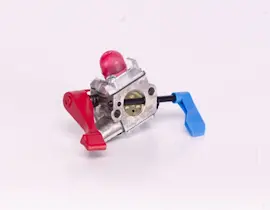
| Carburetion | Carburetor assembly | Carburetor 530071775 |
Why it matters
Craftsman branding is consistent, but the underlying manufacturer can differ across years. Using the 358794961 model-specific parts list helps ensure correct fit, correct fuel routing, and reliable starting and running.
Last updated: February 2026
What is the life expectancy of a gas leaf blower?
A gas leaf blower typically lasts about 10 years with normal homeowner use and consistent maintenance. For your Craftsman model 358794961, following the tune-up and care schedule in the owner's manual is the most reliable way to reach (and often exceed) that lifespan.
What affects how long it lasts
A blower/vacuum like the Craftsman 358794961 usually wears out early for a few predictable reasons:
- Running with a dirty air filter (accelerates engine wear)
- Old fuel or incorrect fuel mix (causes hard starting and carburetor issues)
- Clogged fuel filter or cracked fuel lines (lean running, stalling)
- Loose fasteners and vibration damage over time
- Overheating from debris buildup around the engine and cooling areas
Maintenance schedule that supports a 10-year lifespan
Your manual calls out routine checks and yearly replacements that directly impact engine life.
- Before each use: check for loose fasteners and damaged or worn parts
- After each use: inspect and clean the unit
- Every 5 hours: clean the air filter
- Yearly: replace the spark plug and replace the fuel filter
- Yearly: check muffler mounting screws
Common “life-extending” parts for fuel delivery
If your blower starts, then dies, surges, or only runs on choke, fuel system wear is a top suspect.
| Symptom | Most common cause | Part to consider (if applicable) |
|---|---|---|
| Starts then stalls | Restricted fuel flow | Engine fuel filter 530095646 |
| Fuel smell, wet lines | Cracked or loose fuel line | Fuel line, small 530069247 or fuel line, large 530069216 |
Why it matters
A two-cycle engine can run for many seasons, but it depends on clean air, clean fuel, and tight hardware. Staying on the maintenance intervals helps prevent expensive failures like carburetor damage, air leaks, and overheating.
Last updated: February 2026
What is the most reliable gas leaf blower?
For reliability, we recommend choosing a proven, serviceable gas blower from a major brand with strong parts availability and straightforward maintenance. If you already own the Craftsman 358794961, keeping it tuned with fresh 40:1 fuel mix and routine fuel-system upkeep is the most reliable path day to day (see the owner's manual).
What “reliable” means for a gas leaf blower
A reliable gas blower starts easily, holds a steady idle, and keeps full power without stalling. In practice, reliability comes from a mix of build quality and how well the fuel and air systems are maintained.
Key reliability factors we look for:
- Easy starting and consistent idle (no surging)
- Strong parts support (fuel lines, carburetor, starter parts)
- Simple maintenance access (air cleaner, spark plug, fuel filter)
- Good vibration control and solid housing fit
- Correct fuel mix use (2-cycle engines are sensitive to fuel quality)
Models that are commonly rated as dependable
Across gas blowers, these types are commonly viewed as dependable choices when maintained properly:
| Category | What to look for | Why it helps reliability |
|---|---|---|
| Handheld 2-cycle | Simple carburetor, easy air filter access | Fewer issues from clogged fuel/air paths |
| Backpack 2-cycle | Commercial-duty build, strong harness | Better cooling and durability for long runs |
| Blower/vac combo | Solid impeller and tight tube seals | Less clogging and less vibration damage |
Keeping your Craftsman 358794961 reliable (most important)
Your Craftsman blower/vac is designed to run on unleaded gasoline mixed 40:1 with synthetic 2-cycle air-cooled engine oil. That fuel practice is the single biggest reliability driver.
Maintenance steps that prevent most “won’t start” complaints:
- Mix fuel at 40:1 (3.2 oz oil per 1 gallon gas) and shake to blend
- Replace cracked or soft fuel lines (use poulan lawn & garden equipment fuel line, small 530069247 and/or ayp lawn & garden equipment fuel line, large 530069216 when the sizes match your routing)
- Replace a restricted in-tank filter (use Craftsman lawn & garden equipment engine fuel filter 530095646)
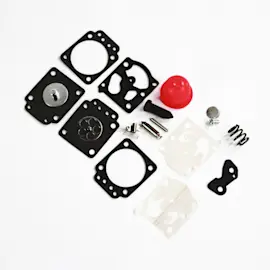
- If it still runs poorly after fuel-system service, consider a carburetor refresh (use carburetor 530071775)
Why it matters
Most “unreliable” gas blowers are actually suffering from old fuel, incorrect mix ratio, or air leaks in the fuel line. Fixing those basics restores starting, power, and engine life, especially on 2-cycle blower/vac units.
Last updated: February 2026