Owner’s manual



How to find part number for Samsung dryer?
For your Samsung dryer model DV45K7600EW, we find the correct part number by matching the dryer’s model number (and sometimes the serial number) to the parts list. On most Samsung front-load dryers, the model/serial tag is on the front frame behind the door; a backup tag is often on the rear panel.
Where to find the model and serial tag
Check these common locations first:
- Open the dryer door and look on the front frame (door opening area)
- Look along the inside edge of the door opening (left or right side)
- Check the rear panel for a second label
- If the label is worn, use a flashlight and take a photo to zoom in
How to use the model number to get the right part number
Once you have the model number, use it to identify the exact replacement part for DV45K7600EW.
- Confirm the model number reads DV45K7600EW (letters and numbers must match)
- Use the parts diagram/list in the DV45K7600EW manual
- Match the failed part by location and description (for example: drum support roller, belt, thermistor)
- Verify the part number before ordering, especially for electrical parts
Example parts you might match by symptom
| Symptom | Common part to check | Example part number (for this model page) |
|---|---|---|
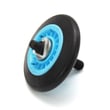
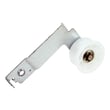
| Thumping or squealing | Drum support roller | DC97-16782A |
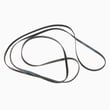
| Drum not turning | Drum belt | 6602-001655 |
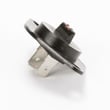
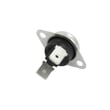
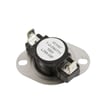
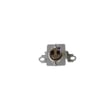
| No heat or overheating | Thermal cut-off thermostat | DC47-00016A |
Why it matters
Samsung dryers can have similar-looking parts across different model variations. Using the exact model number (DV45K7600EW) helps us match the correct drum, heating, and control components so the repair fits and performs correctly.
Last updated: February 2026
What is the average lifespan of a Samsung dryer?
Samsung dryers (including model DV45K7600EW) typically last 10 to 15 years with normal household use. Consistent airflow maintenance and avoiding chronic overheating push lifespan toward the high end; neglected venting and repeated thermal shutdowns shorten it. See the DV45K7600EW manual for model-specific care and cleaning guidance.
What most affects dryer lifespan
- Vent restriction (crushed duct, long run, clogged hood) causing high heat and long dry times
- Lint buildup in the lint filter area and blower housing
- Overloading that strains the drum belt, rollers, and motor
- Heat stress from frequent back-to-back cycles on high heat
- Wear parts aging out (belt, rollers, thermostats, heating components)
Typical lifespan by usage pattern
| Usage pattern | Typical lifespan | What usually fails first |
|---|---|---|
| Light (1 to 3 loads/week) | 12 to 15 years | Belt, rollers, door switch |
| Average (4 to 7 loads/week) | 10 to 13 years | Rollers, belt, heater/thermostats |
| Heavy (8+ loads/week) | 7 to 10 years | Motor, heater, thermal safety parts |
Maintenance that adds years (and saves energy)
- Clean the lint screen every load; wash and dry it monthly if residue builds up.
- Check airflow: strong exhaust outside; flap opens fully during a cycle.
- Keep the vent run short and smooth; avoid plastic or foil flex duct.
- Do not overload; clothes should tumble freely.
- If drying slows down, follow a step-by-step guide like dryer takes a long time to dry.
Why it matters
A dryer that runs hot or runs too long wears out high-heat components (like thermostats and thermal cut-offs) and can also strain mechanical parts such as the drum belt and support rollers. Good airflow is the single biggest factor in keeping a Samsung dryer reliable for the full 10 to 15 years.
Last updated: February 2026
Is it worth replacing a heating element in a Samsung dryer?
Yes; for Samsung model DV45K7600EW, replacing the heating element is usually worth it when the dryer tumbles normally but will not heat, because the part cost is typically far less than replacing the entire dryer. We recommend confirming the failure first, since a blown thermal fuse or thermostat can mimic a bad element (see the DV45K7600EW manual).
When replacement makes sense
Replacing the heater is a strong choice when the rest of the dryer is in good shape and the problem is isolated to the heat circuit.
- The drum turns and airflow feels normal, but clothes stay cold or damp
- No burning smell, no repeated overheating, and the venting is clear
- The dryer is not showing multiple recurring problems (noise, shutting off, UI issues)
- You can test components with a multimeter (continuity/ohms)
- You plan to address the root cause (often restricted venting) so the new part lasts
What to check before you buy parts
On DV45K7600EW, “no heat” is commonly caused by a safety device opening due to overheating or poor airflow.
| Symptom | More likely cause | Common related part to test |
|---|---|---|
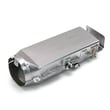
| Runs but never heats | Open heater or open safety device | Samsung dryer heating element assembly DC93-00154A or dryer thermal cut-off fuse, 320-degree f DC47-00015A |
| Heats briefly then stops | Overheating, cycling issue, airflow restriction | Dryer high-limit thermostat DC47-00018A |
| Long dry times, weak airflow | Vent restriction or blower issue | Lint screen, ducting, blower wheel |
Cost and effort: repair vs replace
Typical decision points we use:
- DIY repair: usually the best value if you already have basic tools
- Service call: can exceed the value of an older dryer if multiple parts are failing
- Replace the dryer: makes sense when the unit has repeated breakdowns or major mechanical wear
Why it matters
A heating element often fails because the dryer overheated from restricted airflow. If you replace the heater but do not clean the lint path and vent, the new element and thermal fuses can fail again.
Last updated: February 2026