Owner’s manual



Can I use .095 trimmer line in a .080 trimmer?
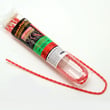
Yes, you can use .095-inch trimmer line in a trimmer that normally runs .080 only when the cutting head (spool and eyelets) is designed for .095. For Craftsman model 316711190, confirm the approved line diameter for your exact cutting head in the 316711190 manual before loading thicker line.
A thicker line can bind in the spool channels or eyelets and overload the driveline.
- Line jams or will not feed smoothly
- More vibration from uneven winding
- Lower RPM and reduced trimming speed
- Extra heat and wear at the clutch and drive shaft
- Increased fuel use
Use these checks before buying a .095 spool or bulk line:
- Look up the specified line diameter for the cutting head in the 316711190 manual
- Inspect the eyelets; .095 must slide freely without forcing
- Check the spool channels; the line should lay flat without stacking
- Wind the line evenly and in the correct direction to prevent binding
- Test at full throttle; if it bogs down, switch back to .080
| Trimming job | Best choice | What you gain |
|---|---|---|
| Routine grass and edging | .080 | Faster spin, smoother feed |
| Heavier weeds (if head allows) | .095 | More durability, less breakage |
| Frequent line jams | .080 | Better feeding reliability |
Matching line diameter to the cutting head prevents constant feed problems and reduces wear on the clutch and drive components. Using the correct size also keeps cutting performance consistent.
Last updated: February 2026
How to replace line on Craftsman gas trimmer?
To replace the cutting line on your Craftsman gas line trimmer model 316711190, you typically remove the cutting head cover, load new trimmer line into the spool (or head channels), then reinstall the cover and test bump-feed. For the exact head style and routing, follow the steps in the 316711190 owner's manual.
- Shut the engine off and let the muffler cool completely.
- Disconnect the spark plug wire to prevent accidental starting.
- Work on a flat surface so the spool spring and parts do not pop out and get lost.
- Wear gloves and eye protection; trimmer line ends can be sharp.
- Remove the cutting head cover: Press the side tabs or remove the retaining fasteners (varies by head).
- Remove the spool: Note how the spring sits under the spool so you can reinstall it the same way.
- Cut new line: Most gas trimmers use 0.080 in to 0.095 in line; use the size specified in the 316711190 owner's manual.
- Load the line:
- If your head uses two channels, feed one line end into each channel so the lines stay separated.
- If your head uses a spool, wind in the direction of the arrow on the spool and keep tension so it does not overlap.
- Reassemble: Reinstall the spool, spring, and cover; pull the line ends through the eyelets.
- Test: Start the trimmer and bump the head lightly to confirm smooth feed.
- Winding the line in the wrong direction
- Overfilling the spool (line binds and will not advance)
- Crossing the two lines inside the head (causes jams)
- Using brittle, old line (snaps and feeds poorly)
If the cover is cracked or the tabs will not latch, replacing the cover restores proper tension and bump-feed.
| Symptom | Most likely issue | What to check/replace |
|---|---|---|
| Cover will not latch | Broken cover tabs | Line trimmer cutting head cover 753-06765 |
| Line will not advance | Line jam or wrong size | Correct line diameter; rewind neatly |
| Line breaks constantly | Line too thin or old | Use correct diameter; replace line |
Correctly loaded line reduces vibration, improves cutting performance, and prevents premature wear on the cutting head, drive shaft, and clutch.
Last updated: February 2026
What is the difference between a 2.4 and 2.7 trimmer line?
A 2.7 mm trimmer line is thicker than a 2.4 mm line, so it lasts longer and hits harder in heavy weeds; a 2.4 mm line is lighter, spins easier, and is better for routine edging and trimming on your Craftsman 316711190 gas line trimmer. For the exact line size and head limits, use the 316711190 owner's manual.
| Line size | Best for | What you’ll notice | Trade-offs |
|---|---|---|---|
| 2.4 mm | Edging, grass, light weeds | Faster spool-up, smoother cutting | Wears faster in thick growth |
| 2.7 mm | Dense weeds, tougher trimming | More durability, better “bite” | More load on the engine, can reduce runtime |
- Use 2.4 mm for weekly maintenance, sidewalks, fence lines, and around flowerbeds.
- Use 2.7 mm when you regularly cut tall grass, thick weeds, or you break line often.
- If the trimmer bogs down with 2.7 mm, step back to 2.4 mm for better RPM.
- Match the line to your cutting head’s rating; forcing oversized line can cause feed problems.
- Keep line fresh; old, dry line gets brittle and snaps more easily.
- Cutting head capacity: Some heads only accept up to a certain diameter; confirm in the 316711190 owner's manual.
- Engine load: Thicker line increases drag; that can make a small engine feel underpowered in continuous heavy cutting.
- Line shape: Round line is smoother and quieter; twisted or serrated styles can cut more aggressively but may wear faster.
Choosing the right diameter helps your Craftsman 316711190 cut cleanly without excessive vibration, poor line feed, or engine bogging. The right line also reduces wear on the cutting head cover and drive components.
Last updated: February 2026
What type of oil and gas for Craftsman 2 cycle 25cc 17 trimmer?
For the Craftsman 316711190 2-cycle gas line trimmer, we use fresh unleaded gasoline mixed with 2-stroke (2-cycle) engine oil at a 40:1 ratio (that is 3.2 oz of oil per 1 gallon of gas). Mix in an approved fuel can before filling the tank.
- Use fresh, regular unleaded gasoline (avoid old fuel that has been sitting for weeks).
- Use 2-stroke air-cooled engine oil labeled for 2-cycle outdoor power equipment.
- Mix at 40:1 every time; do not guess.
- Shake the fuel can to blend the mix before each refuel.
- Store only small amounts of mixed fuel; make a new batch when performance drops.
| Gasoline amount | Oil needed (40:1) |
|---|---|
| 1 gallon | 3.2 oz |
| 1/2 gallon | 1.6 oz |
| 1 quart | 0.8 oz |
| 1 liter | 25 ml |
- Add about half the gasoline to a fuel can.
- Add the measured 2-cycle oil.
- Add the remaining gasoline.
- Cap and shake well.
- Fill the trimmer outdoors with the engine off; wipe up spills.
The correct 40:1 fuel mix keeps the 25cc engine properly lubricated. Too little oil can score the cylinder and piston; too much oil can foul the spark plug, smoke heavily, and reduce power.
For model-specific fuel notes and cautions (including storage guidance), follow the 316711190 owner’s manual.
Last updated: February 2026
Why does my Craftsman trimmer die when I give gas?
When your Craftsman gas line trimmer model 316711190 dies as you squeeze the throttle, the engine is usually running too rich or starving for air or fuel under load. The most common fixes are cleaning or replacing the air filter, refreshing fuel, and checking the fuel system for restrictions; use the 316711190 owner’s manual for model-specific tune-up and adjustment guidance.
- Replace a dirty air filter; a clogged filter can make the engine run rich and stall (a common cause on 2-cycle trimmers).
- Drain old fuel and refill with fresh, properly mixed 2-cycle fuel.
- Inspect the fuel cap vent; a plugged vent can create vacuum in the tank and starve the carburetor.
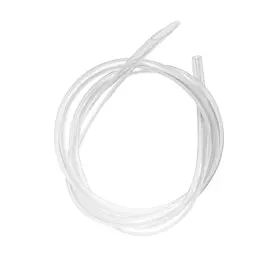
- Check the fuel lines for cracks, kinks, or soft spots.
- Verify the spark arrestor screen (muffler) is not carbon-plugged.
If basic cleaning does not help, these parts are frequent culprits when a trimmer stalls on acceleration:
| Symptom when throttling | Most likely area | What to do next |
|---|---|---|
| Bogging then stall | Air intake restriction | Replace the mtd line trimmer air filter 753-06417 |
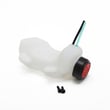
| Starts, idles, then dies on throttle | Fuel delivery restriction | Inspect tank, lines, and consider the mtd line trimmer fuel tank assembly 753-06183 |
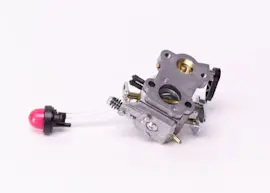
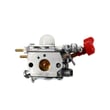
| Needs choke to keep running | Carburetor metering issue or air leak | Check mounting gasket, then consider the mtd line trimmer carburetor 753-06288 |
A trimmer that stalls on throttle is telling you the air-fuel mixture is wrong under load. Fixing the restriction or leak early prevents hard starting, plug fouling, and poor cutting power.
- Let the engine cool before servicing around the muffler.
- Keep fuel away from ignition sources.
- After any fuel-system work, check for leaks before starting.
Last updated: February 2026
Why won't my gas weedeater start?
If your Craftsman gas line trimmer model 316711190 will not start, the problem is almost always fuel delivery (stale fuel, restricted carburetor, air leak) or ignition (fouled plug, weak spark). We fix most no-starts by resetting the fuel mix, then checking air, spark, and the carburetor.
- Drain old fuel and refill with fresh, correctly mixed 2-cycle fuel; use the ratio listed in the 316711190 manual.
- Press the primer bulb several times; you should see fuel moving through the lines.
- Use full choke for a cold start; move to run as soon as the engine pops.
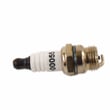
- Remove the spark plug; if it is wet or carbon-fouled, clean or replace it and verify the gap.
- Make sure the stop switch is in RUN and the throttle trigger moves freely.
Stale fuel can varnish small carburetor passages and diaphragms, so fuel issues are the first place to focus.
| Symptom | Most likely cause | What to do |
|---|---|---|
| Won’t pop on choke | Carburetor not metering fuel | Clean or replace carburetor |
| Starts then dies | Fuel restriction or tank vent issue | Check cap vent, lines, filter/pickup |
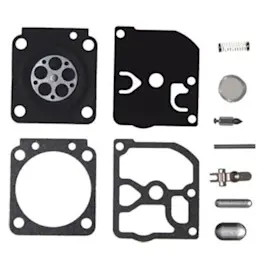
| Only runs on prime | Clogged carburetor circuits | Service carburetor and diaphragm |
- Fuel not reaching the carburetor (cracked tank, leaking pickup, bad grommet): replace the mtd line trimmer fuel tank assembly 753-06183.
- Engine floods or will not draw fuel even with priming: replace the mtd line trimmer carburetor 753-06288.
- Air leak at the carb mounting surface: replace the lawn & garden equipment engine carburetor mount gasket 753-06253.
- Restricted airflow (hard starting, bogging): replace the mtd line trimmer air filter 753-06417.
- Verify a strong blue spark at the plug while cranking; a weak spark points to an ignition problem.
- If the starter rope suddenly feels much easier to pull and it never tries to fire, check compression; low compression indicates internal engine wear.
A 2-cycle trimmer needs the right fuel mix, correct choke/prime, and an airtight fuel path. One cracked fuel component or a varnished carburetor can stop the engine from firing even when you still see spark.
Last updated: February 2026