


How old is my lawn mower by serial number lookup?
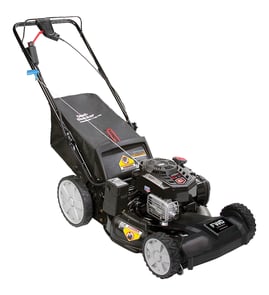
We can’t determine the exact age of your Poulan walk-behind mower model 961440008 from the model number alone; the build date is typically encoded in the serial number (and sometimes on the engine label). Once you locate the serial/date code, you can decode it to estimate the mower’s manufacture date.
On most Poulan walk-behind mowers, the serial/model tag is on the mower deck or handle bracket area. Also check the engine shroud because the engine maker often prints a separate date code.
- Look on top of the deck near the rear discharge area
- Check the side of the deck near the height adjuster
- Inspect the handle mounting brackets
- Check under the grass bag or rear skirt area
- Look on the engine blower housing (engine label)
Serial formats vary by brand and production run, so we use the characters in the serial number to identify a date pattern.
Common patterns you may see:
- YYWW (year and week of year)
- YYMMDD (year, month, day)
- MMDDYY (month, day, year)
- A letter-number code where one character represents the year
| Code pattern | Example | What it means |
|---|---|---|
| YYWW | 2315 | 2023, week 15 |
| YYMMDD | 210604 | June 4, 2021 |
| MMDDYY | 060421 | June 4, 2021 |
Knowing the build date helps us match the correct parts and revisions for your mower, especially for wear items like the blade, discharge components, and drive system.
- Confirms you are ordering compatible replacement parts
- Helps identify mid-year design changes
- Improves accuracy when troubleshooting drive or cutting issues
If you’re already inspecting the deck area, it’s a good time to check common wear parts for damage or looseness.
- Inspect the blade for bends, cracks, or heavy rounding
- Check the blade adapter for wobble or stripped splines
- Verify the discharge shield closes and springs back
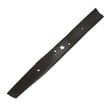
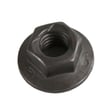
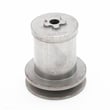
Helpful parts for this model include the husqvarna lawn mower blade, 22-in 532421825 and the blade adapter 581473301.
Last updated: January 2026
What is the life expectancy of a gas lawn mower?
A gas walk-behind mower like the Poulan 961440008 typically lasts 8 to 10 years with normal residential use and basic maintenance. If yours is in that age range, condition matters more than the calendar; many units run longer when wear items are replaced on time.
- Engine care: clean oil, clean air filtration, fresh fuel
- Deck condition: rust, cracks, and impact damage shorten life
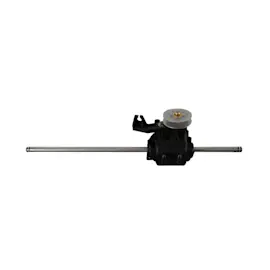
- Drive system wear (self-propelled models): belts, pulleys, transmission components
- Blade and blade mount wear: vibration from a bent blade or worn adapter accelerates failures
- Storage habits: dry storage and off-season fuel prep reduce corrosion and carb issues
- Change engine oil on schedule and keep the cooling fins clear
- Replace or clean the air filter regularly
- Use fresh gasoline; don’t store fuel long-term in the tank
- Keep the underside of the deck clean (avoid pressure-washing bearings)
- Inspect the blade area for vibration and looseness; replace worn cutting parts such as the husqvarna lawn mower blade, 22-in 532421825 and the blade adapter 581473301 when needed
| If you see this | What it usually means | Typical next step |
|---|---|---|
| Starts easily, cuts evenly | Core systems are healthy | Maintain and keep using |
| Excess vibration or uneven cut | Blade or adapter wear/bend | Inspect blade and adapter |
| Poor self-propel drive | Drive cable, pulley, or transmission wear | Inspect drive components |
| Deck rust-through or cracking | Structural end-of-life | Replace mower |
A mower near the end of its typical lifespan can still be a great value if the deck is solid and the engine runs smoothly. Replacing common wear parts early helps prevent secondary damage (like vibration loosening fasteners or stressing the crankshaft).
Last updated: January 2026
Is it cheaper to repair or replace a lawn mower?
For the Poulan 961440008 walk-behind mower, it’s usually cheaper to repair when the fix is routine wear (blade, chute parts, wheels, cables) and the total cost stays under about 50% of the price of a comparable new mower. Replacing makes more sense when you’re facing major engine or drive-system failure, repeated breakdowns, or extensive deck damage.
If your repair estimate (parts + labor) is less than half the cost of a similar new walk-behind mower, repairing is typically the better value. If it’s more than half, replacement often wins.
- Repair is usually best for maintenance and bolt-on parts
- Replace is usually best for major powertrain problems
- Consider downtime and reliability, not just the invoice
These are the types of repairs that often restore performance quickly and cost-effectively:
- Replace a worn or bent blade such as husqvarna lawn mower blade, 22-in 532421825
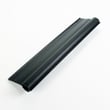
- Fix discharge issues by replacing a damaged chute shield like husqvarna lawn mower deflector shield 532426129
- Restore self-propel function by inspecting the drive system (cable, pulley, transmission components)
- Replace worn wheels if traction or height control is inconsistent
- Tighten or replace common hardware (nuts, bolts, washers) when vibration loosens fasteners
Even on a good mower, replacement can be the better decision when:
- The engine has low compression, heavy smoke, or internal damage
- The drive system needs multiple major components at once (transmission plus related drive parts)
- The deck is cracked, severely rusted through, or repeatedly clogging due to deformation
- You’ve had multiple repairs in one season and reliability is still poor
| Situation | Usually cheaper choice | Why |
|---|---|---|
| Dull/bent blade, poor cut | Repair | Low parts cost, fast improvement |
| Broken discharge shield/door | Repair | Simple bolt-on fix |
| Self-propel not pulling (minor) | Repair | Often cable or pulley related |
| Major engine failure | Replace | High labor and parts cost |
| Repeated breakdowns | Replace | Reliability and time cost add up |
A walk-behind mower’s value is mostly in its engine, deck, and drive system. Spending modest money on wear parts can keep your Poulan 961440008 cutting safely and evenly; spending heavily on major failures often doesn’t pay back.
Last updated: January 2026
Should I use 87 or 89 gas for lawn mower?
For the Poulan 961440008 walk-behind mower, we recommend using fresh regular unleaded gasoline with at least 87 octane; 89 octane is fine but usually not necessary unless your engine knocks or pings under load.
- Use: fresh, clean unleaded gasoline (87 AKI minimum)
- Okay to use: 89 AKI if you prefer, especially in hot weather or heavy mowing
- Avoid: old gas (more than 30 days without stabilizer)
- Avoid: gasoline contaminated with water or dirt
- Avoid: higher octane as a “power upgrade”; it typically does not add power in small engines
| Fuel choice | Works in Poulan 961440008? | When it makes sense |
|---|---|---|
| 87 octane | Yes | Normal mowing, most conditions |
| 89 octane | Yes | If you hear pinging/knocking, heavy load, very hot conditions |
If the engine pings when the blade is engaged or in thick grass, try these steps in order:
- Drain and replace with fresh fuel
- Try 89 octane
- Check the air filter and cooling fins for blockage
- Make sure the blade is sharp and not bent (a struggling engine can sound like knock)
If you need a replacement cutting component while troubleshooting load-related issues, match the correct blade for your deck; a common option for this model family is the husqvarna lawn mower blade, 22-in 532421825.
Using the right fuel helps prevent hard starting, surging, and carbon buildup. The biggest real-world issue we see is not octane; it is stale fuel and fuel system varnish from storage.
Last updated: January 2026