- Kenmore refrigerator water filters
- Whirlpool refrigerator water filters
- Samsung refrigerator water filters
- GE refrigerator water filters
- LG refrigerator water filters
- Frigidaire refrigerator water filters
- KitchenAid refrigerator water filters
- Maytag refrigerator water filters
- Kenmore Elite refrigerator water filters
- Estate refrigerator water filters
- GE Profile refrigerator water filters
- Amana refrigerator water filters
- Bosch refrigerator water filters
- Dacor refrigerator water filters
- Electrolux refrigerator water filters
Top DIY repair help
View All Repair Categories
Appliances
Lawn & Garden
Power Tools
Home Improvement
Sports & Leisure
Heating & Cooling
Can you cut grass with a weed whacker?
less than a minute readApr 09Kim Hillegass
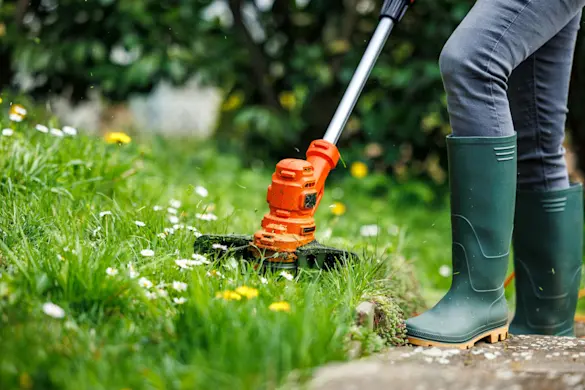
Many of us have been there. Your lawn mower won’t start, and your grass is starting to resemble a jungle. You glance over at your trusty weed whacker and wonder—can you cut grass with a weed whacker? Technically, yes. Should you? Well, that all depends.
Let's take a look at when a weed whacker—also known as a line trimmer—can handle grass-cutting duty, when it's better to wait until you've fixed your mower, and how to make the most of your tools either way.
Can a weed whacker replace your mower? Here’s the truth
Yes, you can cut grass with a weed whacker. But before you go full throttle, it’s worth knowing what you're getting into. A line trimmer can tackle grass, but it's not built for mowing an entire lawn regularly. There are pros and cons.
When it makes sense
A weed whacker isn't just for trimming edges—it can actually pull double duty when you're in a bind. While it’s no substitute for a full-size mower on a large lawn, there are plenty of situations where reaching for your line trimmer makes perfect sense.
Tight spots and edges – Around fences, trees, flower beds, and other places a mower can't reach
Tall or overgrown grass – A line trimmer can handle overgrowth better than some push mowers
Small patches of grass – Like along a sidewalk or in narrow side yards
No lawn mower available – Desperate times, desperate measures
If you're cutting grass without a lawn mower, a weed whacker can be a solid backup—just know it won't be fast, and it may not be perfect.
When it doesn’t
Even though a weed whacker can cut grass in a pinch, there are plenty of situations where it just isn’t the right tool for the job. If you're trying to save time, energy, or get that crisp, even look across your lawn, you'll want to stick with a mower.
Large areas – You’ll be out there forever, and your back won't thank you
Wanting a clean, even finish – Line trimmers don’t offer the same uniform cut as a mower
Soggy or wet lawns – You'll sling wet clumps everywhere and risk damaging your trimmer
If your line is too thin – Standard trimmer line may not be tough enough for thick or dense grass
A weed whacker is a handy tool—but like any tool, it works best when it's used for the right job.
Line trimmer vs lawn mower
Both tools have their strengths, but they’re built for different jobs. If you’re not sure which one to grab, this quick side-by-side comparison can help you figure out what works best for your yard—and your time.
| Feature | Weed Whacker | Lawn mower |
|---|---|---|
| Cutting speed | Slower | Faster for large areas |
| Lawn finish | Uneven, rougher | Clean, consistent |
| Maneuverability | Excellent in tight spaces | Limited around obstacles |
| Effort required | High for big jobs | Lower for full-lawn mowing |
| Fuel/electric use | Light | Higher, depending on mower |
| Noise level | Loud but localized | Loud with wider coverage |
Bottom line: use the line trimmer for detail work or spot jobs, not as a replacement for a full-on mower—unless you're in a pinch or just trimming a small area.
Tips for trimming grass with a line trimmer
Using a weed whacker to cut grass can save the day—but only if you handle it right. These tools are built for precision, not power mowing, so a little technique goes a long way. Whether you're edging a small space or taming tall grass, here’s how to get better results and avoid common mistakes.
Technique and safety tips
Before you start swinging that weed whacker like a lightsaber, take a moment to set yourself up for success—and safety.
Start with a full spool of line – You’ll need it
Wear safety gear – Eye protection, long pants, and closed-toe shoes are musts
Use a smooth, sweeping motion – Let the tip of the line do the work, not the base
Keep the head level with the grass – For a more even cut
Clear debris first – Rocks, sticks, and those cute little lawn gnomes are all tripping hazards
A few simple habits can help you trim more efficiently and avoid turning your lawn job into a safety hazard (or an arm workout you didn’t ask for).
Using a weed whacker on tall grass
Tall grass might look intimidating, but a weed whacker is often the better tool for knocking it down—especially before you try running a mower over it.
Trim in layers – Don’t try to chop it all down at once
Keep the trimmer line at half height, then go lower – Reduces stress on the motor and line
Use heavier-duty trimmer line if needed – Some models accept thicker line better suited for dense growth
Work in sections – Give your trimmer (and your arms) a break
With the right approach, a weed whacker can take tall grass down to size without overloading the motor—or wearing you out.
How to maintain a weed whacker
If you’re going to use a line trimmer for lawn duty, even occasionally, it needs to be in top shape. A poorly maintained weed whacker won’t cut anything but your patience.
Basic maintenance tips
Keeping your weed whacker in working order doesn’t take much—just a few quick checks and some regular upkeep. Whether you're a weekend warrior or just using it between mower repairs, here’s how to keep it humming.
Replace worn trimmer line regularly—it’s cheap and makes a big difference
Clean off grass and debris after every use, especially around the spool and motor vents
Check the spark plug and air filter if it’s running rough or hard to start
Lubricate moving parts according to your owner’s manual
Inspect for cracks or wear on the trimmer guard and shaft
Need parts or accessories? Check out our full collection of line trimmer parts to keep your weed whacker in great shape. And if it starts acting up, we’ve got detailed DIY repair help for gas line trimmers to walk you through the fix.
Final thoughts: weed whackers have their place
So, can you cut grass with a weed whacker? Yes—but it’s not a long-term lawn mowing solution. A line trimmer is perfect for edges, tall patches, and hard-to-reach spots, but your mower still deserves MVP status for overall lawn care.
If your mower’s on the fritz or you're just working with what you've got, a weed whacker can get the job done in a pinch. Just keep it maintained, use the right technique, and know when it’s time to hand the job back to the mower.
Need a replacement part or a quick fix? Sears PartsDirect has everything you need to keep your line trimmer running strong. And if your mower's giving you trouble, check out our DIY lawn mower repair help for easy troubleshooting and repair guides.