Error Codes




Is it cheaper to repair or replace a water heater?
For a State GS640YBRT200 gas water heater, repairing is usually cheaper upfront when the problem is limited to a serviceable part (like the pilot, thermocouple, or gas valve). Replacing the whole heater costs more, but it is typically the better long-term value when the tank is leaking or the unit is near end-of-life.
How we decide: repair vs. replace
We look at what failed, the age of the heater, and whether the issue is a “part problem” or a “tank problem.” On the GS640YBRT200, many no-heat and pilot issues can be tied to replaceable components.
Repair is usually the better choice when:
- The tank is not leaking and corrosion is minimal
- The pilot will not stay lit (often ignition or safety components)
- Hot water is inconsistent due to combustion or control issues
- The fix is a single, accessible part (plus basic labor)
- You want the lowest immediate cost
Replacement is usually the better choice when:
- The tank itself is leaking (replacement is the practical fix)
- You have repeated breakdowns in a short period
- Rusty water, heavy sediment, or severe internal corrosion is present
- Repair costs are stacking up across multiple parts
Common GS640YBRT200 repairs that can be cost-effective
These are examples of parts that often make sense to repair first:
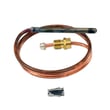
- Water heater thermocouple 100108267 (senses pilot flame and keeps gas flowing safely)
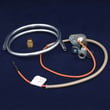
- Water heater pilot assembly 100111380 (pilot burner and related components)
- Water heater gas valve and temperature control assembly 100111369 (controls gas flow and temperature)
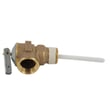
- Kenmore water heater temperature and pressure relief valve 100108279 (safety valve if leaking or not sealing)
Quick comparison
| Situation | Typical best choice | Why |
|---|---|---|
| Pilot will not stay lit | Repair | Often a thermocouple or pilot component |
| No hot water but no leaks | Repair | Control/ignition parts are serviceable |
| Water around base of tank | Replace | Tank leak is not a parts repair |
| Multiple recent failures | Replace | Reliability and total cost trend upward |
Why it matters
A gas water heater replacement includes more than the tank; it can involve venting, gas connections, and code-related updates. If the GS640YBRT200 only needs a targeted part, repairing can restore safe operation at a much lower total cost.
Helpful troubleshooting reference
If your heater is showing a diagnostic condition, use State gas water heater error codes to narrow the failure before buying parts.
Last updated: January 2026
What are common problems with state select water heaters?
Common problems we see on State Select gas water heaters like model GS640YBRT200 include a pilot that will not stay lit, not enough hot water, temperature swings, T&P relief valve dripping, and leaks at fittings or the drain valve. Many issues trace to the pilot system, gas control, or sediment.
Common symptoms and likely causes
- Pilot will not light or stay lit: dirty pilot, weak thermocouple, failing gas control
- No hot water or not enough hot water: burner not firing, low temperature setting, restricted combustion air, sediment buildup
- Water too hot or fluctuating: gas valve/temperature control out of calibration or set too high
- T&P relief valve dripping: high water pressure, overheating, worn relief valve
- Water at the bottom of the heater: loose inlet or outlet connections, drain valve seepage, tank leak
Parts that often fix the issue (when diagnosis points there)
- Water heater pilot assembly 100111380
- Water heater thermocouple 100108267
- Water heater gas valve and temperature control assembly 100111369
- Kenmore water heater temperature and pressure relief valve 100108279
- Water heater drain valve 100263839
Quick checks before replacing parts
- Confirm the gas shutoff valve is fully open and other gas appliances work.
- Clear lint, dust, or pet hair from the burner area and air intake.
- Set water temperature to a safe, typical starting point (about 120°F).
- Dry any wet areas, then recheck later to pinpoint the leak source.
Symptom-to-next-step guide
| Symptom | Most likely area | Next step |
|---|---|---|
| Pilot drops out | Pilot, thermocouple | Inspect pilot flame and thermocouple connection |
| Not enough hot water | Burner, sediment | Verify burner operation; flush sediment if needed |
| Relief valve drips | Pressure, overheating | Check pressure and temperature setting |
| Water under heater | Drain valve, fittings | Identify source; replace leaking component |
Why it matters
Pilot and gas control problems can stop hot water completely, and leaks or overheating can damage nearby materials. Early troubleshooting helps restore reliable hot water and can prevent bigger repairs.
For diagnostic patterns on State gas units, use State gas water heater error codes.
Last updated: January 2026
What is the average cost to install a 40 gallon gas water heater?
For a State GS640YBRT200 gas water heater, the average installed cost for a straightforward 40-gallon gas water heater replacement is typically about $1,650. Your total can be lower or higher depending on venting changes, gas line work, code upgrades, and how accessible the old tank is.
What usually drives the price up or down
- Direct replacement vs. re-pipe: swapping a similar tank costs less than moving water or gas lines.
- Venting changes: upgrading the draft hood, vent connector, or chimney connection adds labor and materials.
- Code and safety items: expansion tank, seismic straps, drain pan, or shutoff updates can add cost.
- Disposal and haul-away: some installers include it, others charge separately.
- Location and access: attic, crawlspace, or tight closets typically cost more.
Typical cost ranges (what you are paying for)
| Item | Typical range | Notes |
|---|---|---|
| Labor (remove and install) | $600 to $1,200 | Higher for difficult access or rework |
| Basic materials | $100 to $400 | Connectors, fittings, vent parts |
| Permit/inspection (where required) | $50 to $300+ | Varies by city/county |
| Total installed (common) | $1,200 to $2,500+ | Most jobs land near the middle |
Parts that can affect installation scope
Even on a “simple” replacement, installers may recommend replacing worn safety or combustion components if they are damaged or leaking.
- Water heater vent draft hood 100111362 (venting connection component)
- Kenmore water heater temperature and pressure relief valve 100108279 (critical safety valve)
- Water heater drain valve 100263839 (used for draining and service)
Why it matters
A gas water heater install is not just the tank. Proper venting, safe gas connections, and a working temperature and pressure relief valve help prevent nuisance shutdowns, poor combustion, and unsafe pressure buildup.
Last updated: January 2026
What is the typical lifespan of a gas hot water heater?
A typical gas water heater, including the State GS640YBRT200, lasts 8 to 12 years. Regular tank flushing, correct temperature settings, and timely maintenance of corrosion-protection parts can help you reach the upper end of that range.
Typical lifespan ranges (quick reference)
| Water heater type | Typical lifespan |
|---|---|
| Gas tank water heater | 8 to 12 years |
| Electric tank water heater | 10 to 15 years |
What shortens or extends lifespan
These factors usually make the biggest difference on a gas tank model like the State GS640YBRT200:
- Water quality and hardness (more sediment buildup means more stress on the tank)
- Anode rod condition (a worn anode lets the tank corrode faster)
- Tank flushing frequency (sediment reduces efficiency and can overheat the bottom)
- Operating temperature (higher settings increase scaling and wear)
- Venting and combustion health (poor draft can cause soot and inefficient heating)
Maintenance that helps you get the full 8 to 12 years
We recommend these practical steps for most gas water heaters:
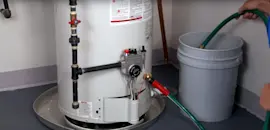
- Flush a few gallons from the drain valve periodically to reduce sediment (use the water heater drain valve 100263839 if yours is leaking or won’t operate).
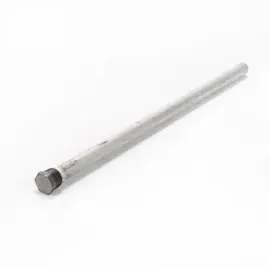
- Inspect and replace the anode rod when it is heavily depleted (common replacement options for this model include water heater anode rod 100109594 or water heater anode rod 100111073).
- Keep the burner area clean and make sure the access door seals properly.
- Watch for pilot or ignition issues; they can lead to nuisance shutdowns and poor heating (see State gas water heater error codes).
Why it matters
Once a tank starts to corrode internally, performance can drop quickly and leaks can develop with little warning. Staying ahead of sediment and anode-rod wear is usually the most cost-effective way to maximize service life.
Last updated: January 2026