View engine




Is 3400 PSI too much pressure to wash a car?
Yes; 3400 PSI is typically more pressure than you want for washing a car, even if your Craftsman CMXGWAS020734 can produce it. For paint-safe cleaning, we recommend using a wider-spray nozzle, keeping distance, and aiming for a gentler effective pressure at the surface.
Safe pressure and technique for car washing
Use your pressure washer like a “rinse tool,” not a paint stripper.
- Use a wide fan spray (avoid 0-degree and tight turbo tips on paint)
- Keep the wand moving; do not dwell on one spot
- Stay back at least 24 to 36 inches; move closer only if needed
- Spray at an angle, not straight into edges, emblems, or trim
- Avoid spraying directly into door seals, window seals, and vents
What PSI range works best on cars?
We cannot identify a model-specific “car wash PSI setting” for the CMXGWAS020734 based on the available model information; pressure at the paint also changes with nozzle choice and distance. In general, these targets work well:
| Task | Typical effective PSI at surface | Notes |
|---|---|---|
| Rinse loose dirt | 800 to 1200 | Safest starting point |
| Wash with soap/foam | 1000 to 1500 | Use a wide fan tip |
| Wheels and tires | 1500 to 2000 | Avoid blasting wheel weights and sensors |
If you see problems, change the nozzle first
If the spray feels too aggressive, switching tips is usually the fastest fix. A worn or incorrect nozzle can also create a harsh, pencil-like stream.
If you need a replacement tip or connection hardware for your setup, match it to the correct component for this model, such as the nozzle 709745 or nozzle quick-connector 195983VGS.
Why it matters
Too much pressure (or too close of a spray pattern) can chip paint, peel clear coat, force water past seals, and damage decals and trim. Using the right nozzle and distance gives you cleaning power without risking expensive cosmetic repairs.
Last updated: January 2026
What are the most common issues with CMXGWAS020734?
The most common issues we see with the Craftsman CMXGWAS020734 gas pressure washer are low or pulsing pressure, detergent not siphoning, leaks at quick-connect fittings, and spray pattern problems caused by a clogged or worn nozzle. These problems are usually fixed with cleaning, tightening, or replacing small wear parts.
Common symptoms and what they usually mean
- Low pressure or surging: clogged nozzle, air in the inlet, restricted water supply, or a worn/unseated O-ring
- No detergent draw: chemical hose clogged, cracked, or not fully submerged in detergent
- Water leaking at connections: damaged O-rings, loose couplers, or a worn quick-connector
- Poor spray pattern: nozzle tip clogged with grit or partially blocked
- Hard to connect the wand/nozzle: quick-connect coupler dirty or worn
Quick checks we recommend first
- Confirm a strong water supply; fully open the spigot and use a non-kinked garden hose.
- Remove and rinse the nozzle; clear debris with a soft tool (never enlarge the orifice).
- Purge air: with water on and engine off, squeeze the trigger until flow is steady.
- Inspect quick-connects and O-rings for nicks, flattening, or missing seals.
- If detergent will not siphon, inspect the chemical pickup line and filter.
Parts that commonly solve these issues
If cleaning and tightening do not fix the problem, these model-compatible parts are common replacements:
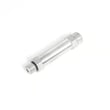
- Nozzle quick-connector 195983VGS for leaking or hard-to-connect quick couplers
- Pressure washer chemical hose 705076 for detergent siphon problems
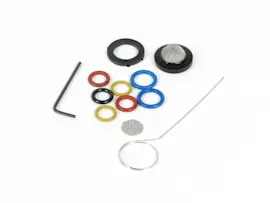
- Craftsman kit-o-ring 706619 for drips at hose, wand, and quick-connect joints
- Nozzle 709745 for a worn or repeatedly clogging spray tip
Symptom-to-fix guide
| Symptom | Most likely cause | Typical fix |
|---|---|---|
| Pressure surges | Clogged nozzle, air in line | Clean nozzle, purge air |
| No soap draw | Pickup hose issue | Replace chemical hose |
| Leaks at coupler | O-ring or connector wear | Replace O-ring kit or quick-connector |
| Spray fans uneven | Nozzle partially blocked | Clean or replace nozzle |
Why it matters
Running the CMXGWAS020734 with restricted flow or leaking fittings reduces cleaning power and can make the pump work harder than it should. Keeping nozzles, chemical pickup, and seals in good shape prevents repeat clogs and nuisance leaks.
Last updated: March 2026
What is a good PSI for a gas pressure washer?
A good PSI for a gas pressure washer depends on the job; for typical home cleaning with a Craftsman CMXGWAS020734, a 1,300 to 2,800 PSI range covers most tasks without being overly aggressive on paint, wood, or siding.
Quick PSI guide by common jobs
- 1,300 to 2,000 PSI: cars, patio furniture, grills, delicate surfaces
- 2,000 to 2,800 PSI: decks, fences, driveways with light staining
- 2,800 to 3,500 PSI: heavy concrete cleaning, tough mildew, large areas
- 3,500+ PSI: commercial or frequent heavy-duty use (more risk of surface damage)
PSI vs GPM (what actually cleans faster)
PSI is the “impact,” but GPM (gallons per minute) is the “rinse power.” For many homeowners, a slightly lower PSI with higher GPM cleans faster and with less streaking.
| Spec | What it affects | What to prioritize for home use |
|---|---|---|
| PSI | How hard the spray hits | Medium PSI to avoid damage |
| GPM | How quickly dirt rinses away | Higher GPM when possible |
| Nozzle angle | How concentrated the spray is | Wider angles for delicate surfaces |
How to “tune” pressure safely on the CMXGWAS020734
We typically control effective pressure more with technique than with the pump:
- Start with a wider fan tip and increase only if needed
- Keep the wand moving; do not dwell in one spot
- Increase distance first (back up) before increasing aggressiveness
- Use detergent for grime instead of relying on maximum PSI
- Test on an inconspicuous area
If your spray seems weak or inconsistent, check for restrictions or leaks in the chemical pickup and fittings; the pressure washer chemical hose 705076 and seals like the Craftsman kit-o-ring 706619 are common wear items that can affect performance.
Why it matters
Using more PSI than necessary can etch concrete, shred wood fibers, and strip paint. Matching PSI, nozzle selection, and technique to the surface helps you clean faster while reducing damage and premature wear on the pump, hose connections, and quick-connect fittings.
Last updated: January 2026