Installation guide
 Owner’s manual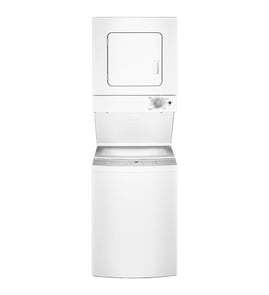
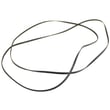


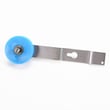

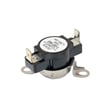
What are signs of dryer belt failure?
On the Kenmore 41761722510 stacked laundry center, a failing dryer belt usually shows up as the motor running but the drum not tumbling, or the dryer stopping shortly after start if a belt switch is triggered. You may also notice new squealing, rubbing, or grinding noises.
- Motor runs, drum does not turn when you press Start.
- Drum turns by hand too easily (little resistance) with power disconnected.
- Burning rubber smell or black belt dust near the front or base of the dryer.
- Thumping or slapping sound as the belt frays or develops a flat spot.
- Squeaking, grinding, or rubbing noises that were not there before (stop using the unit if you hear these). See the 41761722510 owner's manual.
Always start with safe basics that apply to this laundry center:
- Unplug the laundry center (turning the control off does not remove power).
- Let the drum come to a complete stop before reaching inside.
- Do not run the dryer with a blocked, damaged, or missing lint screen.
- Keep airflow clear; do not obstruct the front or back of the dryer.
| What you observe | Most likely cause | What to do next |
|---|---|---|
| Motor hums or runs, drum does not tumble | Belt broken or slipped off | Inspect belt path and idler area; replace belt if damaged |
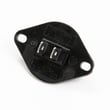
| Dryer starts then stops quickly | Belt switch opened (on some designs) | Check belt condition and belt switch actuator |
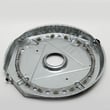
| Loud squeal or scraping while tumbling | Belt worn, or drum support parts worn | Inspect belt plus drum support components |
A worn or broken belt can stop tumbling, overheat loads, and contribute to abnormal noises. Our manual also warns that unusual squeaking, grinding, or rubbing can signal mechanical breakdown and should be addressed promptly to prevent further damage.
Last updated: February 2026
Is it worth replacing a belt on a dryer?
Yes; on the Kenmore 41761722510 stacked laundry center, replacing a worn dryer belt is usually worth it because the part is inexpensive compared with a new unit and it often restores normal tumbling when the dryer runs but the drum will not turn.
A broken or stretched belt is a top cause of a dryer that powers on but will not tumble. We recommend checking the basics first, then inspecting the belt and drum support parts.
- Dryer runs but drum does not turn, and you may hear the motor running
- Burning rubber smell or intermittent tumbling
- Drum turns by hand with very little resistance (belt likely off or broken)
- You recently overloaded the dryer (extra strain on the belt)
- You want a cost-effective repair instead of replacing the laundry center
Use these steps to avoid replacing a belt when the issue is actually power, airflow, or a safety device.
- Confirm the dryer starts reliably (tight plug connection, breaker not tripped)
- Clean the lint screen; restricted airflow increases heat and stress on components
- If the dryer will not start at all, check for a tripped thermal limiter condition noted in the troubleshooting section of the 41761722510 owner’s manual
- Verify venting is not clogged; poor exhaust can cause overheating and shutdowns
If you are already opening the dryer, it is smart to inspect drum support parts that can squeal, thump, or wear the new belt faster.
| Symptom | Common wear area | Example part for this model |
|---|---|---|
| Squealing or scraping while tumbling | Drum bearing or glides | Dryer drum bearing 131825900 |
| Thumping, rubbing, or poor drum support | Drum bearing kit components | Dryer grounding ball 5303281153 |
A slipping belt can leave clothes damp because the drum is not tumbling properly, and continued operation can overheat the motor or wear drum supports faster. Keeping the lint filter clean after every load also helps the dryer run cooler and more efficiently.
Last updated: February 2026
How long is a 29 in dryer belt?
A “29-inch dryer belt” is usually a cross-reference size name, not the belt’s actual measured length. For Kenmore stacked laundry center model 41761722510, the correct belt length depends on the exact belt routing and drum design; we recommend confirming the belt specification in the 41761722510 installation guide before ordering.
In many parts listings, “29” is used as a series/fit reference (or a shorthand for a group of compatible belts), while the belt itself is commonly much longer when laid out end-to-end.
Common belt descriptors you may see:
- Rib count (for example, 4-rib)
- Effective length (often around 80 to 95 inches for many dryers)
- Belt profile (multi-rib vs. V-belt)
- Fit list (Frigidaire/Electrolux-built laundry centers often share designs)
Use the model-specific diagrams and parts list so you match the exact belt style and length.
- Locate the dryer belt callout in the model parts breakdown
- Match the belt by rib count and listed length
- Confirm the belt routing path around the drum and motor pulley
- If the dryer squeals or thumps, inspect drum support parts at the same time
If you are already opening the cabinet, these wear items commonly affect belt life and noise:
- Dryer drum bearing 131825900
- Dryer drum front glide 137513300
- Drum felt seals (inspect for tearing or missing sections)
| Listing term | What it usually refers to | What you should use to order |
|---|---|---|
| “29 in belt” | A reference/fit label | Model-specific belt spec for 41761722510 |
| “4-rib belt” | Belt profile | Must match the original belt type |
| “89.5 in length” (example) | Effective belt length | Must match the model’s required length |
A belt that is even slightly off in length or profile can slip, squeal, overheat, or break early. Confirming the exact spec for Kenmore 41761722510 prevents repeat failures and protects the drum, motor, and idler system.
Last updated: February 2026