Owner’s manual
 Error Codes



Can you replace parts on a water heater?
Yes. On the American Water Heaters BFG1F4034T3NOV gas water heater, many serviceable components can be replaced to restore safe operation and extend the unit’s life, as long as the tank itself is not leaking and the repair is performed correctly per the BFG1F4034T3NOV use & care manual.
Parts you can commonly replace on this model
These are typical replaceable items shown in the repair parts section for this model:
- Temperature and pressure relief valve (T&P)
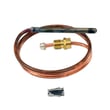
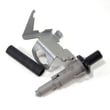
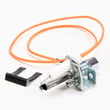
- Pilot/ignition components (pilot igniter, thermocouple)
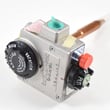
- Gas control valve/thermostat
- Drain valve
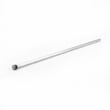
- Anode rod
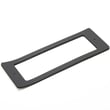
- Manifold door gasket and related burner door parts
If you’re dealing with a leaking or dripping relief valve, the t&p valve 100108279 is a common replacement part for this model.
When replacement makes sense vs. when it does not
A quick way we look at it:
| Situation | Replace parts? | Why |
|---|---|---|
| Pilot will not light or stay lit | Often yes | Ignition and safety parts are serviceable |
| Relief valve dripping | Often yes (after diagnosing cause) | Valve can fail or system pressure can be high |
| Sediment causing noise or slow recovery | Sometimes | Flushing and drain valve service can help |
| Tank is leaking from the body of the heater | No | The tank is not a serviceable part |
Safety and “qualified technician” situations
Because this is a gas water heater, we recommend using a qualified technician for any work involving gas controls, burner access, or combustion components. Stop and get service if you notice:
- Gas odor
- Sooting or combustion odors
- Burner flame that is lazy yellow instead of mostly blue
- Venting or draft problems
Why it matters
Replacing the right part can fix no-hot-water symptoms, nuisance shutdowns, or leaks at valves, and it can help prevent bigger failures (like corrosion when an anode rod is depleted).
Last updated: January 2026
Is it cheaper to repair or replace a water heater?
Repairing an American water heater model BFG1F4034T3NOV is usually cheaper upfront when the problem is limited to a serviceable part (like the pilot/igniter, thermocouple, or drain valve). Replacing the whole water heater typically costs more, but it is the better long-term value when the tank is leaking or the unit is near end-of-life.
How we decide for BFG1F4034T3NOV
We use the same decision points technicians use for this gas model, then match them to common replaceable parts and safety limits described in the BFG1F4034T3NOV use & care manual.
- Replace the water heater if the tank itself is leaking, the unit has chronic sediment-related issues, or major safety controls have failed repeatedly.
- Repair the water heater if the tank is sound and the issue is isolated to ignition, gas control, or a valve.
- Do not keep repairing if you are stacking multiple repairs close together; costs add up fast.
- Prioritize safety-related symptoms (gas smell, poor draft, soot) over cost.
Typical cost logic (repair vs replace)
| Situation | Usually cheaper | Why |
|---|---|---|
| Pilot will not light or stay lit | Repair | Often a single ignition component is at fault |
| T & P relief valve dripping due to a bad valve | Repair | Valve replacement is straightforward compared to replacement |
| Tank leaking from the body of the heater | Replace | Tank is not a serviceable part |
| Frequent “not enough hot water” with heavy sediment | Depends | Flushing may help; severe buildup can shorten remaining life |
Parts that commonly make repair worthwhile
If your tank is not leaking, these model-compatible parts often support a cost-effective repair:
- Water heater pilot igniter 100110927 (ignition problems)
- Nat gas th 100108267 (thermocouple-related pilot issues)
- T&p valve 100108279 (pressure relief valve concerns)
- Drain valve 100109106 (leaks at the drain outlet)
Why it matters
A gas water heater can show symptoms that look “small” but indicate a bigger safety or venting issue. Using the correct repair decision helps you avoid repeat breakdowns, reduce operating costs, and keep combustion and hot-water safety controls working as designed.
Last updated: January 2026
What is the average lifespan of a gas hot water heater?
A typical gas water heater like the American Water Heaters BFG1F4034T3NOV lasts 8 to 12 years. Lifespan is driven mostly by water quality, maintenance (especially flushing), and anode rod condition, not just brand or burner type.
What affects lifespan the most
- Sediment buildup in the tank bottom (causes overheating and tank damage)
- Anode rod wear (once depleted, the tank corrodes faster)
- Water chemistry (hard water and softened water can be harder on the tank)
- Operating temperature (higher settings increase stress and scale)
- Installation and venting quality (poor combustion air or venting can shorten life)
Maintenance schedule we recommend
Use the BFG1F4034T3NOV use & care manual for the exact procedures and safety steps.
| Task | How often | Why it helps |
|---|---|---|
| Drain and flush the tank | Every 6 months | Reduces sediment that can damage the tank |
| Visual inspection of venting and burner area | Every 3 months | Helps catch soot, airflow, or venting issues early |
| Inspect anode rod | Every 3 years | Protects the glass-lined tank from corrosion |
Parts that commonly extend service life
If you are maintaining the unit proactively, these model-compatible parts are often involved:
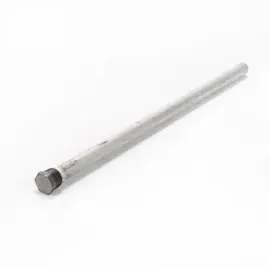
- Anode rod 100108260 (helps protect the tank from corrosion)
- Drain valve 100109106 (makes periodic flushing easier)
- T&p valve 100108279 (critical safety device; replace if leaking or not operating correctly)
Why it matters
Most gas water heaters fail because the tank eventually corrodes and leaks. Regular flushing and keeping a healthy anode rod are the two most effective ways to get the full expected life from a BFG1F4034T3NOV.
Last updated: January 2026
What is the most common problem with gas water heaters?
For the American Water Heaters BFG1F4034T3NOV gas water heater, the most common issue we see is sediment (mineral) buildup in the bottom of the tank, which can reduce heating efficiency, cause popping or rumbling noises, and contribute to premature tank wear. See the maintenance schedule in the BFG1F4034T3NOV use & care manual.
What sediment buildup looks like (and what you may notice)
Sediment forms when minerals in the water settle out and collect at the tank bottom near the burner area.
- Popping, crackling, or rumbling sounds during heating
- Hot water runs out faster than it used to
- Water temperature seems inconsistent (especially during heavy use)
- Higher gas usage for the same hot water demand
- Cloudy water or debris when draining from the tank drain valve
What to do first on this model
The manual for this BFG1F4034T3NOV recommends draining and flushing the tank on a regular schedule to remove sediment.
- Turn off gas at the manual gas shut-off valve
- Close the cold water inlet valve
- Open a nearby hot water faucet to relieve pressure
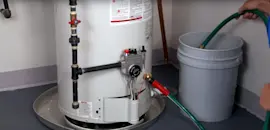
- Connect a hose to the drain valve and route it to a safe drain
- Drain and flush until water runs clearer, then refill and restart
If the drain valve is clogged or won’t flow well during flushing, replacing the drain valve can restore proper draining; use the exact match drain valve 100109106.
Quick comparison: common gas water heater problems
| Problem | Most common symptom | Typical first check |
|---|---|---|
| Sediment buildup | Noise, reduced hot water, slow recovery | Drain and flush tank |
| Pilot/ignition trouble | No hot water, burner won’t light | Pilot lighting steps, combustion air |
| T&P relief valve weeping | Water dripping from discharge line | Thermal expansion, water pressure |
| Anode rod reaction | “Rotten egg” odor | Inspect/replace anode rod |
Why it matters
Sediment acts like an insulating layer between the burner and the water. That makes the heater work harder, increases operating cost, and can shorten the service life of the tank. Regular flushing is one of the simplest ways to keep a gas water heater running efficiently.
Last updated: January 2026