Owner’s manual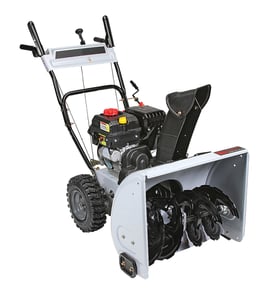




Should I use 87 or 91 for snowblower?
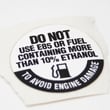
For the Craftsman snow thrower model 247886910, use regular unleaded gasoline with a minimum of 87 octane. Using 91 octane is not required for this model; the bigger priority is avoiding fuel with more than 10% ethanol and never using E85 (see the 247886910 operator's manual).
What fuel is correct for model 247886910?
Use fresh, clean automotive gasoline that meets these guidelines:
- 87 octane minimum (regular unleaded is fine)
- Up to 10% ethanol (E10) is acceptable
- Do not use E85
- Avoid dirty fuel and keep water out of the fuel tank
- Use fuel within about 30 days to reduce stale-fuel problems
87 vs 91: what changes and what does not
Higher octane does not automatically mean “better” for small engines. For this Craftsman model, octane is about knock resistance, not extra power.
| Fuel choice | OK for 247886910? | When it makes sense |
|---|---|---|
| 87 octane (regular) | Yes | Best everyday choice if it is fresh and clean |
| 91 octane (premium) | Yes (but unnecessary) | Only if it is the easiest way for you to get low-ethanol fuel |
| E85 | No | Can cause running issues and fuel-system damage |
Why it matters
Most “won’t start,” surging, and rough-running complaints on snowblowers trace back to fuel quality and storage, not octane. Using the right gasoline helps protect the carburetor, fuel lines, and primer system.
Helpful tip for long-term reliability
If your snowblower sits between storms, good storage habits matter as much as the fuel grade. Our how to store a snowblower guide is a solid checklist for end-of-season and mid-season storage.
Last updated: January 2026
What are common gas snow blower problems?
Common problems on the Craftsman 247886910 gas snowblower include no-start conditions from stale fuel, rough running from fuel or ignition issues, loss of drive from belt or friction-wheel wear, and poor snow discharge from clogs or shear pin failures. Our 247886910 operator's manual troubleshooting chart helps you match symptoms to the most likely cause.
Most common symptoms and what they usually mean
- Engine will not start: stale fuel, choke/primer not used correctly, spark plug issue, key not fully inserted
- Engine runs rough or surges: old fuel, water/dirt in fuel system, running with choke on too long
- Excessive vibration: loose hardware or damaged auger components (stop and inspect before restarting)
- Won’t self-propel: drive cable out of adjustment, worn or damaged drive belt, worn friction wheel
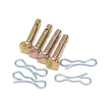
- Won’t throw snow well: chute or auger housing clogged, auger belt loose/worn, shear pin(s) sheared
Quick checks we recommend first (fast and low-cost)
- Drain old fuel and refill with fresh gasoline (avoid storing fuel more than 30 days).
- Verify the key is fully inserted; confirm choke and primer steps are followed for cold starts.
- Check the spark plug condition and gap (the manual lists Torch F6RTC with a 0.020" to 0.030" gap).
- Clear packed snow from the chute using the clean-out tool (never your hand).
- If the auger will not turn or won’t throw snow, inspect shear pins and belts.
When a part is likely the fix
| Symptom | Likely area | Common next step |
|---|---|---|
| Won’t throw snow / auger stops under load | Auger drive system | Inspect/replace auger belt |
| Won’t self-propel | Drive system | Check drive belt, friction wheel, cable adjustment |
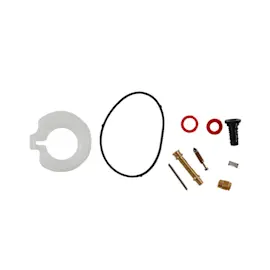
| Runs but hunts/surges | Fuel system | Replace fuel, clean carburetor bowl/jets |
If your auger belt is worn or slipping, replacing the snowblower auger drive belt 256963 is a common repair for this model.
Why it matters
Catching fuel and belt issues early prevents hard starting, poor snow-throwing distance, and extra wear on the drive system. It also reduces the chance of sudden failures mid-storm.
Last updated: January 2026
What is the typical lifespan of a gas snowblower?
A gas snowblower like the Craftsman 247886910 typically lasts 10 to 15 years with normal residential use and consistent maintenance. For this specific model, the operator guidance also notes an average useful life of 7 years or 60 hours of operation, which is a safety-based benchmark rather than a hard failure date (see the Craftsman 247886910 operator's manual).
What to expect for the Craftsman 247886910
The “average useful life” statement is a conservative guideline tied to inspection and safe operation. In real-world use, many machines run well beyond that when wear items are replaced and the engine is cared for.
Big factors that shorten or extend lifespan:
- Annual hours of use (a few storms per year vs. heavy weekly use)
- Storage conditions (dry garage vs. damp shed)
- Fuel habits (fresh fuel vs. stale fuel left in the carburetor)
- Maintenance consistency (oil changes, lubrication, belt checks)
- Impacts and jams (hitting ice chunks, gravel, or hidden objects)
Maintenance that most affects longevity
We see the longest life when owners stay ahead of the basics:
- Change engine oil on schedule (including the first change early in the season)
- Keep fuel fresh and avoid storing with untreated fuel
- Check and replace the spark plug as needed
- Lubricate moving points (auger shaft, wheels, drive hex shaft)
- Inspect belts and replace when worn or slipping
Wear items vs. “end of life”
Many “old snowblower” problems are just normal wear parts.
| Item | What it affects | Typical symptom when worn |
|---|---|---|
| Auger drive belt | Auger/throwing power | Auger slips, weak throwing |
| Skid shoes / shave plate | Scraping and housing protection | Poor scraping, uneven clearing |
| Shear pins | Auger protection | Auger stops after jam |
If your auger belt is worn, replacing the snowblower auger drive belt 256963 is often a cost-effective way to keep the machine going.
Why it matters
Knowing the typical lifespan helps you decide whether to maintain, repair, or refresh key components. On the Craftsman 247886910, staying on top of oil, fuel, and belt condition usually makes the biggest difference in long-term reliability.
Last updated: January 2026