Owner’s manual
 View engine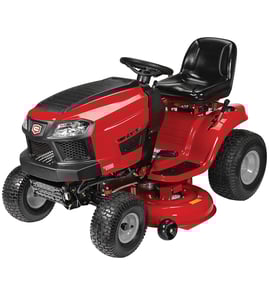


What year is Craftsman Model 917203811 serial number?
On Craftsman tractor model 917203811, the serial number is used to determine the build date; many units use a 6-digit date code where the last two digits indicate the year. Confirm the exact serial-number format and location for your tractor in the 917203811 owner's manual.
How to decode the serial number date code
Many Craftsman riding mowers and tractors use a date-style code that reads as MMDDYY:
- First 2 digits: month (01 to 12)
- Next 2 digits: day (01 to 31)
- Last 2 digits: year (00 to 99)
If your serial number begins with 072811, that decodes to July 28, 2011.
Where to find the serial number on the tractor
Common serial-number locations on tractors like model 917203811 include:
- Under the seat on the seat pan or frame
- On the rear fender pan near the seat
- On the frame rail (left or right side)
- Near the engine compartment on a sticker or metal tag
Use the manual’s “product identification” section to match the correct label for your exact configuration.
Quick examples (MMDDYY format)
| Serial/date code start | Build date it indicates |
|---|---|
| 010524 | January 5, 2024 |
| 112923 | November 29, 2023 |
| 072811 | July 28, 2011 |
Why it matters
Knowing the build year helps us match the correct parts and specs for your 42-inch mower deck, drive system, and steering components. It is especially important when ordering wear items like belts, blades, and electrical parts.
Last updated: January 2026
How to find riding lawn mower model number?
On a Craftsman riding lawn mower like model 917203811, the model number is printed on the product identification label (often under the seat or on the frame). Use the model number to match the correct operator instructions and order the right parts using the 917203811 operator’s manual.
Where to look on the tractor
Check these common label locations first (clean off grass and dirt so the tag is readable):
- Underside of the seat or on the seat pan
- Rear frame area near the hitch plate or drawbar
- Left or right side of the frame rail (near the engine compartment)
- Under the hood near the engine mounting area
- Near the mower deck, typically on the left side of the deck shell
- On the transaxle area or rear fender support (varies by build)
What the model number looks like
For this Craftsman tractor, the model number format is typically a 9-digit number.
| Item on label | Example for this tractor | Why it matters |
|---|---|---|
| Model number | 917203811 | Ensures parts diagrams match your exact build |
| Product description | Lawn tractor, 42-in deck | Helps confirm you are on the right parts list |
| Engine info | 19.0 HP class (varies by engine) | Used for engine-specific tune-up parts |
Tips to avoid ordering the wrong part
Once you find the label, use these best practices before buying parts like a belt, blade, or solenoid:
- Write the model number exactly as shown (all digits)
- Take a clear photo of the label for reference
- Match the part by diagram location and description, not just by appearance
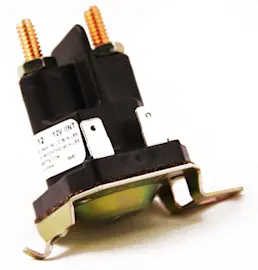
- If you are troubleshooting a no-start, confirm the exact starting system before replacing parts like the lawn tractor starter solenoid 582042802
Why it matters
Craftsman tractors can look similar across years, but small changes in the mower deck, steering linkage, or transmission can require different parts. Using the correct model number keeps repairs accurate and prevents returns.
Last updated: January 2026
What riding mower has the least problems?
If your goal is the fewest problems over time, we recommend prioritizing a well-maintained, serviceable riding mower with proven components (V-twin engine, hydrostatic drive, strong dealer or parts support) rather than focusing only on a brand name. For a Craftsman tractor like model 917203811, following the maintenance and operating limits in the 917203811 owner's manual is one of the most reliable ways to prevent common failures.
What to look for when “least problems” matters
These features consistently reduce breakdowns and nuisance issues across most riding mowers:
- Hydrostatic transmission (smoother drive, fewer shifting/linkage problems)
- V-twin engine (typically smoother, less strain than many single-cylinder setups)
- Easy access to wear items (belts, blades, idlers, battery)
- Strong parts availability (so you can fix issues quickly instead of parking the mower)
- Deck design that stays clean (less grass buildup around mandrels and vents)
Reliability is mostly maintenance and correct operation
Your 917203811 manual’s troubleshooting guidance points to the same pattern we see in the field: many “unreliable mower” complaints trace back to basic upkeep.
Common preventable issues and what usually fixes them:
| Symptom | Most common cause | Typical fix |
|---|---|---|
| Engine clicks but won’t start | Weak battery, corroded terminals, bad solenoid | Charge/clean connections; test/replace solenoid |
| Loss of power | Dirty air filter, low/dirty oil, grass buildup under deck | Clean/replace filter; change oil; clean deck |
| Poor cut or uneven cut | Worn blade, deck not level, buildup under deck | Replace blade; level deck; clean underside |
Parts that often affect “problem-free” mowing
If you are chasing vibration, uneven cutting, or belt-related issues, these are common wear points on this platform:
- 3-in-1 blade, 42-in 532422719 (dull or bent blades cause poor cut and vibration)
- Lawn tractor ground drive belt 532125907 (worn belts can slip and reduce drive performance)
- Husqvarna lawn tractor ground drive idler pulley 532194327 (frozen/noisy idlers can shred belts)
Why it matters
A mower that “has the least problems” is usually the one that is operated within limits (especially on slopes), kept clean under the deck, and serviced on schedule. That prevents the most common no-start, power-loss, and cutting-quality complaints.
Last updated: January 2026