- Kenmore refrigerator water filters
- Whirlpool refrigerator water filters
- Samsung refrigerator water filters
- GE refrigerator water filters
- LG refrigerator water filters
- Frigidaire refrigerator water filters
- KitchenAid refrigerator water filters
- Maytag refrigerator water filters
- Kenmore Elite refrigerator water filters
- Estate refrigerator water filters
- GE Profile refrigerator water filters
- Amana refrigerator water filters
- Bosch refrigerator water filters
- Dacor refrigerator water filters
- Electrolux refrigerator water filters
Top DIY repair help
View All Repair Categories
Appliances
Lawn & Garden
Power Tools
Home Improvement
Sports & Leisure
Heating & Cooling
How to choose the right leaf blower nozzle
less than a minute readOct 15Kim Hillegass
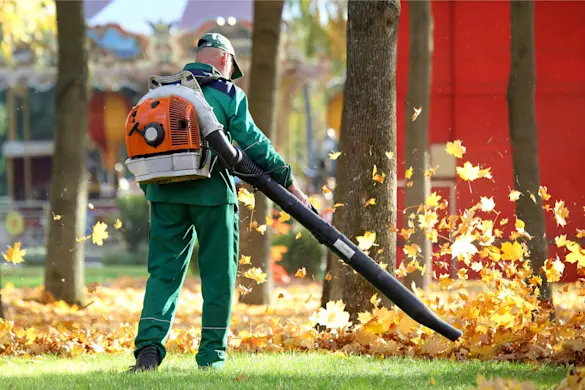
By shaping the airflow, a leaf blower's nozzle controls how much power hits the ground and how accurately you can aim it. A wide, flat nozzle spreads air for broader coverage, while a narrow nozzle concentrates force to loosen stubborn debris or reach tight spaces.
The right nozzle depends on the job. Clearing thick piles of wet leaves, sweeping dust from a driveway, or blowing out gutters all require different combinations of air speed, volume, and control.
Many gas and electric blowers come with interchangeable nozzles or have optional leaf blower accessories designed for specific tasks. Matching the nozzle to the work helps you get better results with less effort.
Understand nozzle shapes and which jobs they handle best
Choosing the right nozzle shape changes how air behaves, affecting both what you can move and how efficiently you do it. Some nozzles deliver speed for stubborn debris, while others push volume to clear big areas faster.
Flat nozzles
Concentrate airflow into a narrow path
Create higher air velocity (MPH) for more force
Ideal for lifting wet leaves, matted debris, or precision work near flower beds
Round nozzles
Disperse air in a wider cone shape
Deliver higher air volume (CFM) to move more material
Best for sweeping large piles across driveways, lawns, and patios
Tapered or curved nozzles
Focus airflow into tight or angled spaces
Direct air under decks, fences, or patio furniture
Great for clearing corners or hard-to-reach spots
Matching nozzle to task
Heavy, wet leaves or stuck debris: Use a flat or tapered nozzle for more concentrated force
Wide open areas: Choose a round nozzle to cover ground quickly with high-volume air
Precision areas or landscaping: Opt for a curved or flat nozzle to keep control near mulch or delicate plants
Gutter cleaning or overhead work: Consider specialty nozzles designed for upward or directional airflow
Air speed vs. air volume
Each nozzle changes the balance between air velocity and volume:
Flat nozzles boost air speed (MPH) but reduce overall air volume
Round nozzles increase air volume (CFM) but lower speed
For sticky, compacted material, speed is more effective. For lighter debris over large areas, volume moves more material with less effort. Adjusting nozzle shape helps strike the right balance for your cleanup needs.
Look for interchangeable nozzles and attachments
Many gas and electric leaf blowers support interchangeable nozzles, making it easier to adapt your blower for different types of work. Some models come with multiple nozzle styles, while others offer optional leaf blower attachments sold separately.
Here are a few common nozzle and attachment types:
Concentrator tubes narrow the airflow for maximum velocity, helping to dislodge wet leaves, gravel, or packed debris.
Wide sweep nozzles spread airflow for faster clearing across patios, driveways, or lawns.
Curved or tapered nozzles help you direct air under furniture, fences, or low-clearance landscaping.
Gutter-cleaning kits use long, curved extension tubes to redirect air upward, making it easier to clear leaves and clogs from gutters while staying on the ground.
Some attachments are universal and can fit a variety of blower brands with adjustable collars or adapters. Others are brand-specific and designed to match your model’s locking tabs or airflow requirements. Always check compatibility before buying a nozzle or kit.
Switching nozzles or adding the right attachment for the task not only improves results but also reduces strain by making the blower work more efficiently.
Other factors that affect blower performance
While nozzle shape makes a big difference, other factors also impact how well your leaf blower handles different tasks:
Motor power or engine size determines the baseline airspeed (MPH) and volume (CFM) your blower can produce. A more powerful blower can maintain strong performance even with a wide nozzle.
Variable speed control gives you more flexibility, allowing you to throttle down for delicate work or crank up the power for heavy cleanup.
Tube diameter also plays a role. Narrow tubes boost airspeed, while wider tubes move more air at once.
Ergonomics and weight distribution matter when using attachments or aiming air at odd angles. A curved nozzle can help with reach, but only if the blower remains comfortable to control.
If your blower is underperforming or having trouble maintaining power, you may want to explore DIY repair help for gas leaf blowers to troubleshoot performance issues like fuel system problems or clogged filters.
Taking all these factors into account helps you choose a nozzle that complements your blower’s design and your preferred working style.
Choosing the right leaf blower nozzle starts with knowing the task. Whether you’re sweeping driveways, clearing matted leaves, or detailing around flower beds, matching the nozzle shape to the job improves both control and efficiency.
If your blower supports accessories, consider picking up a few different nozzles or attachments to get more out of your tool. For replacement parts or upgrades, check the model tag and explore compatible leaf blower parts and attachments at Sears PartsDirect.