Owner’s manual


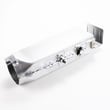
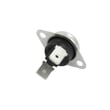
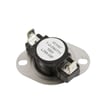
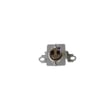

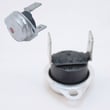
How to tell if Samsung dryer thermal fuse is bad?
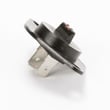
On the Samsung DVE50R5400V dryer, a bad thermal fuse is typically “open” (no continuity), which often shows up as a dryer that will not start or runs but will not heat. We confirm it by safely accessing the fuse and testing it with a multimeter; details vary by configuration, so use the DVE50R5400V user manual.
Common signs a thermal fuse may be bad
A thermal fuse is a safety device that opens if the dryer overheats. Symptoms can overlap with venting or heating problems, so we recommend testing instead of guessing.
- Dryer will not start (some designs route power through the fuse)
- Dryer runs but does not heat (common on many electric and gas dryers)
- Cycle stops early or seems inconsistent after overheating events
- Burning smell or very hot cabinet (stop using the dryer and inspect venting)
- Repeated “no heat” complaints even after cleaning the lint screen
How we test a thermal fuse (basic method)
- Disconnect power (unplug the dryer; for gas models, also shut off the gas supply).
- Access the thermal fuse (commonly on the blower housing or exhaust duct area).
- Pull the two wire connectors off the fuse terminals.
- Set a multimeter to continuity or lowest ohms.
- Touch a meter lead to each terminal.
What the meter reading means
| Meter result | What it usually indicates | Next step |
|---|---|---|
| Continuity (near 0 ohms) | Fuse is likely good | Check heating circuit, airflow, sensors |
| No continuity (open/OL) | Fuse is bad (blown) | Replace the fuse; correct overheating cause |
Why it matters (do not skip this)
A thermal fuse usually blows because the dryer overheated. If you replace the fuse without fixing airflow, the new fuse can fail again.
- Clean the lint screen every load
- Inspect and clean the exhaust duct and outside vent hood
- Avoid crushed or kinked venting; use 4-inch metal ducting when possible
For airflow-related no-heat issues, we often reference dryer takes a long time to dry because restricted venting is one of the most common root causes.
Last updated: January 2026
Is it worth replacing a heating element in a Samsung dryer?
Yes, it’s often worth replacing the heating element in a Samsung dryer like model DVE50R5400V when the dryer is otherwise in good shape and the no-heat problem is confirmed. Before buying parts, we recommend ruling out airflow and power-supply issues using the DVE50R5400V user manual.
When replacement usually makes sense
Replacing the heating element is typically a good value when:
- The dryer tumbles normally and completes cycles, but won’t heat
- The cabinet, wiring, and terminal block show no signs of overheating
- The venting is clear and the lint filter is maintained
- You plan to keep the dryer for a few more years
- The repair cost is well below the cost of a comparable replacement dryer
When it may not be worth it
Consider skipping the repair (or diagnosing further) when:
- The dryer has multiple symptoms (no heat plus loud squeal, burning smell, or frequent shutdowns)
- You see heat damage at the power cord/terminal block area (electric models)
- The dryer has chronic long-dry times caused by restricted ducting that keeps returning
- You suspect a control board or wiring problem in addition to the heater
Quick decision checklist (cost vs. confidence)
| What you know right now | What it suggests | Next step |
|---|---|---|
| Dryer runs but clothes stay cold | Heat circuit issue likely | Confirm airflow and settings, then test heater circuit |
| Dryer heats sometimes | Intermittent component (thermostat, relay, wiring) possible | Diagnose before buying a heater |
| Dryer takes a long time but does get warm | Vent restriction likely | Fix venting first |
Why it matters
On DVE50R5400V, a restricted exhaust system can mimic a “bad heater” by reducing airflow and triggering temperature-related issues. Confirming venting and cycle settings first helps you avoid replacing the wrong part and improves drying performance.
Helpful model-specific tips before you decide
- Clean the lint filter every load and inspect the exhaust duct regularly.
- If you’re using NORMAL with Eco Dry enabled, the dryer may feel like it’s not heating at the beginning; that can be normal behavior.
- Run the built-in Vent Blockage Test described in the manual to check for duct restrictions.
- If an information code appears, use Samsung dryer error codes to narrow the cause before replacing parts.
Last updated: January 2026
What is the most common problem with Samsung dryers?
On the Samsung DVE50R5400V dryer, we can’t verify a single “most common” failure from model-specific documentation alone; however, the user manual shows that no heat, poor drying, and long dry times are among the most frequently troubleshot issues. Start with airflow and lint buildup checks in the DVE50R5400V user manual.
Issues we troubleshoot most often on this model
- Dryer runs but does not heat
- Dryer heats but does not dry well (clothes still damp)
- Extended drying time
- Vent restriction warnings or vent blockage test concerns
- Information codes related to temperature sensing or power
Quick checks to do first (high impact)
- Clean the lint filter before every load; make sure it’s fully seated.
- Check the outside vent hood; it should open freely while the dryer runs.
- Inspect the full vent path for kinks, crushed duct, or lint buildup.
- Avoid overloading; dry heavy and lightweight fabrics separately.
- If a code appears, use Smart Care or the code list before replacing parts.
Airflow vs. heat: what your symptom usually means
| What you notice | More likely cause area | What we do next |
|---|---|---|
| Dryer heats but takes a long time | Venting or airflow restriction | Clean venting, confirm 4-inch metal duct, rerun vent check |
| Dryer tumbles but has no heat | Heating system or safety cutoff | Verify power or gas supply, then test heating components |
| Code such as tC, tC5, HC, or 9C1 | Sensor, overheating, or power issue | Diagnose by code and confirm venting and supply voltage |
Why it matters
Restricted airflow is a top driver of poor drying performance and can also cause overheating that triggers safety shutoffs. Checking venting and the lint filter first often restores normal drying and helps prevent repeat breakdowns.
Related help
Last updated: January 2026
How do I reset my Samsung dryer?
For the Samsung DVE50R5400V dryer, there is not a single, model-specific “reset button” procedure in the user documentation; most “reset” situations are handled by stopping the cycle, correcting the cause (door, lint, venting, power), and restarting. For operating steps and feature behavior, use the DVE50R5400V user manual.
What we recommend first (model-specific)
Use the normal stop and restart method that matches how this dryer is designed to operate:
- Press Start/Pause (Hold to Start) to stop the cycle.
- Make sure the door is fully closed and nothing is caught in the opening.
- Clean and reinstall the lint filter.
- Re-select the cycle and options.
- Press and hold Start/Pause (Hold to Start) to run the cycle.
If you are trying to clear an information code
On DVE50R5400V, codes are meant to point you to a condition that needs attention; they often return until the underlying issue is corrected.
Common code-related checks:
- dC: door is open; close the door firmly and check for laundry caught in the door.
- tC / tC5: thermistor related; check for a clogged lint screen and restricted venting.
- HC: high temperature heating check; clean the lint filter and improve airflow.
- 9C1: abnormal voltage; verify the power supply is correct and stable.
For code definitions and next steps, use our Samsung dryer error codes guide.
When a power cycle can help (and when it usually will not)
A brief power interruption can sometimes clear a temporary control glitch, but it will not fix airflow restrictions, door switch problems, or voltage issues.
| Situation | Power cycle likely to help? | Better next step |
|---|---|---|
| Display or controls acting “stuck” | Sometimes | Turn off, wait briefly, restart cycle |
| Code for door open or vent restriction | Unlikely | Fix door closure, lint filter, venting |
| Long dry times | Unlikely | Check ducting, outside hood, load size |
| Repeated voltage code | Unlikely | Check outlet, breaker, supply wiring |
Why it matters
On Samsung dryers like the DVE50R5400V, “resetting” is usually about restoring safe operation by correcting airflow, door, or power conditions; that prevents repeat shutdowns, overheating protection trips, and poor drying performance.
Last updated: January 2026