Owner’s manual
 View engine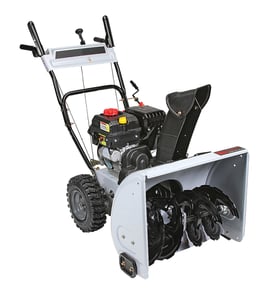



Should I drain the gas out of my snowblower?
Yes. For Craftsman snow thrower model 247888530, we recommend draining the fuel system for off-season storage when you will not use the machine for 30 days or longer; drain the tank, then run the engine until it stalls so the carburetor is emptied (see the off-season storage guidance in the 247888530 owner’s manual).
Best practice for end-of-season storage
- Work outdoors and keep all ignition sources away (gasoline vapors ignite easily).
- Shut the engine off and let it cool before handling fuel.
- Siphon or pump the fuel tank empty into an approved gas container.
- Start the engine and let it run until it stalls (this helps empty the fuel lines and carburetor).
- Wipe up any spills immediately and store fuel containers safely.
Drain vs. treat with stabilizer (quick comparison)
| Storage situation | What we recommend | Why |
|---|---|---|
| Not using it for 30+ days | Drain tank and run engine dry | Helps prevent gum and varnish in the carburetor |
| Using it regularly through winter | Keep fresh fuel and avoid long storage | Reduces starting and performance issues |
| Unsure how long it will sit | Drain is the safest default | Eliminates stale-fuel problems |
If it already has old fuel
- Drain the tank and run it dry first.
- Refill with clean, fresh unleaded gasoline before the next use.
- If it still runs rough or will not start, the carburetor may need cleaning or service.
Why it matters
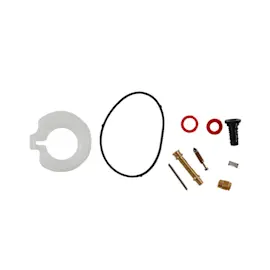
Old gasoline can separate and leave deposits that clog small carburetor passages. Draining the system before storage is one of the most effective ways to prevent “won’t start” problems next season.
Last updated: January 2026
Where can I find the Craftsman snowblower model number?
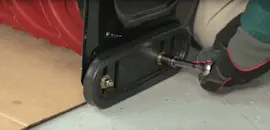
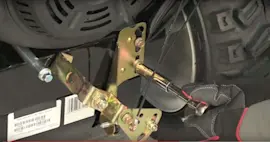
On the Craftsman snow thrower model 247888530, the model number is printed on the product identification label located on the back side of the metal base between the left and right rear wheels. Use that full model number when ordering parts or checking specifications in the 247888530 owner’s manual.
How to locate the label on your snow thrower
- Shut the engine off, remove the ignition key, and let hot parts cool.
- Stand behind the machine at the handlebar position.
- Look low on the rear of the unit at the metal base (near the rear wheels).
- Find the product identification label and read the model number line.
- Write down the model number and serial number for future reference.
What the model number is used for
The model number helps us match the correct diagrams and compatible replacement parts for your exact Craftsman snowblower configuration (auger system, drive system, and chute controls).
| You need | Where to find it | Why it matters |
|---|---|---|
| Model number | Product identification label | Ensures parts fit your exact unit |
| Serial number | Same label | Helps identify production details |
| Engine info | Engine label/plate | Helps match engine-specific service parts |
Why it matters
Even small differences between snowblower versions can change which belts, skid shoes, shear bolts, or auger components fit. Using the exact model number 247888530 prevents ordering the wrong part and reduces downtime during winter.
Last updated: January 2026
Where is the serial number on a snowblower?
On the Craftsman snow thrower model 247888530, the serial number is typically printed on the model and serial number label (often called the ID tag) attached to the machine. Check the rear of the unit first; many snowblowers place the label on the back of the frame or housing. See the 247888530 owner's manual for the model and serial number recording section.
Where to look on the Craftsman 247888530
Start with these common label locations (look for a sticker or metal tag with MODEL and SERIAL):
- Rear of the snowblower frame, behind the handles
- Back of the auger housing (the front bucket area), near the top edge
- Side of the frame near a wheel
- Near the engine mounting area (on the frame, not usually on the plastic shrouds)
- Under the handle panel area (less common, but possible)
What numbers you should write down
For parts lookup and service, we recommend recording these items exactly as shown on the tag:
- Model number: 247888530
- Serial number: the unique unit identifier
- Engine model/spec numbers (if listed): helpful for engine-specific parts
| Item on label | What it’s used for | Example format |
|---|---|---|
| Model number | Matching diagrams and parts to your snowblower | 247888530 |
| Serial number | Identifying your exact production run | Letters and numbers |
| Engine ID (if present) | Matching engine tune-up and fuel parts | Varies |
Why it matters
The serial number can affect small design changes across production runs (brackets, cables, hardware). Using the correct model and serial information helps us match compatible Craftsman parts and avoid ordering the wrong component.
If the label is missing or unreadable
If the tag is damaged, try these practical steps:
- Wipe the area with a damp cloth and mild cleaner, then re-check under bright light
- Use a flashlight at a low angle to make faint printing easier to see
- Take a close-up photo and zoom in
- If you can’t recover the serial number, use the model number 247888530 and confirm parts by diagram and description
Last updated: January 2026
Should I use 87 or 91 for snowblower?
For the Craftsman snow thrower model 247888530, we recommend using clean, fresh, unleaded automotive gasoline; 87 octane is typically the right choice. Higher octane (like 91) usually does not improve performance on this type of small engine unless the engine specifically calls for it in the 247888530 owner’s manual.
What to use (and what to avoid)
- Use 87 octane regular unleaded for normal operation.
- Use fresh fuel (do not use old gas that has been sitting for months).
- Avoid fuel with high alcohol content; the manual warns that alcohol-blended fuels can attract moisture and contribute to fuel system issues during storage.
- Do not overfill the tank; leave room for expansion.
- Store gasoline only in an approved container.
Quick comparison: 87 vs 91 in a snowblower
| Fuel choice | When it makes sense | What you should expect |
|---|---|---|
| 87 octane (regular) | Normal use for most snowblower engines | Reliable starting and running when fuel is fresh |
| 91 octane (premium) | Only if you need it for a specific engine requirement or you prefer it for storage practices | Usually no added power; mainly higher cost |
Why it matters
Using the correct fuel helps prevent hard starting, rough running, and carburetor varnish, especially on seasonal equipment like a two-stage snow thrower. Fresh, properly stored gasoline is often more important than choosing a higher octane.
Helpful related maintenance tips
- If the snowblower will sit 30 days or longer, plan for off-season fuel handling as described in the 247888530 owner’s manual.
- Keep up with seasonal tune-up basics (spark plug, oil checks, and clean fuel practices).
- If you are already servicing the auger area, inspect related components such as the yard-man snowblower auger shaft bearing housing 05931A for wear or damage.
Last updated: January 2026