Installation guide
 Owner’s manual



How to clean Kenmore Quiet Guard Standard dishwasher filter?
On Kenmore dishwasher model 66513269K114, we clean the Ultra Wash HE filtration system by removing the upper filter assembly and lower filter from the bottom center of the tub, rinsing them under running water, then reinstalling and locking the upper filter back in place. See the 66513269K114 use & care manual for the exact removal and reinstallation steps.
The filters sit at the bottom center of the dishwasher tub.
- Turn off the cycle and let the dishwasher cool before reaching into the sump area.
- Remove the lower rack for access.
- Turn the upper filter assembly about 1/4 turn counterclockwise and lift it out.
- Lift the lower filter slightly, then pull it forward to remove.
- Check for debris around the filter opening and remove any visible food pieces.
We recommend cleaning without abrasive tools.
- Rinse both filters under warm running water until most soils are gone.
- Use a soft brush only if you have stuck-on soils or hard-water deposits.
- Do not use a wire brush or scouring pad; it can damage the filter mesh.
| Dish prep habit | Typical filter cleaning interval |
|---|---|
| Scrape and rinse before loading | Every 4 to 12 months |
| Scrape only before loading | Every 2 to 4 months |
| No scraping or rinsing | Every 1 to 2 weeks |
A loose filter can cause poor cleaning and gritty residue.
- Set the lower filter under the locating tabs so the round opening lines up.
- Insert the upper filter assembly into the lower filter opening.
- Rotate the upper filter clockwise until it drops and locks.
- If it still turns freely, keep turning clockwise until it locks.
A clean filter helps your 66513269K114 maintain strong wash performance, reduces redepositing food particles on dishes, and can prevent drainage and odor issues.
Last updated: January 2026
How do I force my Kenmore dishwasher to drain?
On Kenmore model 66513269K114, you can force a drain by canceling the current cycle: open the door slightly to stop the wash action, press CANCEL/DRAIN once, then close the door within 3 seconds. If water is in the tub, it will run about a 2-minute drain.
- Open the door slightly and wait for spraying to stop.
- Press CANCEL/DRAIN one time.
- Close the door within 3 seconds.
- Let the drain cycle finish (about 2 minutes).
- Confirm the Cancel/Drain light turns off when done.
If water remains after the cancel/drain sequence, the issue is usually a blockage or a drain-path problem rather than a control setting.
- Check for a kinked or pinched drain hose under the sink.
- If connected to a disposer, make sure the disposer inlet knockout plug was removed.
- Check for food or debris in the sink drain/disposer connection.
- Clean the dishwasher filter system (food buildup can restrict flow).
- If the drain motor hums but does not move water, the drain pump may be jammed or failing.
| What you notice | Most likely cause | What to do next |
|---|---|---|
| Water stays in tub, no drain sound | Drain path blocked or control not canceling | Repeat cancel/drain; then check hose and disposer inlet |
| Hums but does not drain | Pump jam or weak pump | Inspect pump area; consider replacing the drain pump |
| Drains slowly | Partial clog or dirty filter | Clean filter and check drain hose routing |
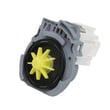
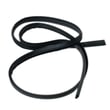
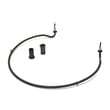
If troubleshooting points to a failed drain component on this model, these are commonly involved:
Forcing a drain clears standing water so you can safely unload dishes, prevent odors, and confirm whether you have a simple cancel/drain issue or a true “won’t drain” problem.
For more control-panel details and the exact cancel/drain procedure wording for this series, use the 66513269K114 use & care manual.
Last updated: January 2026
What are the common problems with Kenmore dishwashers?
Common problems we see on the Kenmore 66513269K114 dishwasher are poor cleaning, water not draining, leaks, and cycles that will not start or finish. Many issues trace back to filter maintenance, loading, water temperature, or a worn seal, pump, or inlet valve; see the 66513269K114 use & care manual for model-specific operating and care steps.
- Dirty dishes or gritty residue: clogged filter, blocked spray arm holes, or poor loading that prevents water flow.
- Water left in the tub: drain hose restriction, disposer knockout plug not removed, or a weak drain pump.
- Leaks at the door: worn door seal or lower door seal, or suds from the wrong detergent.
- Won’t start or stops mid-cycle: door not latched, control lock enabled, or the door not closed within the start window.
- Long cycle times: normal on high-efficiency models, especially if incoming water is cool.
- Clean the filter system monthly (more often with heavy use or hard water); a clogged filter is a top cause of poor cleaning.
- Run hot water at the sink until it is hot before starting; this model is designed for about 120°F incoming water.
- Confirm the spray arms spin freely and the detergent dispenser is not blocked by tall items.
- Use only automatic dishwasher detergent and add rinse aid for better drying and fewer spots.
- If connected to a disposer, confirm the disposer inlet knockout plug is removed.
| Symptom | Part to inspect/replace | Why it matters |
|---|---|---|
| Leaking at the door | Dishwasher door seal W11177741 | A worn seal lets water escape during wash and drain. |
| Not draining | Dishwasher drain pump WPW10348269 | A weak pump can leave water in the tub. |
| Won’t fill or fills slowly | Dishwasher water inlet valve W11175771 | Low fill reduces spray pressure and cleaning. |
| Poor cleaning | Dishwasher filter W10872845 | A damaged or clogged filter can recirculate soil. |
On the 66513269K114, many “big” problems start as simple flow issues (filter, spray, fill, drain). Fixing those early helps prevent odors, redeposited food soils, and repeat cycle failures.
Last updated: January 2026