Owner’s manual
 Error Codes
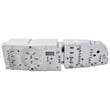

What is the capacity of the Kenmore Elite washer?
The Kenmore Elite washer model 11044836300 is a horizontal-axis (front-load style) washer; most machines in this class are typically about 4.0 to 4.5 cu. ft. capacity. For the exact rated capacity for your specific unit, check the specifications section in the 11044836300 owner's manual.
Capacity is usually listed as “capacity,” “tub volume,” or “basket volume” in the specs.
- Look for a Specifications or Product data section
- Check the model/serial tag on the cabinet to confirm you are matching the correct model number
- If the manual lists liters, convert to cubic feet (1 cu. ft. = 28.3 L)
- If you only see “load size” (small, medium, large), use the typical range above as a guide
| Washer type | Typical capacity range |
|---|---|
| Compact front-load | 2.0 to 2.8 cu. ft. |
| Full-size front-load (horizontal axis) | 4.0 to 5.0 cu. ft. |
| Traditional top-load | 3.5 to 4.5 cu. ft. |
Capacity affects how much you can wash per cycle and how you should dose detergent. Overloading a front-load washer can also increase vibration and strain parts like the drive system and drain components.
Last updated: January 2026
How to do a hard reset on a Kenmore washer?
For the Kenmore Elite washer model 11044836300, a hard reset is done by removing power long enough for the control to fully shut down, then restoring power and restarting a cycle. This clears many temporary glitches and can stop a stuck cycle or unresponsive buttons.
- Press Pause/Cancel once to stop the cycle (if the washer responds).
- Unplug the washer from the outlet (or switch the breaker OFF).
- Wait 2 minutes.
- Plug the washer back in (or switch the breaker ON).
- Select a normal cycle and press Start.
These checks fix the most common “looks dead” or “won’t run” situations on front-load Kenmore Elite washers.
- Confirm the outlet has power (test with a lamp).
- Make sure the door closes firmly and latches; a failed latch can prevent starting.
- Check for a drain problem; if the washer cannot drain, it may not advance or spin.
- Verify both hot and cold water supplies are on; fill errors can stop a cycle.
- If the tub is full of water, run Drain/Spin after the reset.
| Symptom after reset | What to inspect | Example part for model 11044836300 |
|---|---|---|
| Door won’t lock, cycle won’t begin | Door latch/lock mechanism | Door lock WP8182634 |
| Won’t drain, stops mid-cycle | Drain pump and hoses | Water pump 280187 |
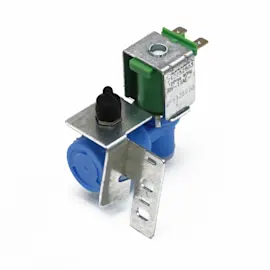
| Won’t fill or fills slowly | Inlet valve and screens | Washer water inlet valve WP8181694 |
A hard reset restores the control board to a clean startup state. If the same failure returns right away, the washer is usually reacting to a real condition (door not locking, not filling, not draining) rather than a one-time control glitch.
For model-specific control and cycle details, use the 11044836300 owner's manual.
Last updated: January 2026
What is the life expectancy of a Kenmore washer?
Most Kenmore washers, including the Kenmore Elite 11044836300 horizontal-axis washer, typically last 10 to 15 years with normal household use. Lifespan depends most on load size, how often you run it, and whether wear items (like the drain pump and door boot) are replaced when symptoms start.
- Weekly usage: 3 to 5 loads per week usually lasts longer than daily heavy use
- Overloading: strains the drive system, tub bearings, and suspension
- Water quality: hard water can increase detergent buildup and odors
- Drain health: coins, lint, and debris can shorten pump life
- Door seal care: front-load door boots last longer when kept clean and dry
| Washer type | Typical life expectancy | Notes |
|---|---|---|
| Front-load / horizontal-axis (like 11044836300) | 10 to 15 years | Best results with correct detergent and routine cleaning |
| Top-load (traditional) | 10 to 14 years | Often tolerates abuse a bit better |
| Heavy-use household (large family, daily loads) | 7 to 12 years | Wear parts usually show up sooner |
- Use HE detergent and avoid overdosing (too many suds stresses the drain system)
- Leave the door slightly open between loads to reduce mildew and bellow damage
- Check pockets to prevent clogs and pump damage
- Run a monthly cleaning cycle (or hot cycle) to reduce buildup
- Level the washer to reduce vibration and suspension wear
If the washer is otherwise in good shape, replacing common wear parts can extend life significantly. Examples include the water pump 280187 for draining problems or the bellow WP8181850 if you see leaks at the door.
A washer that is maintained and repaired early usually avoids secondary damage (like water leaks, motor strain, or repeated drain errors), which is what most often turns a simple fix into a replacement decision. For model-specific care and cleaning guidance, use the 11044836300 owner's manual.
Last updated: January 2026
How to force a Kenmore Elite washer to drain?
To force-drain a Kenmore Elite washer model 11044836300, we use the emergency drain method: shut off power, then drain water from the pump filter area and clear any blockage so the drain pump can move water out normally. See the steps in the 11044836300 owner's manual.
- Unplug the washer (or switch off the breaker).
- Turn off both water supply valves.
- Place towels and a shallow pan under the lower front access area.
- Open the lower access panel and locate the pump clean-out (filter cap).
- Slowly loosen the filter cap to let water drain into the pan; empty the pan as needed.
- Remove the filter fully and clear lint, coins, buttons, and debris.
- Reinstall the filter cap snugly, close the panel, then restore power.
Most no-drain problems come from a clog, a kinked drain hose, or a failing pump.
- Check the drain hose for kinks, crushing, or a blocked standpipe.
- Confirm the drain hose is not shoved too far down the standpipe (it can siphon or back up).
- Listen for the pump during Drain/Spin; a loud hum with no water movement points to a blockage or pump issue.
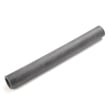
- If the washer drains slowly or not at all after cleaning the filter, inspect the water pump 280187 and the washer tub-to-pump hose WPW10467168 for obstructions.
| What you see | Most common cause | What we do first |
|---|---|---|
| Water stays in tub, pump hums | Clogged pump filter or hose | Clean filter; check tub-to-pump hose |
| No pump sound at all | Door not locking or control issue | Verify door locks; retry Drain/Spin |
| Drains but very slowly | Partial clog or weak pump | Clear hoses; consider pump replacement |
Standing water can cause odor, poor rinsing, and repeated drain errors. Clearing the pump filter and checking the drain path protects the drain pump and helps the washer reach high-speed spin.
Last updated: January 2026