Installation guide
 Owner’s manual
 Error Codes


What is the most common problem with Whirlpool washers?
The most common Whirlpool washer problems are no drain/no spin, won’t start, and excessive noise or shaking. On the Whirlpool LSN1000LW0 direct-drive washer, these symptoms most often trace back to a lid switch issue, a drain pump restriction, or a worn drive coupling.
Quick symptom-to-cause checklist (LSN1000LW0)
- Won’t spin or drain: lid switch not closing, pump jam, or a worn motor coupling
- Won’t start: lid switch not engaging, timer issue, or power supply problem
- Loud grinding/rattling: pump obstruction, clutch wear, or gearcase wear
- Agitates poorly: worn agitator dogs or agitator drive wear
- Shakes/bangs: unbalanced load, weak suspension spring, or leveling issue
Most common fixes we see on direct-drive Whirlpool top-load washers
These are the first items we check because they commonly fail and match the symptoms above:
| Symptom | What to check first | Common part to consider (if failed) |
|---|---|---|
| No spin/no drain | Lid switch operation | Washer lid switch WP8054980 |
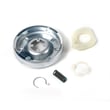
| Hums but won’t move | Motor-to-transmission connection | Washer motor coupling 285753A |
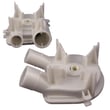
| Won’t drain or drains slowly | Pump for clogs/leaks | Washer drain pump WP3363394 |
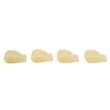
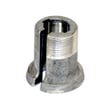
| Agitator slips or “ratchets” | Agitator dogs | Agitator dog 80040 |
How we recommend troubleshooting (safe, fast steps)
- Unplug the washer before inspecting parts.
- Confirm the lid closes firmly; if the washer stops when you lift the lid, the lid switch circuit is critical to spin.
- Check the drain hose for kinks and the standpipe for slow draining.
- If you hear the motor running but the tub will not spin or agitate, inspect the motor coupling.
- If the washer will not drain or you find water under the unit, inspect the drain pump for debris and cracks.
Why it matters
No-drain and no-spin complaints often look like a “bad motor,” but on a direct-drive design like the LSN1000LW0, a simpler failure (lid switch, coupling, or pump) is more common and usually faster to diagnose and repair. For model-specific operating and safety details, use the LSN1000LW0 owner’s manual.
Last updated: February 2026
Are Whirlpool washer parts interchangeable?
Whirlpool washer parts are only interchangeable when the part is an exact match for your specific washer design and revision. For Whirlpool direct-drive washer model LSN1000LW0, we recommend using factory specified replacement parts so the part fits right and works right.
What “interchangeable” really means
Parts can look similar across Whirlpool, Kenmore, and other Whirlpool-built models, but small differences (mounting holes, electrical connectors, shaft sizes) can prevent proper operation.
Common examples where exact matching matters:
- Electrical parts: timer, lid switch, inlet valve
- Drive system parts: motor coupling, clutch, gearcase-related parts
- Water handling parts: drain pump, inner drain hose
- Agitation parts: agitator, agitator dogs, agitator bolt
Best way to confirm a part fits LSN1000LW0
Use the model-specific diagrams and part lists, then match by part ID or part number.
Checklist we use:
- Confirm the full model number is LSN1000LW0 (not just “LSN1000”)
- Match the part by part ID/part number, not by appearance
- Compare any included hardware (clips, couplers, grommets)
- Verify electrical ratings and connector style for switches and timers
Parts that are commonly confused on direct-drive Whirlpool washers
| Symptom | Often suspected part | Example part for LSN1000LW0 |
|---|---|---|
| Won’t spin or agitates poorly | Motor coupling or clutch | Washer motor coupling 285753A, clutch 285785 |
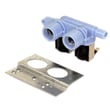
| Won’t drain | Drain pump or drain hose | Washer drain pump WP3363394, washer inner drain hose WPW10358149 |
| Won’t start or won’t spin with lid closed | Lid switch | Washer lid switch WP8054980 |
Why it matters
Using the correct Whirlpool factory specified part helps prevent repeat failures, leaks, noise, and premature wear. It also reduces the chance of damaging related components in the drive system or wiring.
For part identification and exploded views, use the LSN1000LW0 owner's manual.
Last updated: February 2026
What's the average lifespan of a Whirlpool washing machine?
Whirlpool washing machines typically last 10 to 14 years in normal household use. For your Whirlpool LSN1000LW0 direct-drive washer, consistent maintenance and correct loading habits are what most often determine whether it lands closer to 10 years or keeps running well beyond that; see the LSN1000LW0 owner's manual for care and use details.
What affects washer lifespan the most
These are the biggest real-world factors we see with direct-drive Whirlpool washers:
- Overloading (extra strain on the drive system, clutch, and basket drive)
- Unbalanced loads (more vibration and wear on suspension and drive components)
- Detergent and bleach use (too much detergent causes buildup; undiluted bleach can damage fabrics and components)
- Water quality (hard water speeds up mineral buildup)
- Small leaks left unfixed (corrosion and bearing or gearcase damage over time)
Typical lifespan expectations (quick guide)
| Usage pattern | Typical lifespan | What usually shortens it |
|---|---|---|
| Light (few loads/week) | 12 to 16 years | Sitting unused, hose aging, minor leaks |
| Average (most households) | 10 to 14 years | Overloading, poor leveling, buildup |
| Heavy (large family) | 7 to 12 years | Frequent unbalanced loads, wear on drive parts |
Maintenance habits that help LSN1000LW0 last longer
We recommend these practical steps for a Whirlpool direct-drive washer:
- Keep loads evenly distributed; mix items to reduce off-balance spinning
- Use the recommended detergent amount; avoid “extra” detergent for better cleaning
- Don’t pour chlorine bleach directly on the load; wipe spills promptly (helps prevent damage)
- Check fill and drain hoses for cracks, bulges, or seepage and replace as needed
- If agitation gets weak, inspect common wear items like the agitator dog 80040 before bigger repairs
Why it matters
A washer that is maintained and repaired early usually avoids the expensive failures (gearcase, basket drive, motor-related wear) that can end its service life. Small fixes and correct use often add years to a Whirlpool washer’s life.
Last updated: February 2026