Owner’s manual
 Error Codes




What's the average lifespan of a Whirlpool refrigerator?
Most Whirlpool refrigerators average about 10 to 15 years of service life with normal use and basic maintenance. For your Whirlpool GB2FHDXWS07 bottom-mount refrigerator, keeping airflow clear, doors sealing tightly, and temperatures set correctly helps you reach the high end of that range; see the GB2FHDXWS07 owner’s manual for care and operating guidance.
A refrigerator’s lifespan depends more on operating conditions than brand alone.
- Condenser cleanliness (dust buildup makes the compressor work harder)
- Door gasket condition (air leaks cause longer run times)
- Room temperature and ventilation (tight cabinets trap heat)
- Ice maker and water system upkeep (clogs and leaks create extra wear)
- How often doors are opened and how full the compartments stay
These steps are safe, fast, and make a measurable difference.
- Vacuum the front grille area and clean condenser coils (if accessible)
- Confirm the refrigerator is level so doors self-close
- Keep vents inside the fresh food and freezer compartments unblocked
- Set temps to typical targets: 37°F fresh food and 0°F freezer
- Address water leaks quickly; a slow drip can damage components over time
Many “end of life” symptoms are actually a single failed part.
| Symptom | Common cause | Example part for GB2FHDXWS07 |
|---|---|---|
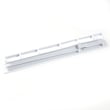
| Warm fridge, freezer OK | Airflow/damper issue | Refrigerator damper control assembly WPW10196393 |
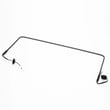
| Frost buildup, warming | Defrost system issue | Refrigerator defrost heater WP12729128 |
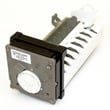
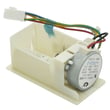
| No ice | Ice maker failure or water supply issue | Refrigerator ice maker D7824706Q |
Knowing the typical 10 to 15 year lifespan helps you decide whether to repair (often cost-effective for a single part like a damper, heater, or ice maker) or plan for replacement when multiple sealed-system issues stack up.
Last updated: January 2026
What is the most common problem with Whirlpool refrigerators?
The most common Whirlpool refrigerator issue is poor cooling caused by restricted airflow or heat not being released, most often from dirty condenser coils. On Whirlpool model GB2FHDXWS07, the same basics apply: start with cleaning, airflow checks, then test fans and temperature controls.
- Dirty condenser coils: warm fresh food section, longer run times, hot cabinet sides.
- Condenser fan not running (if equipped): compressor area gets very hot, weak cooling.
- Evaporator fan problem: freezer may get cold but refrigerator warms; little or no air from vents.
- Defrost system issue: frost buildup on the freezer back wall; airflow drops over time.
- Temperature sensing/control issue: temperatures swing, or unit runs too much or too little.
- Unplug the refrigerator; vacuum and brush the condenser coils and the area around the compressor.
- Confirm vents inside the refrigerator and freezer are not blocked by food packages.
- Listen for the evaporator fan in the freezer when the door switch is pressed.
- Check for heavy frost on the freezer back panel (points to a defrost problem).
- Verify settings: refrigerator about 37°F and freezer about 0°F.
| Symptom | Likely system | Example part for this model |
|---|---|---|
| Warm fridge, freezer OK | Air circulation | Refrigerator evaporator motor W11024089 |
| Frosted freezer back wall | Defrost system | Refrigerator defrost heater WP12729128 |
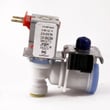
| No ice or weak water fill | Water supply | Refrigerator water inlet valve assembly WP2315576 |
When coils are dirty or a fan is failing, the compressor runs longer and hotter. Fixing airflow and heat removal early helps restore normal temperatures and reduces strain on major components like the compressor and control.
- Use the GB2FHDXWS07 manual for cleaning locations, airflow diagrams, and control settings.
- If you’re seeing a code or flashing lights, use Whirlpool refrigerator error codes to narrow the failure to a specific circuit or sensor.
Last updated: January 2026
How do you remove the bottom freezer drawer on a Whirlpool refrigerator?
On the Whirlpool GB2FHDXWS07 bottom-mount refrigerator, you typically remove the bottom freezer drawer by pulling it fully open, lifting the drawer front up and off the side rails, then removing the basket and sliding the rails out as needed. Use the GB2FHDXWS07 owner's manual for the exact rail and stop style.
- Unplug the refrigerator or turn off power at the breaker for safety.
- Pull the freezer drawer all the way open.
- Lift up on the drawer front to release it from the rail brackets, then pull the front off.
- Lift the upper basket out (if equipped), then lift the lower basket out.
- If you need the rails out, locate the rail stops or locking tabs near the front; press the tabs and slide the rails forward to remove.
- #2 Phillips screwdriver (some versions use screws on the drawer front brackets)
- Small flat-blade screwdriver (to help press locking tabs)
- Work gloves (sharp metal edges on rails)
- Drawer front will not lift off: Check for screws at the inside corners of the drawer front; remove them first.
- Rails will not release: Look for a locking tab on each rail; both sides must be released evenly.
- Drawer feels crooked on reinstall: Make sure both rails are fully seated at the same extension and the drawer front is clipped into both brackets.
| Item to verify | What “correct” looks like |
|---|---|
| Rail position | Left and right rails extend the same distance |
| Drawer front attachment | Both sides clipped in (or screwed in) evenly |
| Basket seating | Basket sits flat and slides without rubbing |
Removing the freezer drawer correctly prevents bent slide rails, broken mounting tabs, and air leaks that can cause frost buildup and poor cooling.
Last updated: January 2026
How do I stop ice buildup on the bottom of my freezer?
Ice buildup on the bottom of the freezer in your Whirlpool GB2FHDXWS07 almost always happens when defrost water cannot drain to the pan, then refreezes into a sheet of ice. Clearing the drain path and restoring good door sealing stops the repeat freeze-up.
- Unplug the refrigerator, then remove food and the freezer basket so you can access the rear panel.
- Melt the ice sheet with a hair dryer on low or by placing towels and letting it thaw (do not chip ice with sharp tools).
- Flush the defrost drain with hot water using a turkey baster until it flows freely to the drain pan.
- Clean the drain opening and trough; food particles and ice slush commonly block it.
- Check the door seal for gaps and clean it with warm soapy water; warm air leaks create heavy frost that adds to drain icing.
If you clear the drain and ice returns within days or weeks, one of these issues is common.
| What you notice | Likely cause | What to inspect next |
|---|---|---|
| Ice sheet returns, water puddles after defrost | Drain tube restricted or icing | Inspect/replace the refrigerator drain tube W10619951 |
| Heavy frost plus ice on floor | Defrost system not melting frost fully | Test the refrigerator defrost heater WP12729128 |
| Frost pattern is uneven, fan noise changes | Poor airflow across evaporator | Check the refrigerator evaporator fan motor W11024089 |
When the drain is blocked, defrost water has nowhere to go, so it refreezes and can eventually push water out onto the kitchen floor. Fixing it early also helps your Whirlpool refrigerator maintain stable temperatures and reduces compressor run time.
For panel removal, drain access points, and any model-specific cautions for GB2FHDXWS07, follow the steps in the GB2FHDXWS07 owner’s manual.
Last updated: January 2026