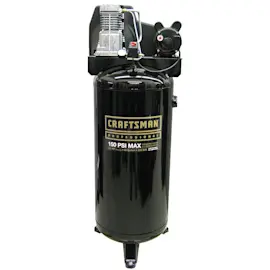
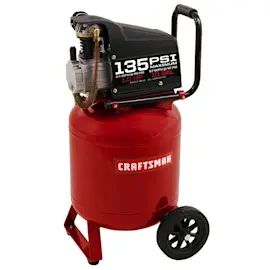
Owner’s manual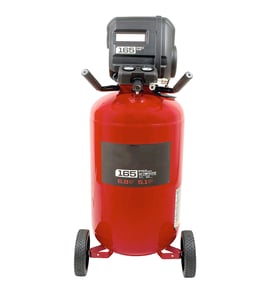
What is the common problem with an air compressor?
The most common problems we see on the Craftsman 919176951 air compressor are air leaks (at fittings, hoses, or valves) and pressure control issues (pressure switch not shutting off, regulator leaking, or a restricted check valve). These issues typically show up as low pressure, constant cycling, or a safety valve popping.
Common problems and what they look like
- Air leaks at fittings: hissing around tube connections, couplers, or the tank outlet
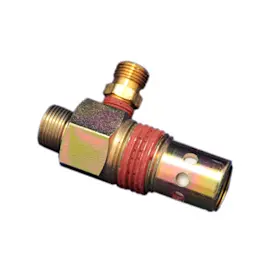
- Air leaks at or inside the check valve: leaking near the pump-to-tank line, hard starting, or air bleeding back
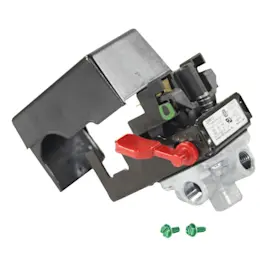
- Pressure switch problems: compressor does not shut off at cut-out pressure, or won’t restart correctly
- Regulator problems: continuous leak at the regulator knob, or regulated pressure drops quickly under tool use
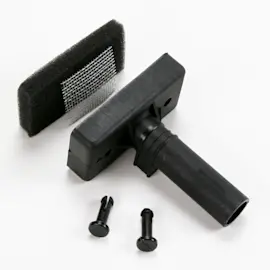
- Restricted air intake filter: reduced output and longer run times
Quick checks you can do safely
Before any inspection or repair, unplug the compressor and bleed off all tank air pressure.
- Listen for hissing with the tank pressurized; check fittings, hose connections, and valves
- Spray soapy water on suspected leak points; bubbles pinpoint the leak
- Watch the tank pressure gauge; if pressure climbs too high and the safety valve opens, stop using it
- Check the air intake filter for dirt or blockage
- If regulated pressure drops when using a tool, compare the tool’s air demand to the compressor’s output rating
Troubleshooting guide: symptom to likely cause
| Symptom | Likely cause | What to check first |
|---|---|---|
| Safety valve pops | Pressure switch not shutting off, cut-out set too high, tank leak | Pressure switch operation, obvious leaks |
| Won’t supply enough air | Restricted intake filter, air leaks, check valve restricted, undersized compressor | Filter, leaks, check valve |
| Regulator leaks continuously | Dirty or damaged regulator internal parts | Regulator body and outlet |
Why it matters
Air leaks and pressure-control failures waste air, overwork the motor and pump, and can create unsafe overpressure conditions. Following the safety steps in the 919176951 owner’s manual helps prevent injury from hot parts, moving parts, and compressed air.
Last updated: January 2026
How to check compressor size?
For the Craftsman 919176951 air compressor, “size” usually means the tank capacity (gallons), the motor power, and the pump output (CFM at a given PSI). The most reliable way to check the exact ratings for your unit is the data label on the compressor and the specifications section in the 919176951 owner's manual.
What “compressor size” can mean
- Tank size (gallons): how long you can run tools before the pump has to cycle.
- Air delivery (CFM): how much usable air the pump produces (commonly listed at 40 PSI and 90 PSI).
- Max pressure (PSI): the highest tank pressure before the pressure switch shuts the motor off (cut-out).
- Motor rating (HP/amps/volts): what the motor can sustain and what your circuit must support.
- Duty cycle: how long the compressor can run before it needs a cool-down period.
Where to find the size information on the compressor
Check these spots first:
- Tank label or decal (often lists gallons, max PSI, and sometimes SCFM/CFM)
- Motor nameplate (voltage, amps, RPM, sometimes HP)
- Pressure switch cover area (may list cut-in and cut-out settings)
- Manual specifications pages in the 919176951 owner's manual
Quick guide: which “size” matters for your job
| If you are doing this | The spec to match | What to look for |
|---|---|---|
| Nailers, staplers, brad nailers | Tank size + recovery | Moderate PSI, steady cycling |
| Impact wrench, ratchet, die grinder | CFM at 90 PSI | Higher CFM than the tool requires |
| Painting/spraying | CFM at working PSI + regulator stability | Consistent airflow, clean dry air |
| General shop use | Max PSI + CFM | Enough CFM to avoid constant running |
Why it matters
If you size by the wrong number (for example, tank gallons only), the compressor can run constantly, overheat, and struggle to maintain pressure. Matching CFM at the tool’s PSI gives the most accurate “right size” for performance.
Last updated: January 2026
Do I need a 150 psi max air compressor?
For a Craftsman air compressor model 919176951, you only need 150 PSI max if your air tools or accessories require higher pressure or you want more stored air in the tank; for most DIY pneumatic tools, regulated output around 90 to 120 PSI is enough as long as your compressor can keep up with airflow demand.
How to decide (PSI vs. SCFM)
PSI is the pressure ceiling; SCFM (airflow) is what keeps tools running without constant pressure drop. Use this quick checklist:
- Check the tool label for required PSI and SCFM
- Plan to set the regulator to the tool’s requirement (commonly 90 PSI)
- Choose extra SCFM if you run tools continuously (spray guns, sanders)
- Avoid exceeding any tool’s maximum pressure rating
- If you use accessories rated under 125 PSI, install and use a regulator
For model-specific operating and safety guidance, follow the 919176951 owner’s manual.
Typical PSI needs by tool type
| Tool or use | Typical working pressure | Notes |
|---|---|---|
| Brad/finish nailer | 70 to 100 PSI | Low airflow demand; most compressors work well |
| Impact wrench/ratchet | 90 PSI | Airflow matters more than max PSI |
| Blow gun/inflation | 30 to 90 PSI | Regulator control is key |
| HVLP/paint spraying | 20 to 50 PSI at gun | Often needs higher SCFM depending on gun |
Safety and setup that matter more than max PSI
The manual stresses that too much air pressure is a bursting hazard. We recommend these basics every time:
- Verify the manufacturer’s maximum pressure rating for each tool/accessory
- Set the regulator so outlet pressure never exceeds that rating
- Turn the compressor OFF before attaching or removing accessories
- Drain tank moisture regularly to reduce internal corrosion
Why it matters
Buying for “150 PSI max” alone can lead to a compressor that hits pressure but cannot supply enough airflow, causing slow tool performance and frequent cycling. Matching tool SCFM at the required PSI gives better real-world results.
Last updated: January 2026
What company makes Craftsman air compressors?
Craftsman air compressors (including model 919176951) were produced for Sears by multiple manufacturers over the years, so the maker depends on the exact unit and production code. The most reliable way to identify who made yours is to use the compressor’s data labels and the identification guidance in the 919176951 owner's manual.
How we identify the manufacturer on a Craftsman compressor
Use the information printed on the unit, not the model prefix alone.
- Record the model number from the maintenance label on the air tank
- Record the code number from the maintenance label or foil label (often on the rear of the tank)
- If your unit is ASME-coded, record the manufacturer’s number from the welded metal data plate on the tank
- Keep these numbers together for parts ordering and service
Where to look on model 919176951
The manual for this Craftsman oil-lubricated single-stage compressor describes common label locations.
| Information to record | Typical label location | What it helps with |
|---|---|---|
| Model number | Maintenance label on the tank (often left front) or label on the shroud | Confirms the exact unit family |
| Code number | Maintenance label or foil label (often rear of tank) | Identifies the production version |
| Manufacturer’s number (some units) | Welded metal data plate on the tank | Helps identify the build source |
Why it matters
Manufacturer and production code determine which repair parts fit, especially items like the pressure switch, regulator, check valve, and pump components. Matching the label information prevents ordering a look-alike part that will not mount or connect correctly.
Related DIY help
Last updated: January 2026