Owner’s manual
 View engine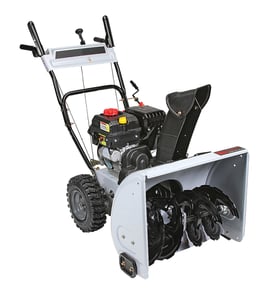




How many years should a snowblower last?
A Craftsman snow thrower like model 536881851 commonly lasts about 10 to 15 years when it’s maintained on schedule, stored properly, and repaired as wear items fail. Heavy use, poor storage, and skipped maintenance can shorten that lifespan.
This model is an 8.5 HP, 27-inch dual-stage unit; with routine oil changes, belt checks, and proper off-season storage, it’s realistic to keep it running reliably for many winters. For the maintenance intervals and storage steps, follow the 536881851 owner’s manual.
- Change engine oil at the recommended interval and keep the oil at the FULL mark
- Use fresh fuel and stabilize fuel before storage
- Keep the auger housing and discharge chute clear; avoid ingesting gravel
- Check and tighten fasteners; address abnormal vibration immediately
- Store dry and covered; prevent rust on the auger housing and impeller
Most snowblowers get retired because common wear parts are ignored until performance drops. On this model, the manual calls out normal-wear items like belts and shear pins.
| Wear item | What you’ll notice | Typical fix |
|---|---|---|
| Drive belt | Unit won’t self-propel or slips under load | Replace belt |
| Auger drive belt | Auger/impeller won’t throw snow well | Replace belt |
| Shear pins | Auger stops turning after hitting an object | Replace shear pins |
| Friction wheel | Poor traction or no forward movement | Inspect/replace friction wheel |
If you’re troubleshooting movement issues, the snowblower drive belt 1733324SM is one of the common replacement parts for this model.
A snowblower that’s maintained tends to fail gradually (slipping belts, worn friction wheel, broken shear pins) instead of failing suddenly. Replacing those parts early usually costs far less than replacing the entire machine.
Last updated: January 2026
Is it cheaper to repair or replace a snowblower?
For the Craftsman snow thrower model 536881851, it’s usually cheaper to repair when the issue is a normal wear item (belt, shear pins, cable) and the machine is otherwise in good shape. Replacement tends to make more sense when repair costs approach about half the price of a comparable new snowblower.
We recommend leaning toward repair when most of these are true:
- The engine starts and runs smoothly (no persistent stalling or heavy smoke)
- The auger and drive problems point to wear parts (belt, shear pins, friction wheel)
- The frame, auger housing, and chute are not cracked or badly bent
- You can do the work yourself using the 536881851 operator’s manual
- The needed parts are readily identifiable for your exact model
We recommend leaning toward replace when several of these are true:
- Multiple major systems need work at once (engine + drive + auger)
- The machine has repeated failures each season despite maintenance
- Corrosion or structural damage makes repairs unreliable
- You would pay for labor-heavy repairs that exceed the machine’s value
On this model, many common problems are tied to routine service parts:
- Won’t self-propel: inspect/replace the ground drive belt or friction wheel
- Won’t throw snow well: inspect/replace the auger belt or replace broken shear pins
- Slipping or squealing: check belt condition and tension adjustments
If you suspect a worn ground drive belt, the snowblower drive belt 1733324SM is a common replacement part for this model.
| Scenario | Typical scope | Usually smarter choice |
|---|---|---|
| Belt or shear pin replacement | Basic DIY repair | Repair |
| Friction wheel replacement | Moderate DIY repair | Repair (if engine is strong) |
| Engine won’t run reliably + drive issues | Complex diagnosis/parts | Replace (often) |
A well-maintained Craftsman 536881851 can often be kept running for years with periodic belts, shear pins, and adjustments. Deciding based on total repair cost (parts + labor) helps avoid sinking money into a machine that won’t be dependable in the next storm.
Last updated: January 2026
Can I use 5W30 instead of SAE 30 in my snowblower?
Yes. For the Craftsman snow thrower model 536881851, the operator’s manual states that synthetic 5W30 is acceptable for all temperatures, so it’s a safe choice for winter operation; straight SAE 30 is typically thicker in cold weather and can make starting harder. See the oil guidance in the 536881851 operator's manual.
Use a high-quality detergent oil and keep the level at the FULL mark on the dipstick.
- Use 5W30 (synthetic is fine) for cold-weather starting and normal snowblower use.
- Avoid straight SAE 30 in freezing conditions; it can crank slowly and increase wear at startup.
- Check oil level with the unit level and the engine off.
- Do not overfill; too much oil can cause running issues.
- Change oil at least yearly or about every 50 hours of use (whichever comes first).
| Oil type | Cold-weather starting | Best use case | Notes |
|---|---|---|---|
| 5W30 (synthetic) | Best | Snowblower winter temps | Manual-approved for all temps on this model |
| 5W30 (conventional) | Good | Typical winter use | Also acceptable if it meets service rating |
| SAE 30 (straight) | Poor in cold | Warmer temps | Can be too thick for snowblower starting |
Snowblower engines see the most wear during cold starts. Using 5W30 in your 536881851 helps oil flow faster at startup, which improves starting and reduces friction when temperatures drop.
Last updated: January 2026
Should I spray my snowblower with WD-40?
For Craftsman model 536881851, the operator guidance does not list WD-40 (or any anti-stick spray) as a required maintenance step. Instead, we recommend following the cleaning, adjustment, and safety steps in the 536881851 operator's manual to reduce clogging and protect the drive system.
The manual focuses on operating technique, safe unclogging, and post-use steps.
- Stop the engine before unclogging the discharge chute or auger housing
- Remove the safety key and disconnect the spark plug wire before servicing
- Use the cleaning stick (not your hands) to clear packed snow
- Run the snow thrower a few minutes after throwing snow to help prevent freeze-up
- Adjust ground speed to match conditions (slower in deep, wet, or heavy snow)
Because the manual does not provide a WD-40 procedure for the 536881851, we cannot confirm a manufacturer-approved way to apply it. If you choose to use any product, keep it limited and make sure it does not create slipping or attract debris.
| Area | Better approach first | Why |
|---|---|---|
| Chute and auger housing | Clear packed snow and ice; use proper speed and overlap | Reduces clogging without adding residue |
| Drive performance issues | Inspect belts, cable adjustment, and shear pins | Sprays will not fix worn or slipping parts |
If the snow thrower still jams or won’t throw well after you correct technique and clear buildup, check common wear items.
- Worn or loose auger drive belt
- Broken shear pins
- Cable out of adjustment
Helpful examples for this model include the snowblower gas belt 585416MA and the kit shearbol 1501227MA.
Using the correct operating and maintenance steps helps prevent jams and protects key components like belts and shear pins. It also reduces the risk of unsafe unclogging.
Last updated: January 2026