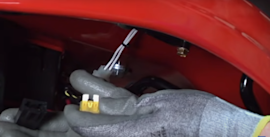
Installation guide
 Owner’s manual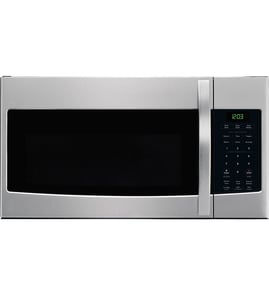




How can I tell what size my microwave is?
For your GE JVM1540DM5BB microwave/hood combo, “size” usually means two things: the outside dimensions (to fit the cabinet space) and the inside capacity (cubic feet). The most reliable way is to measure the unit and confirm the listed specs in the JVM1540DM5BB owner’s manual.
Measure the outside (fit and clearance)
Use a tape measure and record these three numbers:
- Width: measure across the front of the microwave
- Height: measure from the bottom to the top of the case
- Depth: measure from the back to the front edge (include the door if you need full clearance)
- Door swing clearance: make sure the door can open without hitting a cabinet or wall
- Vent clearance: confirm you have room for airflow and the vent path (recirculating or ducted)
Most over-the-range microwave/hood combos are about 30 inches wide, but the exact dimensions vary by model.
Confirm the installation “size” requirements
If you are replacing an existing unit, the installation guide is the best place to confirm what your cabinet and cooktop spacing should support.
Key checks we use for over-the-range installs:
- Cabinet opening width and bottom style (flat, recessed, or with overhang)
- Mounting plate position under the cabinet
- Wall stud location (the microwave must be anchored to at least one stud)
- Cooktop-to-microwave clearance (commonly 30 inches)
Reference: JVM1540DM5BB installation guide
Outside size vs. inside capacity (quick comparison)
| What you’re checking | What it tells you | How to find it |
|---|---|---|
| Outside dimensions (W x H x D) | Fit in your space | Measure the unit; confirm in manual |
| Inside capacity (cu. ft.) | How much food fits inside | Listed in manual/specs |
| Installation clearances | Safe mounting and ventilation | Installation guide |
Why it matters
Getting the size right prevents cabinet fit problems, ensures proper ventilation for the hood fan, and helps avoid door clearance issues. It also helps you choose compatible accessories like a turntable support or replacement tray.
Last updated: January 2026
What is the best type of microwave oven to buy?
If you want the “best” microwave, match the type to your kitchen and how you cook: countertop models are the most flexible, over-the-range models (like the GE JVM1540DM5BB) save counter space and add ventilation, and convection microwaves add baking and browning. Use the JVM1540DM5BB owner's manual to confirm fit, safe use, and feature details.
Quick guide: which microwave type fits your needs?
- Countertop: easiest to install, easiest to replace, best for renters
- Over-the-range (OTR): frees counter space, includes a cooktop light and vent fan, designed to mount over a range
- Built-in: clean look, usually needs a trim kit or cabinet cutout planning
- Convection/combination: adds crisping and baking, good for small kitchens that need “second oven” capability
What to compare before you buy
Focus on these specs and features because they affect daily performance and usability:
- Wattage: most everyday cooking is best around 900 to 1200 watts
- Capacity: choose a cavity size that fits your most-used plates and cookware
- Ventilation (OTR models): confirm venting style (recirculating with charcoal filter vs. outside vent)
- Turntable vs. flatbed: turntables heat evenly but limit oversized dishes; flatbeds fit more shapes
- Controls: look for quick-start keys (like add-30-seconds) and power level control
- Cookware compatibility: avoid metallic trim; test questionable dishes before regular use
Over-the-range microwaves: what “best” means for this style
For an OTR microwave/hood combo like GE JVM1540DM5BB, “best” usually means it fits your space and vents correctly. This style is intended for household installation over cooking equipment and is designed for use over ranges up to 36 inches wide; follow the JVM1540DM5BB installation guide for mounting, grounding, and vent setup.
| If you want... | Choose this type | Why it matters |
|---|---|---|
| Maximum flexibility | Countertop | No cabinet or vent constraints |
| More counter space | Over-the-range | Combines microwave plus hood functions |
| Baking and browning | Convection/combination | Adds oven-like results |
| Built-in look | Built-in | Best aesthetics, more planning |
Why it matters
The “best” microwave is the one that fits your kitchen layout, matches your cooking habits, and supports safe operation. For example, OTR models require proper mounting and grounding, and all microwaves work best with microwave-safe cookware and correct power settings.
Last updated: January 2026
What's the average lifespan of a GE microwave?
A GE microwave, including over-the-range models like the GE JVM1540DM5BB microwave/hood combo, typically lasts 8 to 10 years with normal household use. Lifespan depends most on daily run time, keeping the cavity and vents clean, and avoiding overheating from blocked airflow (see the JVM1540DM5BB owner's manual).
Typical lifespan and what changes it
Most microwaves fail early due to heat stress, door-switch wear, or power-supply issues (fuse, control board, high-voltage components). Here are the biggest factors we see:
- Heavy daily use (multiple long cook cycles per day) shortens life
- Grease buildup in the vent system raises internal temperatures
- Slamming the door can damage door switches and latches
- Running the microwave empty can overheat components
- Power surges can damage the control board and noise filter
Maintenance that helps you reach (or beat) 8 to 10 years
A little routine care goes a long way on a microwave/hood combo.
- Clean the interior after spills to prevent arcing and odor
- Wash or replace the grease filter regularly (for this model, see microwave grease filter WB06X10359)
- Replace the charcoal filter on recirculating setups when odors linger (see microwave charcoal filter WB02X33061)
- Keep the vent grille clear so the cooling airflow is not restricted
- Use microwave-safe cookware and avoid metal trim or foil
Quick “repair or replace” guide
| What you notice | Common next step | Why |
|---|---|---|
| Dead display, no response | Check house power, then inspect the fuse | A blown fuse can stop everything |
| Runs but does not heat | Diagnose heating circuit | Often involves high-voltage components |
| Loud buzzing or burning smell | Stop using and inspect | Prevents further damage |
| Turntable not rotating | Check tray support and tray fit | Reduces uneven heating |
Why it matters
Knowing the typical lifespan helps you decide whether a repair makes sense. If your JVM1540DM5BB is near the 8 to 10 year mark and needs a major heating repair, comparing repair cost vs. replacement is usually the smartest next step.
Last updated: January 2026