

What is the most common problem with KitchenAid dishwashers?
The most common issues we see with KitchenAid dishwashers like model KDTM384ESS1 are poor cleaning (food left on dishes), draining problems (water left in the tub), and leaks around the door. These usually trace back to restricted water flow, a blockage in the drain path, or a worn sealing surface.
- Dishes come out dirty or gritty: spray arms or filtration area restricted; water not circulating strongly.
- Standing water in the bottom: drain hose or sump area blocked; drain path restricted.
- Leaks at the front/bottom of the door: door seal area dirty, misaligned, or worn.
- Won’t start or stops mid-cycle: door not latching consistently; control senses an open door.
- Poor drying: heater not heating, rinse aid issues, or cycle selection.
- Clean the filter area and remove any debris (labels, glass, bones).
- Confirm the spray arms spin freely and holes are not plugged.
- Run hot water at the sink until it’s hot before starting the cycle.
- Use the right detergent amount and add rinse aid if your model uses it.
- Check for a high drain loop or air gap and clear any sink/disposer clogs.
If troubleshooting points to a failed component, these model-matched parts are common fixes:
| Problem you notice | Common part involved | What it affects |
|---|---|---|
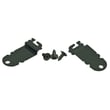
| Won’t start, beeps, or stops when bumped | Dishwasher door latch WPW10653840 | Door-closed sensing and cycle start |
| Not filling or fills slowly | Dishwasher water inlet valve W11175771 | Water entering the dishwasher |
| Not drying well, water not heating | Element assembly W10703867 | Water heating and drying performance |
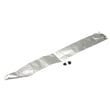
| Leaks near the bottom edge of the door | Dishwasher door seal, lower W10909089 | Sealing at the lower door edge |
If your KitchenAid is showing a code or flashing pattern, match it to the failure area before replacing parts. Use our KitchenAid microclean he dishwasher error codes to narrow it down.
Most “common problems” are really flow problems: if the dishwasher can’t fill, circulate, heat, or drain correctly, cleaning and drying drop fast. A few quick checks can prevent unnecessary part replacement and repeat failures.
Last updated: February 2026
What are the commonly replaced parts in a dishwasher?
In a KitchenAid dishwasher like model KDTM384ESS1, the most commonly replaced parts are the ones that move, seal, heat, fill, or drain water. We typically see wear on rack hardware, door latching and sealing parts, and water-handling components such as the inlet valve, drain hose, and pump assemblies.
- Rack hardware: broken wheels, adjusters, clips, and rails can make racks bind or fall off track (example: dishwasher dishrack roller assembly, lower WPW10195417).
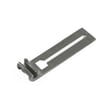
- Door latch and door seals: a weak latch can prevent starting; worn seals can cause leaks (example: dishwasher door latch WPW10653840).
- Water inlet valve: causes no-fill, slow fill, or intermittent fill issues (example: dishwasher water inlet valve W11175771).
- Drain hose: kinks, clogs, or splits can lead to poor draining or leaks (example: dishwasher drain hose 8269144A).
- Heating system parts: poor drying, cool water, or long cycles can point to heater-related problems (example: element assembly W10703867).
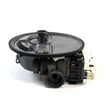
- Wash system parts: weak cleaning or unusual noises can involve the pump, motor, sump, or diverter (example: dishwasher pump and motor assembly W10902589).
| Symptom | Common part areas to check | Example part for KDTM384ESS1 |
|---|---|---|
| Won’t start or stops mid-cycle | Door latch, control, wiring | Dishwasher door latch WPW10653840 |
| Not filling | Inlet valve, supply line, float area | Dishwasher water inlet valve W11175771 |
| Not draining | Drain hose, pump, blockage | Dishwasher drain hose 8269144A |
| Not drying | Heating element, rinse aid use | Element assembly W10703867 |
| Rack won’t roll smoothly | Rollers, adjusters, rails | Dishwasher dishrack roller assembly, lower WPW10195417 |
Replacing the right part restores wash performance, prevents leaks that can damage cabinets and flooring, and avoids repeat failures caused by clogs, poor loading, or restricted water flow.
- Use KitchenAid he dishwasher error codes to match a flashing code to the most likely failed component.
- If the unit has power but won’t run, follow dishwasher wont start video to narrow it down to the latch, controls, or a simple reset.
Last updated: February 2026
What's the average lifespan of a KitchenAid dishwasher?
A KitchenAid dishwasher like model KDTM384ESS1 typically lasts 10 to 14 years. Lifespan depends most on water quality, how often you run cycles, and whether wear items (like rack rollers, door seals, and inlet valves) are replaced when symptoms first show up.
Most KitchenAid dishwashers fall into the same real-world range, but these factors move the needle:
- Hard water speeds up mineral buildup on the heating system and internal waterways
- Heavy daily use increases wear on racks, hinges, and the wash system
- Poor draining or standing water accelerates odors and corrosion
- Overloading stresses racks and reduces cleaning performance
- Skipped maintenance (filter and spray arm cleaning) shortens service life
If you see one issue occasionally, a repair often makes sense. If you see several at once, replacement becomes more likely.
- Repeated leaks at the door or bottom edge
- Not filling or filling slowly
- Not draining or leaving water in the tub
- Dishes come out gritty or still dirty even after cleaning the filter
- Poor drying or no heat during the cycle
Replacing a few common parts early often prevents bigger failures.
| Symptom | Common cause | Example part for KDTM384ESS1 |
|---|---|---|
| Lower rack won’t roll smoothly | Worn rack wheels | Dishwasher dishrack roller assembly, lower WPW10195417 |
| Water won’t enter or fills slowly | Inlet valve issue | Dishwasher water inlet valve W11175771 |
| Water at the bottom edge of door | Lower door seal worn | Dishwasher door seal, lower W10909089 |
A dishwasher that is maintained and repaired early usually runs quieter, cleans better, and avoids secondary damage (like leaks reaching the floor). That is the difference between getting 10 years and getting closer to 14.
Last updated: February 2026