Owner’s manual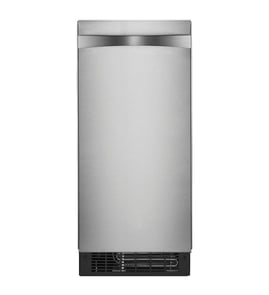


How do I reset the icemaker on a Kenmore refrigerator?
For Kenmore model 10689599100 (a freestanding ice maker), the most reliable reset is a simple power reset: turn the unit off with the ON/OFF button, then unplug it for 5 to 10 minutes and plug it back in. Use the 10689599100 owner's manual for the exact control steps.
- Press ON/OFF to stop ice maker operation (this does not remove power from the unit).
- Unplug the ice maker from the grounded outlet.
- Wait 5 to 10 minutes.
- Plug the unit back in.
- Press ON/OFF to restart ice production.
- Allow up to 24 hours for the first full batch; discard the first 2 batches.
These checks solve most “won’t operate” complaints after a reset:
- Confirm the unit is plugged into a grounded 3-prong outlet.
- Check the home breaker or fuse.
- Make sure the control is turned on (ON/OFF).
- Verify room temperature is above 55°F; colder rooms can stop production.
- If your unit has a drain pump and there is water in the bin, check the drain hose for kinks or pinches.
| Situation | What you’ll see | What it means |
|---|---|---|
| First start or restart | Slower output at first | Normal; production stabilizes over time |
| Warm room or warm water | Less ice in 24 hours | Higher temps reduce production |
| Bin gets full | Unit shuts off automatically | Normal; restarts when ice is needed |
A power reset clears minor control glitches and restarts the normal freeze, release, and cut cycle (ice sheet releases onto the cutter grid, minerals drain, then fresh water refills). If ice is thin or stops, issues like a loose drain cap, restricted water flow, or a failing component can mimic a “needs reset” symptom.
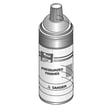
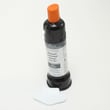
If you suspect restricted water flow or off-tasting ice, replacing the water filter F2WC9I1 is a common first fix.
Last updated: February 2026
How long does it take for a Kenmore ice maker to make ice?
For Kenmore model 10689599100, plan on up to 24 hours to produce the first batch of ice after startup; the unit also runs an initial rinsing cycle of about 5 minutes before it begins making ice. For best taste, discard the first 2 batches. See the 10689599100 owner's manual.
- The water pan fills and the ice maker rinses itself first (about 5 minutes).
- Initial ice production is slower while the system stabilizes.
- The ice level sensor in the bin monitors ice level and stops and restarts production as needed.
- Room temperature and incoming water temperature directly affect how fast ice is produced.
- The storage bin is not refrigerated, so some melting is normal.
| Situation | What you will see | Typical time |
|---|---|---|
| First startup after install or long shutdown | Rinse, then first ice cycles begin | Up to 24 hours for first batch |
| Bin is low or empty | Normal cycling at preset temperatures | Varies with conditions |
| High demand | Faster production using feature | Up to 24 hours of boosted output |
- Turn on Acceler-Ice when you need more ice in the next day.
- Keep the door closed; the door ajar alarm sounds after 5 minutes open.
- Make sure the water supply valve is fully open and the supply line is not kinked.
- Replace the water filter when indicated; a restricted filter can reduce fill and production (example: water filter F2WC9I1).
- Clean the ice maker when the “Cleaning Needed” light comes on or about every 9 months.
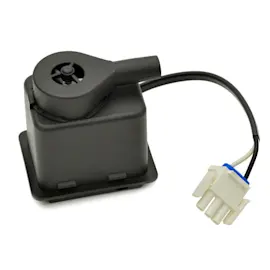
Startup timing is different from day-to-day production. Knowing the 24-hour first-batch window helps prevent unnecessary part replacements (like the recirculation pump or control board) when the unit is actually operating normally.
Last updated: February 2026
Why is my Kenmore icemaker not making ice?
If your Kenmore ice maker model 10689599100 runs but makes no ice, the most common causes are the control being turned off, the water supply being shut off or restricted, or a drain issue that empties the water pan (loose drain cap, clogged drain tube, or kinked drain line). See the 10689599100 owner's manual for the model-specific checks.
- Confirm the unit is ON (ON/OFF button); the button does not disconnect power.
- Allow 24 hours for the first batch after startup; discard the first 2 batches.
- Verify the water supply valve is fully open and the supply line is not kinked.
- Tighten the drain cap if you see thin ice or no ice.
- Clean the drain tube and make sure the drain line is not kinked.
- If room temperature is high, expect reduced production (the bin is not refrigerated, so some melting is normal).
Low flow or poor water quality can stop or slow ice production.
| What you notice | Likely cause | What to do |
|---|---|---|
| No ice at all | Water supply off or not connected | Turn on water, confirm connection |
| Thin ice or no ice | Drain cap loose, water pan emptying | Tighten drain cap, check for leaks |
| Slow production | Warm room or warm incoming water | Improve ventilation, lower room temp |
| Off-taste, scale, clumping | Mineral content, scale buildup | Clean the system; consider filtration |
If your unit uses a replaceable filter and you have low flow or heavy scale, replacing the water filter F2WC9I1 can help restore consistent water delivery.
If water supply and drain checks are good but you still get no ice, focus on the ice-making system steps: water fill, freezing on the evaporator, release, and cutting on the grid.
- No fill or inconsistent fill: check the water fill system and sensor
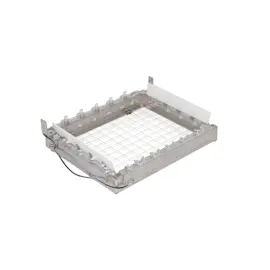
- Ice sheet forms but does not cut: inspect the cutter grid
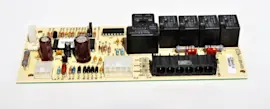
- Unit runs but cycles incorrectly: suspect the electronic control
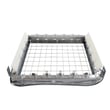
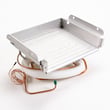
Model-matched parts commonly involved include the ice maker electronic control board W11034363 and the cutter grid W10919199.
This model drains mineral-heavy water after each freeze cycle and refills with fresh water. If the drain system is restricted or the water pan is being emptied unintentionally, the machine can run normally but never keep enough water in the system to make a full ice sheet.
Last updated: February 2026
How to remove the ice maker from a Kenmore refrigerator?
Kenmore model 10689599100 is a freestanding ice maker, not a refrigerator ice maker module. To remove it (move it out for service or replacement), we shut the unit off, disconnect power and water, drain the water pan, then disconnect the water line so the cabinet can be moved safely. See the step-by-step procedure in the 10689599100 owner's manual.
- Press the ON/OFF button or set the selector switch to OFF.
- Unplug the ice maker (or disconnect power at the breaker).
- Shut off the water supply to the ice maker.
- Wait 5 to 10 minutes for ice to drop into the bin; remove all ice.
- Unscrew the drain cap in the bottom of the water pan (inside the bin) and drain completely.
- Reinstall the drain cap securely.
- Pull the ice maker forward enough to access the rear connections.
- Disconnect the water supply line at the ice maker connection (use two wrenches to protect the tubing and fitting).
- If you need access to the water valve area, remove the lower access panel screws and pull the panel forward.
- Move the unit out for service.
- Two adjustable wrenches (or two open-end wrenches)
- Towel or shallow pan (for water from the line and drain)
- Work gloves
- Flashlight
| What to disconnect | Where | Why it matters |
|---|---|---|
| Power | Plug or breaker | Prevents electrical shock |
| Water supply | Shutoff valve | Prevents leaks and flooding |
| Drain cap | Water pan inside bin | Prevents spills when moving |
| Water supply line | Rear connection | Lets you move the unit safely |
Draining the water pan and disconnecting the water line prevents leaks, protects the compression fitting and tubing, and helps avoid thin ice or no-ice problems after reassembly if the drain cap is left loose.
Last updated: February 2026