Owner’s manual
 Error Codes



What is the life expectancy of an LG range?
Most LG gas ranges, including model LSG4513ST, typically last 13 years with normal household use and basic maintenance. Many units run longer, but performance issues often show up first in wear items like igniters, sensors, and control components; see the LSG4513ST owner's manual for care and operating guidance.
Typical lifespan and what affects it
A range’s life is mostly driven by heat exposure, cleaning habits, and how often the oven and burners run.
- Average service life: about 13 years for a gas range
- Heavy use (daily baking, frequent high-heat cooking) shortens lifespan
- Poor airflow around the oven can stress cooling and electronics
- Spills and harsh cleaners can damage knobs, panels, and finishes
- Power quality (surges/outages) can stress control boards
Parts that commonly need repair first
On LG gas ranges, these parts often fail before the cabinet and core gas piping do:
| Symptom | Common culprit | Example part for LSG4513ST |
|---|---|---|
| Oven won’t heat or takes too long to ignite | Igniter not drawing enough current | Range oven burner igniter MEE61841401 |
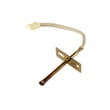
| Oven temperature swings or bakes unevenly | Sensor drifting out of range | LG range oven temperature sensor EBG61305805 |
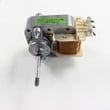
| Convection fan noisy or not running | Fan motor wear | Range convection fan motor EAU62343001 |
Maintenance that helps you reach (or beat) the average
These habits reduce strain on the bake system, convection fan, and controls.
- Keep burner ports and caps clean and seated correctly
- Wipe up oven spills after the oven cools (burned-on spills trap heat and odors)
- Avoid slamming the oven door; it protects hinges and door glass
- Use cookware that matches burner size to reduce excess heat on the cooktop
- If the oven struggles to ignite, address it early to avoid stressing the gas valve and controls
Why it matters
Knowing the typical lifespan helps you decide whether to repair or replace. If your LSG4513ST is under about 10 years old, repairs like an igniter or temperature sensor are usually practical; past the average lifespan, multiple electronic or gas-ignition repairs can add up.
Last updated: February 2026
What model is my LG range?
Your LG range model number is printed on the appliance’s rating label; for this parts page, the model is LSG4513ST. Once you match your label to that model number, you can use it to get the right LG gas range parts and the correct troubleshooting steps in the LSG4513ST owner's manual.
Where to find the model number on the range
On most LG freestanding gas ranges, the rating label is in one of these common spots:
- Inside the oven door frame area (open the oven door and check the frame)
- On the lower drawer frame (warming drawer or storage drawer area)
- Along the side trim near the door opening
- Behind the control panel area (less common)
How to read the label (and avoid ordering the wrong part)
Use the model number exactly as shown on the label (letters and numbers matter). Also record the serial number for service history.
- Model number: identifies the exact design family (example: LSG4513ST)
- Suffixes/revision codes: can affect fit (example formats: “/00”, “-00”, etc.)
- Serial number: helps date the unit and confirm production run
| Label item | What it’s used for | Why it matters |
|---|---|---|
| Model number | Parts lookup and diagrams | Ensures correct fit and compatibility |
| Serial number | Service and warranty records | Helps identify production variations |
| Gas type info | Installation and safety checks | Confirms correct fuel setup |
Why it matters
LG ranges can look identical across multiple model numbers, but internal parts (like an oven igniter, temperature sensor, or control board support) can differ. Using the exact model number prevents returns and repeat repairs.
Last updated: February 2026
What replacement parts are most commonly needed for the LSG4513ST?
For the LG LSG4513ST gas range, the most commonly replaced parts are the ones tied to oven ignition, temperature control, airflow, and door hardware. Start by matching symptoms (no heat, uneven baking, noisy fan, door issues) to the parts list and diagrams in the LSG4513ST owner's manual.
Commonly replaced parts for this model
These are frequent fixes when the oven will not heat, heats inconsistently, or has mechanical wear:
- Oven burner igniter (weak igniter causes delayed ignition or no bake)
- Oven temperature sensor (incorrect temperature readings, overbaking or underbaking)
- Convection fan motor (noisy fan, no convection airflow)
- Oven gas valve (no gas flow to bake burner, intermittent heating)
- Door parts (hinge or inner glass damage, heat loss)
Quick symptom-to-part guide
Use this as a starting point, then confirm with troubleshooting steps in the manual.
| Symptom | Most likely part to check | Example part on this model |
|---|---|---|
| Oven will not ignite or takes a long time to light | Oven burner igniter | Range oven burner igniter MEE63084901 |
| Oven temperature is inaccurate | Oven temperature sensor | LG range oven temperature sensor EBG61305805 |
| Convection is loud or not running | Convection fan motor | Range convection fan motor EAU62343001 |
| Door will not close right or drops | Door hinge | Range oven door hinge AEH75637211 |
| Inner door glass is cracked | Door inner glass | Range oven door inner glass 4890W1N005L |
How we recommend choosing the right replacement part
- Confirm the symptom first (bake vs broil vs convection).
- Use the model diagrams to identify the exact location and version of the part.
- Compare your original part markings to the part ID.
- Replace related wear items together when practical (for example, igniter issues can mimic gas valve problems).
- After installation, run a bake test and verify temperature stability.
Why it matters
On a gas range like the LG LSG4513ST, ignition and temperature feedback control both safety and cooking results. Replacing the correct component (igniter, sensor, fan, or door hardware) restores reliable lighting, stable oven temperature, and proper heat retention.
Last updated: March 2026