Installation guide
 Error Codes


How much does it cost to replace drum bearings on a dryer?
Replacing drum bearings or drum support components on a dryer typically costs $150 to $400 total for most in-home repairs. On a Crosley CDG4700LW0 dryer, the final price depends on which wear parts are replaced (rollers, idler, belt) and local labor rates; DIY is usually the cost of parts only.
- Parts: $30 to $150 (more if multiple wear parts are replaced together)
- Labor: $100 to $250 (common range for drum removal and reassembly)
- Service call/diagnostic: sometimes included, sometimes separate
- Best value approach: replace the full set of drum support wear items at once
| Repair approach | What’s included | Typical total cost |
|---|---|---|
| DIY parts-only | You supply labor | $30 to $150 |
| Pro repair, single part | One failed roller or idler | $150 to $300 |
| Pro repair, “full drum support refresh” | Rollers + belt + idler parts | $250 to $400 |
On many dryers, “bearing” complaints are actually worn drum support parts. For the CDG4700LW0, common wear items include:
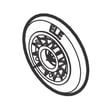
- Dryer drum support roller 5304523152
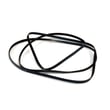
- White-westinghouse dryer drum belt 134719300
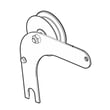
- Dryer idler spring 131601000
- Idler arm/spacer hardware (if worn or noisy)
If you only replace the loudest or most obviously failed part, the dryer can start squealing or thumping again soon after. Replacing rollers, belt, and idler components together helps restore smooth drum rotation, reduces noise, and can prevent belt damage.
Use the steps and safety guidance in the CDG4700LW0 installation guide and then inspect for:
- Flat-spotted rollers (thump-thump sound)
- Belt glazing, cracking, or fraying
- Idler pulley arm play or weak tension
- Excess lint buildup around the blower housing and base
Last updated: February 2026
Why is my dryer not working when I push the start button?
If your Crosley CDG4700LW0 dryer does nothing when you press Start, the most common causes are a door that is not fully latched, a power supply problem, or a failed safety or start circuit component (such as the door switch). Start with the quick external checks, then move to simple electrical tests.
- Confirm the door closes firmly and the latch engages; a dryer will not start if it thinks the door is open.
- Verify the outlet has power and the breaker is fully reset (flip OFF then ON).
- Make sure the cycle is actually selected and the timer knob is not between settings.
- If you smell gas, follow the safety steps in the installation guide.
These parts are frequent culprits when the motor never runs:
- Door switch (opens the motor circuit when the door is open); see dryer door switch 134813601.
- Electronic control board (can fail to send power to the motor circuit).
- Start switch (in the console; not listed in the parts shown here).
- Motor (can fail or bind).
- Thermal fuse (not listed in the parts shown here; often opens if airflow is restricted).
- Door switch test: With power unplugged, check the door switch for continuity when the door is closed.
- Airflow check: Clean the lint screen and confirm the vent is not crushed or clogged; restricted venting can lead to safety cutoffs.
- Control and motor circuit checks: If the door switch is good, test for power leaving the control when Start is pressed (requires a multimeter and wiring diagram).
| Symptom | Most likely cause | Next step |
|---|---|---|
| No lights, no response | Power supply issue | Check breaker, outlet, cord |
| Lights on, no motor sound | Door switch or start circuit | Test door switch, then start switch/control |
| Clicks/hums then stops | Motor issue or seized drum | Check drum turns freely, inspect belt/rollers |
A no-start condition is often a safety interlock doing its job (door switch, grounding, or a heat-related cutoff). Fixing the root cause helps prevent repeat failures and reduces fire risk from poor venting.
Last updated: February 2026
Where is the heating element in a Crosley dryer?
On the Crosley CDG4700LW0 gas dryer, there is no electric heating element; heat is produced by a gas burner assembly (burner tube, igniter, gas valve coils, and flame sensor) located in the lower cabinet area, typically behind the front lower access panel or the front panel depending on the cabinet design. Use the CDG4700LW0 installation guide for safe access and shutoff steps.
In a gas dryer like the CDG4700LW0, the “heater” is the burner system. Common components include:
- Burner igniter (glows to light the gas)
- Gas valve coils (open the gas valve when energized)
- Flame sensor (confirms ignition)
- Burner housing/tube (where the flame burns)
- Cycling controls such as a thermistor
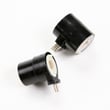
If your dryer runs but will not heat, the gas valve coils are a frequent wear item; the coil-seconda 5303931775 is the coil kit listed for this model.
Follow these basics before inspecting the burner area:
- Unplug the dryer; do not rely on the control being “off.”
- Shut off the gas at the manual shutoff valve.
- Let the dryer cool completely.
- Work in a well-ventilated area; keep flammables away.
- After any gas-line disturbance, check connections with a soapy water solution (never an open flame).
| Dryer type | What creates heat | Typical location |
|---|---|---|
| Gas dryer (CDG4700LW0) | Gas burner assembly | Lower front cabinet area |
| Electric dryer | Heating element | Heater housing, usually rear or lower cabinet |
Ordering an “element” for a gas dryer leads to the wrong repair path. Identifying the burner components helps you troubleshoot no-heat symptoms faster and choose the correct parts (igniter, coils, thermistor, or airflow-related fixes).
For step-by-step no-heat diagnosis, use gas dryer wont heat troubleshooting video.
Last updated: February 2026
Why is my Crosley dryer not drying clothes?
For your Crosley CDG4700LW0 dryer, the most common reasons clothes stay damp are restricted airflow (lint screen or venting), the dryer not exhausting outdoors correctly, or a heat problem on a gas model (igniter, coils, or gas valve). Start with the venting checks in the CDG4700LW0 installation guide.
- Clean the lint screen before every load.
- Inspect the vent hood outside; remove lint buildup and confirm the damper opens while the dryer runs.
- Replace any flexible plastic or foil vent; use 4-inch rigid or flexible metal duct.
- Make sure the dryer exhausts outdoors, not into an attic, wall, crawl space, or other concealed space.
- Check the vent run for crushing, kinks, or long runs that restrict airflow.
Your installation requirements call for 4-inch (102 mm) metal ducting and an approved vent hood with a swing-out damper. Keep at least 12 inches of clearance between the vent hood and the ground or obstructions.
| What we check | What “good” looks like | What it causes if wrong |
|---|---|---|
| Duct material | 4-inch rigid or flexible metal | Long dry times, overheating risk |
| Termination | Outdoors with vent hood damper | Moisture stays in laundry area |
| Duct interior | No lint, no screws protruding into duct | Lint catches, airflow drops |
On a gas dryer, no-heat or weak-heat symptoms often point to ignition or gas valve components.
- If the drum tumbles but there is no heat, check the burner system.
- If heat starts then stops, gas valve coils are a common cause; consider the coil-seconda 5303931775.
- If the dryer overheats or cycles heat oddly, a temperature sensor can be involved; consider the dryer thermistor 134587700.
Poor airflow is the number one cause of slow drying; it also makes the dryer run hotter and longer than designed. Correct venting improves dry times, energy use, and overall dryer performance.
Last updated: February 2026