Installation guide
 Owner’s manual


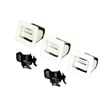
How to tell if a dryer thermal fuse is blown?
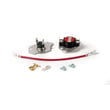
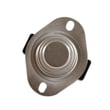
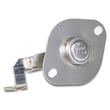
On the Crosley CED126SXQ1 electric dryer, a blown thermal fuse typically causes the dryer to not run at all (or to stop mid-cycle). We confirm it by unplugging the dryer and testing the fuse for continuity with a multimeter; no continuity means the fuse is blown and must be replaced.
Quick test steps (safe and accurate)
- Unplug the dryer (or switch off the breaker) before opening any panels.
- Access the blower housing area where the thermal fuse is commonly mounted.
- Pull the wires off the fuse terminals (note their positions).
- Set a multimeter to continuity or lowest ohms.
- Touch probes to the fuse terminals:
- Beep or near 0 ohms: fuse is good
- No beep or OL/infinite: fuse is blown
For panel access and exact component locations on this model, use the CED126SXQ1 owner’s manual.
What usually causes a thermal fuse to blow
A thermal fuse opens when the dryer overheats. Before installing a new fuse, fix the overheating cause or the new fuse can blow again.
Common causes to correct:
- Lint screen clogged or coated with residue
- Lint buildup in the lint chute or blower housing
- Crushed, kinked, or excessively long vent hose
- Blocked exterior vent hood (flapper not opening)
- Restricted airflow from improper venting (most setups use 4-inch vent)
What to check first when the dryer will not start
The installation and troubleshooting guidance for this dryer also points to basic “no run” checks:
| Symptom | Check | Why it matters |
|---|---|---|
| Dryer does nothing | Door fully closed | Door switch must close to run |
| No response | Push-to-start pressed firmly | Start circuit must engage |
| Runs but no heat | Both fuses/breakers OK | Electric dryers often use 2 fuses/breakers |
Parts that are commonly replaced together
If you are servicing an overheat condition, these parts are often involved:
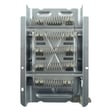
- Dryer thermal cut-off fuse kit 279816 (overheat protection components)
- Dryer operating thermostat WP3387134 (temperature regulation)
- Dryer high-limit thermostat WP3977767 (backup overheat limit)
Why it matters
A blown thermal fuse is a safety device doing its job. Replacing it without restoring proper airflow can lead to repeat failures, longer dry times, and overheating.
Last updated: February 2026
What are common dryer part failures?
On the Crosley CED126SXQ1 electric dryer, the most common part failures involve the heating circuit (no heat), the drum drive system (won’t tumble or squeals), and safety/airflow issues that cause overheating and shutdowns. Many symptoms trace back to venting, power supply, or a worn wearable part.
Most common failures by symptom
- No heat but drum turns: heating element, thermal cut-off/fuse, operating thermostat, high-limit thermostat, or a power supply issue (electric dryers need 240V and typically use 2 fuses/breakers).
- Won’t start or stops: door switch, push-to-start switch, timer, motor, or a tripped breaker.
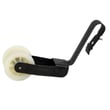
- Won’t tumble / thumping / squealing: worn belt, idler pulley, drum support wear (often serviced as a kit).
- Long dry times: restricted airflow from lint buildup or a crushed/too-long vent run.
- Overheating / burning smell: blocked venting, lint accumulation near the heater housing, or failed thermostats.
Parts that commonly wear out on this model
These are frequent replacements for CED126SXQ1 when troubleshooting the symptoms above:
| System | Common failure | Example part for this model |
|---|---|---|
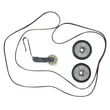
| Drum drive | Belt breaks or slips | Belt 341241 |
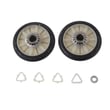
| Drum drive | Idler pulley wears, squeals | Dryer idler pulley WP691366 |
| Heat | Element opens, no heat | Dryer element 279838 |
| Heat safety | Thermal cut-off opens from overheating | Dryer thermal cut-off fuse kit 279816 |
| Controls/safety | Door switch fails, won’t run | Dryer door switch WP3406105 |
Quick checks we recommend before replacing parts
- Confirm power: electric dryers can tumble with only half power; reset both breakers or replace both fuses if used.
- Check airflow: clean the lint screen, inspect the lint chute area, and verify strong exhaust flow outside.
- Verify the door is fully closed: a misaligned strike can prevent starting.
- Listen for clues: squeal points to idler/belt; a heavy thump can be a flat-spotted roller or a bunched load.
- Review model-specific troubleshooting: follow the steps in the CED126SXQ1 owner’s manual.
Why it matters
Most “failed parts” symptoms are made worse by poor venting. Good airflow helps prevent thermal fuse trips, protects the heating element, and shortens dry times, which saves energy and reduces repeat breakdowns.
Last updated: February 2026
What is the most expensive part to replace on a dryer?
On a Crosley CED126SXQ1 electric dryer, the drive motor is typically the most expensive single component to replace, especially once labor is included. Timers and wiring can also be costly, but the motor is the most common high-dollar repair on this style of dryer.
Typical high-cost dryer parts (and what they do)
- Drive motor: turns the drum and runs the blower; a failed motor can stop the dryer from running.
- Timer or control: controls cycle time and power routing; failures can cause no-start or cycle issues.
- Heating system parts: the heater and safety thermostats can add up if multiple parts fail.
- Wire harness: damaged wiring can be expensive because it is a large assembly.
- Cabinet or door assemblies: usually only replaced after physical damage.
CED126SXQ1 examples from common replacement parts
These are model-matched examples that often represent the higher end of parts cost for this dryer.
| Part (example) | What it affects | Cost impact (typical) |
|---|---|---|
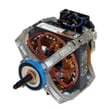
| Drive motor 279827 | Drum rotation and airflow | Highest parts cost in many repairs |
| Dryer timer W10894766 | Cycle timing and power routing | High |
| Wire harness W10366762 | Electrical connections throughout dryer | High |
| Dryer element 279838 | Heat production | Medium to high |
How to decide if the “expensive part” is really the problem
We recommend checking these basics first because they can mimic a motor or control failure:
- Confirm the door fully closes; a bad door switch can prevent starting.
- For electric dryers, verify you have a 240-volt supply; the drum can turn with no heat if one leg of power is lost.
- Check both household fuses or both breakers (electric dryers commonly use two).
- If the dryer runs but has no heat, test the heating element and safety thermostats before assuming a motor issue.
- Use the troubleshooting steps in the CED126SXQ1 owner’s manual to match symptoms to likely causes.
Why it matters
The motor is a high-cost part, so confirming power, airflow, and safety devices first helps avoid replacing the wrong component and reduces repeat failures (especially if overheating from poor venting caused the original problem).
Last updated: February 2026
Why is my Crosley dryer not drying?
If your Crosley CED126SXQ1 electric dryer runs but clothes stay damp, the most common causes are restricted airflow (lint screen or venting), a no-heat setting, or an electrical supply issue that leaves the drum turning without full 240 volts for heat. See the CED126SXQ1 owner’s manual for cycle and troubleshooting guidance.
Quick checks that fix most “not drying” complaints
- Clean the lint screen before every load; reinstall it firmly.
- If lint falls off the screen while it’s installed, wash the screen to remove detergent or softener residue.
- Confirm you did not select Air Dry/No Heat.
- Run the dryer 5 to 10 minutes and check for strong airflow at the outside exhaust hood.
- Reduce load size; heavy, tightly packed loads dry slowly.
- Make sure the room temperature is above 45°F; low temps can extend drying time.
Airflow and venting: the #1 cause
Poor venting makes drying times long and can also cause overheating.
Best-practice venting targets
| Item | What works best | What to avoid |
|---|---|---|
| Vent material | 4-inch rigid metal (or heavy metal flex) | Plastic or foil vent |
| Vent length | Shortest possible | Long runs |
| Elbows | 0 to 4 max (90°) | Extra bends and kinks |
| Cleaning | Full vent cleaning at least every 2 years | Letting lint build up |
For step-by-step venting requirements and clearances, use the CED126SXQ1 installation guide.
When the dryer tumbles but there’s little or no heat
On electric dryers, a tripped breaker or blown fuse can leave the motor running but stop the heater.
- Reset both sides of the 240-volt breaker (or replace both fuses if your home uses fuses).
- Verify the dryer is on a dedicated 30-amp circuit.
- If power is correct and airflow is good, test heating components.
Common heat-related parts to check
| Symptom | Often involved | Example part for this model |
|---|---|---|
| No heat | Heating element | Dryer element 279838 |
| Overheats, then no heat | Thermal cut-off | Dryer thermal cut-off fuse kit 279816 |
| Cycles heat poorly | Operating thermostat | Dryer operating thermostat WP3387134 |
Why it matters
Drying depends on two things working together: strong airflow and steady heat. Fixing vent restrictions and lint screen residue usually restores normal drying time and helps protect fabrics and the dryer from overheating.
Last updated: February 2026
Why is my Crosley sensor dryer not heating?
If your Crosley CED126SXQ1 electric sensor dryer runs but does not heat, the most common causes are a tripped 240-volt supply (often one of two breakers), restricted venting that overheats the heater circuit, or a failed heating component such as the heating element, thermal cut-off, or thermostat. Use the checks in the CED126SXQ1 owner's manual to narrow it down.
Quick checks first (no tools)
- Confirm the dryer is set to a heated cycle (not Air Fluff/No Heat).
- After 5 minutes of running, open the door and feel for heat.
- Check your home electrical panel; electric dryers typically use two fuses/breakers.
- Make sure the door fully closes and latches.
- Clean the lint screen and verify strong airflow at the outside vent hood.
What you should see
| What the dryer does | Most likely issue | What to do next |
|---|---|---|
| Drum turns, no heat | One breaker tripped or fuse blown | Reset both breakers; restore full 240V |
| No heat, long dry times, hot cabinet | Vent restriction | Clean/shorten vent; remove crushed flex duct |
| No heat after power and vent are good | Failed heater safety or thermostat | Test and replace the failed part |
Parts that commonly cause “runs but no heat” on CED126SXQ1
If power and airflow are good, we focus on the heater circuit parts below.
- Heating element: open coil stops heat completely; see dryer element 279838.
- Thermal cut-off kit: opens when the heater area overheats; see dryer thermal cut-off fuse kit 279816.
- High-limit thermostat: can open and prevent heating when temperatures spike.
- Operating (cycling) thermostat: can fail and stop heat regulation.
Why airflow and leveling matter on sensor cycles
Sensor Dry/Auto Dry relies on proper tumbling and airflow to heat and dry efficiently. A clogged vent can overheat the heater housing and trip safety devices, and an unlevel installation can reduce tumbling performance so sensor cycles do not behave correctly. Use the venting and setup guidance in the CED126SXQ1 installation guide.
When to stop and get service
If you reset both breakers and still have no heat, or you suspect a wiring/240V supply issue, have a qualified technician check the outlet, cord, terminal block, and heater circuit.
Last updated: February 2026
Why won't my Crosley dryer start?
If your Crosley CED126SXQ1 electric dryer will not start, the most common causes are a door that is not fully closed, controls not set to an active cycle, the PUSH TO START knob not pressed firmly or long enough, or a power supply issue (tripped breaker or blown fuse). Use the checks below, then test the start and door circuits.
Quick checks first (no tools)
- Confirm the cycle control is set to a timed or automatic cycle (not Off).
- Close the door firmly; the dryer will not run with an open door.
- Press and hold the PUSH TO START knob until you hear the drum begin moving.
- Verify the dryer is plugged in and the household electrical supply is on.
- Check the home electrical panel; many electric dryers use two fuses or breakers.
Power and control checklist (most likely causes)
| What you see | What it usually means | What to do |
|---|---|---|
| Nothing happens at all | No power, open door circuit, bad start switch | Check breakers/fuses, door closure, then test switches |
| Lights work but motor will not run | Failed start switch, door switch, or motor circuit safety | Test door switch and start switch |
| It stopped after a load and now will not start | Overheat protection opened (often airflow related) | Clear venting and check thermal safety parts |
Parts that commonly prevent starting
If the quick checks do not fix it, these parts are common culprits on dryers like the CED126SXQ1:
- Door switch: if it does not close electrically, the motor will not run (door must latch fully).
- Start switch: a worn switch may not send power to the motor when you press Start.
- Thermal safety: overheating from restricted airflow can open a thermal cut-off and stop operation.
Helpful part references for this model:
- Dryer door switch WP3406105
- Dryer push-to-start switch WP3977456
- Dryer thermal cut-off fuse kit 279816
Why it matters
A dryer that will not start is often protecting itself from an unsafe condition (like overheating) or it is not getting full 240-volt power. Fixing airflow restrictions and confirming both breakers/fuses are good helps prevent repeat failures.
For model-specific starting checks and the installation checklist, follow the CED126SXQ1 installation guide and operating steps in the CED126SXQ1 owner's manual.
Last updated: February 2026