Installation guide
 Owner’s manual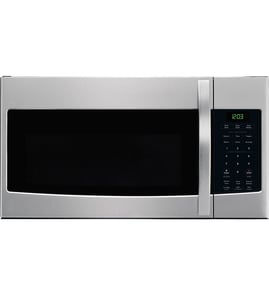



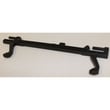
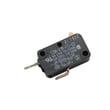
How big is a Kenmore microwave model 40185052210 in inches?
For Kenmore microwave/hood combo model 40185052210, the installation guide confirms it fits a 30-inch-wide cabinet opening and installs over ranges up to 30 inches wide. For the exact overall exterior width, height, and depth in inches, use the dimension diagram in the 40185052210 installation guide.
The installation instructions for model 40185052210 specify these key fit constraints:
- Cabinet opening between upper cabinets must be 30 inches wide and unobstructed
- Designed to install over cooking surfaces and ranges up to 30 inches wide
- Bottom of the upper cabinet must be 30 inches or more above the cooking surface
- Unit must be installed level for proper door alignment and venting
- Venting can be set up as recirculating, outside top exhaust, or outside back exhaust
Overall dimensions are typically shown in the installation drawings (often near the mounting template and cabinet prep steps). Check these sections:
- Product dimension diagram (overall W x H x D)
- Mounting plate and rear wall template pages
- Top cabinet template (power cord clearance and cutout locations)
These are common ranges for over-the-range microwaves that fit a 30-inch space; confirm your exact numbers in the guide:
| Measurement | Typical range (inches) | What it affects |
|---|---|---|
| Width | 29 7/8 to 30 | Cabinet-to-cabinet fit |
| Height | 16 to 17 1/4 | Clearance to upper cabinet |
| Depth | 15 to 17 | How far it projects over the range |
Getting the correct exterior dimensions helps you avoid cabinet interference, ensures the mounting plate lines up with studs, and prevents vent duct misalignment (especially when switching between recirculating and outside exhaust setups).
Last updated: February 2026
How many cubic feet is a Kenmore Model 40185052210 microwave?
The Kenmore 40185052210 microwave/hood combo is typically a 1.7 cu. ft. over-the-range microwave. For the exact capacity listed for your specific unit and configuration, confirm it in the 40185052210 owner's manual.
We recommend checking the capacity in the specs section of the manual or on the model and rating label.
- Look for a “Specifications” or “Product information” section in the 40185052210 owner's manual
- Check the model and rating label (commonly inside the door opening or on the oven frame)
- If your unit was replaced or the door was swapped, verify the model number matches 40185052210
- Compare the listed capacity to the common over-the-range range (1.6 to 2.0 cu. ft.)
Capacity affects what fits on the turntable, how evenly food heats, and what cookware sizes work best. It also helps when comparing replacement options or matching accessories.
| Capacity | Best for | Typical plate/cookware fit |
|---|---|---|
| 1.6 cu. ft. | Smaller households | Dinner plates, smaller casserole dishes |
| 1.7 cu. ft. | Most kitchens | Standard plates, medium cookware |
| 2.0 cu. ft. | Larger cooking needs | Larger dishes, bigger portions |
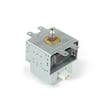
If the microwave runs but does not heat, capacity is not the cause. Common culprits are high-voltage components such as the microwave magnetron OM75P-21-ESGN. For safe diagnostic steps, use our why is my microwave not heating guide.
Last updated: February 2026
How do I reset a Kenmore microwave?
To reset your Kenmore microwave/hood combo model 40185052210, unplug it (or switch off the breaker) for about 1 minute, then restore power and set the clock. This clears most control glitches and returns the unit to a normal standby state.
- Power reset (most common): Unplug for 60 seconds, then plug back in.
- Breaker reset: Turn the microwave circuit breaker OFF, wait 60 seconds, then turn it ON.
- Control lock check: If the keypad seems unresponsive, look for a Control Lock feature in the 40185052210 owner's manual.
- After a reset: Re-enter the clock and any preferred settings.
Because 40185052210 is an over-the-range microwave/hood combo, power and installation details matter.
- Use a dedicated 20-amp outlet for the microwave circuit.
- If you reset at the breaker, confirm the microwave powers back on before testing cooking.
- If the unit was recently installed or moved, verify it was installed per the 40185052210 installation guide.
A reset helps with temporary software or keypad glitches. If the microwave still will not run, heat, or respond, these are common next checks:
- Confirm the door closes firmly and the latch engages.
- Listen for the cooling fan during a cook cycle.
- If it runs but does not heat, heating-circuit parts may be involved.
| Symptom after reset | What it often points to | Example part (if needed) |
|---|---|---|
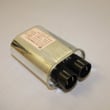
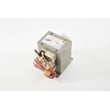
| Display works, no heat | High-voltage heating circuit | Magnetron, diode, capacitor |
| Dead, no display | Power supply issue, fuse, wiring | Power cord, fuse circuit |
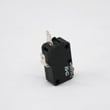
| Runs, stops when door moves | Door safety switch issue | Door interlock switch |
For “runs but not heating” troubleshooting steps, use our why is my microwave not heating guide.
Resetting is the fastest way to rule out a control-board hiccup before you spend time on deeper troubleshooting or parts replacement.
Last updated: February 2026
Are Kenmore microwaves good?
Kenmore microwaves are a good choice for most kitchens because they typically deliver solid everyday performance and practical features for the price. For the Kenmore 40185052210 microwave/hood combo, long-term satisfaction depends most on correct installation, proper venting setup, and routine filter cleaning as outlined in the 40185052210 installation guide.
A microwave/hood combo has to do two jobs: heat food and move smoke and steam. In our experience, customers are happiest when these basics are strong:
- Consistent heating on common cook settings
- Reliable door latching and safe door switch operation
- Effective vent fan performance for your cooking style
- Easy-to-maintain grease filters (and charcoal filter if ductless)
- Reasonable parts availability for wear items
This model is designed to be installed as one of three ventilation types (recirculating ductless, outside top exhaust, or outside back exhaust). A poor match between your kitchen setup and the venting configuration can make the fan seem “weak” even when the microwave is fine.
| Venting type | Where air goes | Best for | Common maintenance |
|---|---|---|---|
| Recirculating (ductless) | Back into kitchen | No exterior duct available | Replace charcoal filter periodically |
| Outside top exhaust | Up through cabinet/duct | Typical vertical duct setups | Clean grease filter regularly |
| Outside back exhaust | Out through rear wall | Horizontal duct setups | Clean grease filter regularly |
Why it matters: A level, correctly supported installation helps the door align properly and reduces vibration and noise over time.
If performance changes after a period of normal use, these are common areas to check or service:
- Grease filter loading (restricts airflow and increases odors)
- Charcoal filter saturation in ductless setups
- Door interlock switch wear (can cause no-start or intermittent running)
- Heating circuit components (when the unit runs but does not heat)
Helpful model-matched examples:
If the microwave runs (light, fan, turntable) but food stays cold, the issue is usually in the high-voltage heating system. We use the symptom-based steps in why is my microwave not heating to narrow it down before replacing parts.
A microwave/hood combo can seem “bad” when the real issue is venting configuration, clogged filters, or a single serviceable component. Fixing the root cause restores performance and helps prevent repeat failures.
Last updated: February 2026