Owner’s manual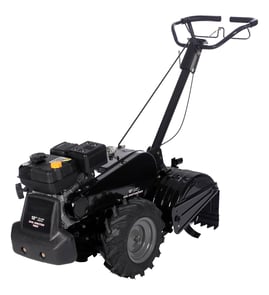



How often should I change the oil in my tiller?
For the Craftsman rear-tine tiller model 917299691, we change the engine oil after the first 2 hours of operation, then every 25 hours of use after that, or at least once a year. We also check the oil level before starting and after each 5 hours of continuous use (see the 917299691 owner’s manual).
Recommended oil-change schedule
- New tiller or fresh rebuild: change oil after 2 hours
- Normal use: change oil every 25 hours
- Light seasonal use: change oil once per year even if you do not reach 25 hours
- Between changes: check oil level before each start
- Long run time: recheck oil after 5 hours of continuous use
How we change the oil (quick steps)
- Disconnect the spark plug wire to prevent accidental starting.
- Warm the engine briefly so oil drains more freely.
- Keep the tiller on a level surface; place a drain pan under the drain plug.
- Remove the drain plug and tip the tiller forward to drain.
- Reinstall and tighten the drain plug; refill through the oil filler opening.
Oil type and temperature guide
All oil should meet API service classification SG.
| Typical conditions | Common choice | Why it helps |
|---|---|---|
| Warmer weather | SAE 30W | Good protection at higher temps |
| Consistently 32°F or lower | SAE 5W-30 | Easier starting in cold weather |
Why it matters
Fresh oil protects internal engine parts from wear and heat. On a rear-tine tiller like the Craftsman 917299691, clean oil also helps the engine hold steady power under load, which improves tilling performance and engine life.
Last updated: February 2026
Where is the model number on a Craftsman rear tine tiller?
On the Craftsman rear-tine tiller model 917299691, the model number is on a plate attached to the top of the transmission. For quick confirmation and a diagram-style reference, use the 917299691 owner's manual.
How to find it fast
- Shut the engine off and let hot parts cool.
- Remove the spark plug wire so the tiller cannot start accidentally.
- Stand behind the handles and look down toward the transmission housing.
- Find the metal plate on top of the transmission; the model number is stamped/printed there.
- Wipe dirt and oil off the plate with a rag to read it clearly.
Model number vs. engine model number (common mix-up)
Your tiller has a tiller model number and the engine has its own engine model number. Here is where each is typically located:
| What you need | Where to look | What it’s used for |
|---|---|---|
| Tiller model number (917299691) | Plate on top of the transmission | Ordering Craftsman tiller parts like belts, cables, and tines |
| Engine model number | On the engine blower housing near the spark plug | Ordering engine-specific parts (carburetor, ignition, gaskets) |
Why it matters
Using the correct model number helps us match the right Craftsman rear-tine tiller parts and diagrams the first time, especially for drive and tine components such as the belt 591372401 or tiller clutch cable 532110675.
Last updated: February 2026
What tiller is made in the USA?
Some tillers are made in the USA, but it depends on the brand and the specific model and where it’s assembled. For your Craftsman rear-tine tiller model 917299691, we recommend using the 917299691 owner’s manual to confirm the original manufacturer details and to match the correct service parts for your unit.
USA-made tiller brands you’ll commonly see
These brands are often associated with USA manufacturing or USA assembly for certain models or product lines (availability varies by year and model):
- Mantis (commonly associated with manufacturing in Pennsylvania)
- MacKissic (Merry Tiller)
- Power Dog (Kuhns Power Equipment)
- Northwest Tillers (heavy-duty/farm-style units)
- Land Pride (some models assembled in the USA)
How to confirm if a specific tiller is USA-made
Use these quick checks before you buy or when you’re identifying what you already own:
- Look for a “Made in USA” or “Assembled in USA” label on the frame, engine shroud, or ID plate
- Check the model and serial tag; it often lists the manufacturing location
- Verify the engine brand and model (engine origin can differ from the tiller’s assembly origin)
- Compare parts diagrams and part numbers to ensure you’re matching the correct platform
- Use the manual and parts list to confirm the exact configuration
What “made in the USA” can mean (quick comparison)
| Label you see | What it usually indicates | What to verify |
|---|---|---|
| Made in USA | Built domestically under that claim | ID plate wording and documentation |
| Assembled in USA | Final assembly in the USA, parts may be global | Country of origin for major components |
| Engine made in X | Engine origin only | Tiller frame and transmission origin |
Why it matters
Country of origin can affect parts compatibility, service procedures, and long-term support. For example, wear items like belts and tines are considered normal maintenance items on many tillers, so matching the correct parts and adjustment procedures is key for reliable performance.
Last updated: February 2026
What kind of oil do you use in a Craftsman tiller?
For the Craftsman rear-tine tiller model 917299691, we use SAE 30W engine oil for normal warm-weather operation; SAE 10W-30 is also acceptable. This tiller’s engine oil capacity is 20 oz, so fill to the dipstick mark and avoid overfilling (see the 917299691 owner's manual).
Oil type and capacity for model 917299691
Use the viscosity that matches your temperature range:
- SAE 30W: best for typical warm temperatures
- SAE 10W-30: good for cooler conditions and variable temps
- SAE 5W-30: helps cold starting when temperatures stay 32°F or below
- Use oil that meets API service classification SG (or equivalent)
| Item | Spec for 917299691 |
|---|---|
| Oil capacity | 20 oz |
| Recommended oil | SAE 30W |
| Alternate oil | SAE 10W-30 |
| Cold-weather option | SAE 5W-30 (32°F or below) |
How to check and add oil (quick steps)
- Park the tiller on a level surface and let the engine cool.
- Disconnect the spark plug wire to prevent accidental starting.
- Remove the oil fill cap/dipstick, wipe it clean, then reinsert to check level.
- Add oil slowly; recheck often so you do not overfill.
- Tighten the oil filler plug securely after checking or filling.
Oil change interval (what we recommend)
- Change oil after the first 2 hours of operation.
- Then change oil every 25 hours of use (or at least once a year).
Why it matters
Correct oil viscosity and the right fill level protect the crankcase and internal engine parts from wear, reduce overheating, and help your Craftsman tiller start easier in cold weather.
Last updated: February 2026
Are Craftsman rear tine tillers any good?
Yes. Craftsman rear-tine tillers like model 917299691 are a strong choice for breaking new ground and working tougher soil because counter-rotating tines bite in and pull the machine forward. Like any tiller, long-term satisfaction depends on correct setup, safe operation, and staying ahead of normal wear items.
What “good” looks like for a rear-tine tiller
A rear-tine design is built for control and traction, especially when you are tilling deeper or in compacted soil.
- Counter-rotating tines help the machine dig instead of skipping across the surface
- Better stability than many front-tine tillers in hard ground
- More consistent soil mixing when tines are sharp and correctly installed
- Easier to manage tilling depth using the depth stake
- Best results come from multiple shallow passes instead of one deep pass
Common complaints and what usually causes them
Most “not good” experiences trace back to wear, adjustment, or using too aggressive a tilling depth/speed.
| Symptom customers notice | Most common cause | What to check first |
|---|---|---|
| Poor tilling or shallow digging | Worn/bent tines | Tine wear and tine gap near transmission |
| Tines behave unexpectedly | Tines installed wrong direction | Sharp edges should rotate rearward from above |
| Excess vibration or hard handling | Loose hardware or damaged tines | Tightness of bolts and tine condition |
| Drive feels weak or inconsistent | Belt or clutch control issue | Belt condition and clutch cable adjustment |
Model-specific maintenance that matters most
Your 917299691 owner’s documentation calls out two big performance items: keep fasteners tight and keep tines in good shape.
- Inspect tines for sharpness, wear, and bending (especially near the transmission)
- If the gap between the tines exceeds 3-1/2 inches, replace or straighten as needed
- Use gloves/hand protection when handling tines
- Avoid overloading the machine by trying to till too deep at too fast a rate
- Keep bystanders, children, and pets away during operation
For diagrams, tine orientation, and service adjustments, use the 917299691 owner’s manual.
Parts that most often affect “good vs. bad” performance
These are normal wear or control parts that can change how the tiller feels in the soil:
- Belt 591372401 (drive engagement and power transfer)
- Tiller clutch cable 532110675 (engagement feel and adjustment range)
- Tines (wear item; replace when worn or bent)
Why it matters
A rear-tine tiller can feel “powerful” or “frustrating” based on tine condition and setup. Sharp, correctly oriented tines and a properly adjusted drive system reduce strain on the machine and improve tilling depth and soil breakup.
Last updated: February 2026
How to lubricate a tiller?
For the Craftsman 917299691 rear-tine tiller, lubrication mainly means keeping the engine oil at the correct level and changing it on schedule; the transmission is sealed and only needs lubrication if it’s serviced. Use the oil type and intervals listed in the 917299691 owner’s manual.
What to lubricate (and what not to)
- Engine crankcase oil: check before use and during long runs; change after the first 2 hours, then every 25 hours or yearly.
- Oil fill and drain points: keep the oil filler plug tight after checking or adding oil.
- Transmission: sealed; only lubricate if you open it for service.
- Control cables and pivots (general upkeep): a light lubricant helps prevent sticking, but keep oil off belts and pulleys.
- Belts and sheaves: keep dry and clean; replace worn parts instead of lubricating them.
Engine oil schedule and oil type (model-specific)
Use this as your quick reference for the 917299691:
| Item | What to do | Interval |
|---|---|---|
| Engine oil change | Drain and refill with clean oil | After first 2 hours; then every 25 hours or at least once a year |
| Oil level check | Verify level; add as needed | Before starting; after each 5 hours of continuous use |
| Oil type | SAE 30W (SAE 10W-30 acceptable); SAE 5W-30 for consistent 32°F and below | Match to temperature |
How to change the engine oil (safe, clean method)
- Disconnect the spark plug wire before maintenance.
- Run the engine briefly so the oil is warm (it drains faster).
- Park on a level surface and place a drain pan under the drain plug.
- Remove the drain plug; tip the tiller forward to drain completely.
- Reinstall and tighten the drain plug; refill with the correct oil.
Why it matters
Correct lubrication prevents premature wear, hard starting, and overheating. On a rear-tine tiller like this Craftsman model, clean engine oil is the single most important lubricant you maintain; the sealed transmission is designed to be low-maintenance.
If your tines or wheels are not driving correctly, lubrication is rarely the fix; a worn drive component such as the belt 591372401 is a more common cause.
Last updated: February 2026
What is the back of a tiller called?
On the Craftsman 917299691 rear-tine tiller, we typically call the back the rear (from the operator’s position standing behind the machine). The working end at the rear is the tine area, and the blades are the rear tines (often described as standard-rotating or counter-rotating). See the 917299691 owner's manual for the operator-position diagram and control names.
Common names for the back of a rear-tine tiller
From the operator’s position, these are the most common terms you will see in manuals, parts lists, and repair guides:
- Rear: the back of the tiller (opposite the front/engine side)
- Rear tines: the rotating blades that dig and mix soil
- Tine shield / leveling shield: shielding near the tines that helps control soil throw and finish
- Depth stake: the rear-mounted depth control that sets how deep the tines dig
- Handlebars: the operator controls at the back where you stand
Quick reference: what you call it vs what it does
| Term | Where it is | What it does |
|---|---|---|
| Rear tines | Back, at ground level | Breaks up soil and pulls the tiller through the dirt |
| Depth stake | Back, behind/near tines | Limits digging depth and helps stabilize the tiller |
| Leveling shield | Near the rear tine area | Helps smooth the tilled soil and reduces soil spray |
| Operator’s position | Behind the tiller | Defines left/right and front/rear orientation |
Why tine rotation gets mentioned when people say “the back”
Many rear-tine tillers are described by how the rear tines rotate:
- Counter-rotating tines (CRT): tines spin opposite wheel travel for aggressive digging
- Standard rotating tines (SRT): tines spin with wheel travel for easier handling in lighter soil
- Depth setting matters: trying to till too deep too fast can overload the machine
Why it matters
Using the correct “rear” terminology helps you match the right Craftsman parts (tines, shields, depth stake hardware) and follow safe procedures. Before inspecting or servicing the rear tine area, shut off the engine and disconnect the spark plug wire as outlined in the 917299691 owner's manual.
Last updated: February 2026