 Installation guide
 Owner’s manual



What is the average lifespan of a Kenmore washer?
A Kenmore washer typically lasts 10 to 15 years. For your Kenmore Elite washer 11027072603, lifespan depends most on installation (leveling and vibration control), monthly tub cleaning, and catching wear items early (bearings, suspension, drain pump). See the 11027072603 owner's manual for care and cycle guidance.
Typical lifespan ranges (what most owners see)
- Top-load washers: about 12 to 15 years
- Front-load washers: about 10 to 12 years
- High-use households (daily loads): often closer to the low end of the range
| Washer type | Typical lifespan | Most common wear points |
|---|---|---|
| Top load | 12 to 15 years | Suspension, hub/drive, lid lock |
| Front load | 10 to 12 years | Bearings, door boot leaks, drain pump |
What extends the life of model 11027072603
Good setup and routine care reduce vibration, leaks, and premature bearing wear.
- Level the washer so all feet firmly contact the floor (reduces noise and tub stress)
- Avoid overloading; heavy, unbalanced loads shorten suspension and bearing life
- Use the Clean Washer cycle monthly to reduce odor and residue buildup
- Use correct detergent amount; excess suds can cause long drain issues
- Check hoses and connections for leaks after moving or servicing
Parts that commonly affect “end of life” symptoms
If the washer is loud, shakes, or will not drain, these parts are frequent culprits:
- Suspension W10820048 (excessive vibration, off-balance spinning)
- Pump-water W10536347 (no drain, slow drain, water left in tub)
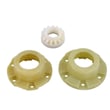
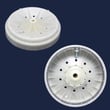
- Whirlpool washer tub bearing and drive shaft kit W10435302 (roaring noise, rough spin)
- Washer lid lock WPW10619844 (won’t start or stops mid-cycle)
Why it matters
Most “washer replacement” decisions happen after repeated off-balance spinning, draining failures, or bearing noise. Addressing leveling, cleaning, and early part wear often adds years of reliable service.
Last updated: January 2026
How to do a hard reset on a Kenmore washer?
For the Kenmore Elite washer model 11027072603, a hard reset is simple: turn the washer off, unplug it (or switch off the breaker) for about 2 minutes, then restore power and select a new cycle. This clears many temporary control glitches and stuck cycle states.
Hard reset steps (safe, no tools)
- Press Power to turn the washer off.
- Unplug the washer from the outlet (or turn the breaker off).
- Wait 2 minutes.
- Plug back in (or turn the breaker on).
- Press Power, choose a cycle, then press Start.
- If the lid is locked, wait for the Lid Lock light to turn off before opening the lid.
If the washer still will not start
On this model, the lid must be closed for the washer to start, and the controls can appear “dead” if the cycle was paused or stopped incorrectly.
- Press Stop once to pause (this typically unlocks the lid after the Lid Lock light turns off).
- Press Stop twice to stop the cycle and turn the washer off.
- Close the lid firmly, then press Power and Start.
- Run a Clean Washer cycle monthly (not for clothing) to help prevent odor and residue issues that can contribute to performance complaints.
Quick reference: what the buttons do
| Control | What it does | When to use it |
|---|---|---|
| Power | Turns washer on/off | Before selecting a cycle |
| Start | Starts or restarts the cycle | After selecting cycle/options |
| Stop (1 press) | Pauses cycle | To add a garment |
| Stop (2 presses) | Stops cycle and turns off washer | To fully cancel a cycle |
Why it matters
A hard reset restores the control to a clean “power-up” state, which often fixes issues like a frozen display, unresponsive buttons, or a cycle that will not advance. If symptoms return quickly, the problem is usually a lid lock, drain issue, or control/drive fault that needs troubleshooting in the 11027072603 owner’s manual.
Last updated: January 2026
How to force a Kenmore Elite washer to drain?
To force-drain a Kenmore Elite washer model 11027072603, we first stop the cycle and remove power, then drain water through the drain path (hose/pump) so the tub can empty safely. This is most often needed when a load stops mid-cycle or the washer will not spin out.
Fast, safe force-drain steps
- Unplug the washer (or switch off the breaker) before touching hoses or panels.
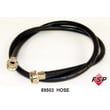
- Check the drain hose routing: straighten kinks and make sure it is not crushed behind the cabinet.
- Verify standpipe depth: to prevent siphoning, the drain hose should not be inserted more than 4 1/2 in. (11.4 cm) into the drainpipe/standpipe (a common cause of drain problems). See the installation guide.
- Lower the drain hose into a shallow pan or bucket (keep it below tub level) to gravity-drain as much water as possible.
- If the washer still will not drain, inspect the drain pump area for a clog (coins, socks, lint) and clear the obstruction.
Parts that commonly cause “won’t drain” symptoms
If the hose is clear and the washer still will not pump out, these parts are common suspects on this platform:
- Drain pump (motor runs but no water moves, or it hums)
- Lid lock (some cycles will not drain/spin correctly if the lid is not locking)
- Pressure switch hose (water level sensing issues can interrupt draining)
Helpful model-matched parts to check:
Quick checks before replacing parts
| What you notice | Most likely cause | What we do next |
|---|---|---|
| Water drains slowly | Partial clog or restricted hose | Clear hose path; check standpipe depth |
| Pump hums, no drain | Jammed or failed pump | Inspect pump; replace if seized |
| Stops and will not spin out | Lid lock or sensing issue | Check lid lock operation; inspect pressure hose |
Why it matters
A restricted drain hose or a failing drain pump can leave water in the tub, prevent high-speed spin, and lead to odor and residue buildup. Correct hose installation (including the standpipe insertion limit) also helps prevent siphoning and repeat drain complaints.
Last updated: January 2026
How many cubic feet is my Kenmore Elite washer?
Your Kenmore Elite washer model 11027072603 is a high-efficiency top-load design; washers in this Kenmore 110 platform are typically about 4.0 to 4.6 cu. ft. capacity. For the exact cubic-foot rating tied to your full model number, use the specifications pages in the 11027072603 owner's manual.
How to confirm the exact capacity for model 11027072603
Capacity is listed as basket volume (cu. ft.) in the product specifications, not in the installation steps.
- Open the Specifications or Features section in the 11027072603 owner's manual
- Verify the model tag reads 11027072603 (not just 110.27065 or 110.27075)
- Look for terms such as capacity, basket volume, or cu. ft.
- If the manual groups multiple models, match the capacity line to your exact model
Typical capacity ranges (quick comparison)
Use this to sanity-check what you find in the specs.
| Top-load washer type | Typical capacity (cu. ft.) | Best for |
|---|---|---|
| Standard top-load | 2.5 to 3.5 | Smaller, everyday loads |
| HE top-load (like many Kenmore Elite) | 3.5 to 5.5 | Larger loads with less water |
Why it matters
Cubic feet is the washer basket volume; it affects load size, turnover, and spin balance. Overloading can cause poor cleaning and out-of-balance spinning even when the washer is labeled “large capacity.”
Tips to load by capacity (works for this model type)
- Load items loosely; do not pack them down
- Keep the load below the tub ring to reduce rubbing and imbalance
- Mix large and small items to help balance during spin
- Level the washer during setup using the 11027072603 installation guide
Last updated: January 2026





