Owner’s manual
 Error Codes


Why is there ice on the bottom of my freezer side by side?
Ice collecting on the freezer floor is almost always caused by a clogged defrost drain; during defrost, water cannot flow to the drain pan, so it refreezes at the bottom. On Kenmore Elite model 79572053113, clearing the drain and reducing moisture entry typically stops the problem (see the 79572053113 owner's manual).
What to check first (fast, safe steps)
- Unplug the refrigerator or turn off power at the breaker.
- Remove the freezer drawer/bins so you can see the bottom panel.
- Look for a sheet of ice at the very bottom or under the lower drawer.
- Melt the ice with a hair dryer on low or by placing towels and letting it thaw.
- Flush the drain with hot water; a common mix is 2 cups hot water + 1 teaspoon baking soda.
- Confirm the doors close tightly; frequent or long door openings increase frost and ice buildup.
Why the drain clogs
When warm, humid air enters the freezer, moisture increases and can lead to frost and ice. If the drain hole or drain tube is restricted by ice, food debris, or sludge, defrost water backs up and freezes on the freezer floor.
Quick diagnosis guide
| Symptom | Most likely cause | What usually fixes it |
|---|---|---|
| Ice sheet on freezer bottom | Defrost drain clogged/frozen | Thaw and flush drain; clear drain tube |
| Frost builds up quickly after clearing | Door not sealing or not closing | Clean/reshape gasket; adjust loading so door shuts |
| Water/ice returns every few days | Drain refreezing | Ensure drain is fully clear; verify freezer temp is not set too cold |
Why it matters
A blocked drain can lead to recurring ice buildup, harder drawer operation, and temperature swings that affect ice production and food quality.
Helpful related guidance
If you also notice the door not sealing well, follow the steps in how to fix a fridge door seal.
Last updated: January 2026
Why is my refrigerator not getting cold at the bottom?
If your Kenmore Elite refrigerator model 79572053113 is warm at the bottom, the most common causes are restricted airflow (blocked vents or an iced-up evaporator area), a control setting issue (including Demo Mode), or heat not being removed efficiently (dirty condenser area). Start with airflow and settings, then move to cleaning and fan checks using the 79572053113 owner's manual.
Quick checks that fix most “warm bottom” complaints
- Confirm the refrigerator is not in Demo Mode (cooling is disabled in Demo Mode).
- Make sure the temperature controls are set correctly; adjust one step at a time and allow time to stabilize.
- Check for blocked air vents in the fresh food section; rearrange items so air can circulate.
- Reduce long or frequent door openings; warm, humid air raises temperatures.
- If the unit was recently installed or moved, allow up to 24 hours to reach target temperatures.
What to inspect next (in order)
| What you notice | Likely cause | What we recommend |
|---|---|---|
| Top shelves are colder than bottom | Airflow restriction | Clear vents; avoid overpacking; check for frost buildup behind rear panel |
| Whole refrigerator is warm | Control off, Demo Mode, defrost cycle | Turn control on; disable Demo Mode; wait 30 minutes if in defrost |
| Warm plus musty odors | Poor circulation, stale air | Replace the lg refrigerator air filter ADQ73214408 and improve airflow |
| Warm bottom plus noisy running | Heat not rejecting well | Clean condenser area; verify condenser fan airflow (if equipped) |
Why it matters
Bottom-warm symptoms usually mean cold air is not circulating correctly or heat is not being removed. Fixing airflow and cleaning issues early helps protect food temperatures and reduces compressor run time.
When a part is commonly involved
If airflow is good and settings are correct, these parts are often checked by a technician:
- Evaporator/fan area (frost buildup can block airflow)
- Temperature sensors (defrost sensor issues can contribute to icing)
- Sealed system components (less common, higher complexity)
For model-matched troubleshooting steps and control instructions, follow the 79572053113 owner's manual.
Last updated: January 2026
What are the common problems with Kenmore Elite refrigerators?
Common problems on the Kenmore Elite 79572053113 bottom-mount refrigerator include weak or no cooling, frost buildup, water leaks, dispenser or ice maker issues, and unusual noises. Many fixes start with basic maintenance (filters, airflow, cleaning coils) and then move to diagnosing fans, sensors, or the sealed system using the 79572053113 owner's manual.
Most common symptoms and what usually causes them
- Not cooling or warm temperatures: dirty condenser area, airflow blockage, failed fan, or a sealed-system/compressor issue
- Frost or ice buildup: defrost system problem, door not sealing, or frequent door openings
- Water under the refrigerator or in the crisper: clogged defrost drain, loose water line, or filter housing leak
- Ice maker not making ice: restricted water supply, frozen fill tube, or ice maker failure
- Buzzing, clicking, or rattling: condenser fan noise, ice maker cycling, or compressor/start components struggling
Quick checks we recommend before replacing parts
- Confirm settings: freezer near 0°F and fresh food near 37°F.
- Make sure vents are not blocked by food packages.
- Replace overdue filters: a clogged water filter can reduce dispenser flow and affect ice production.
- Clean dust from the condenser area and ensure good airflow around the cabinet.
- If your model supports it, use Kenmore Connect features described in the manual to capture diagnostic info.
Parts that commonly relate to these problems (for this model)
| Symptom | Common part involved | Example part for model 79572053113 |
|---|---|---|
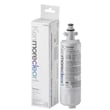
| Bad taste/low water flow/slow ice | Water filter | Genuine Kenmore refrigerator water filter 9690 AGF80300801 |
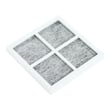
| Odors in fresh food section | Air filter | Lg refrigerator air filter ADQ73214408 |
| Frost issues/temperature swings | Defrost sensing | Refrigerator defrost sensor assembly 6615JB2005R |
| Door not sealing, moisture/frost | Door gasket | Refrigerator door gasket, right ADX72930461 |
Why it matters
Cooling and frost problems can quickly lead to food spoilage and higher energy use. Water leaks can damage flooring, and dispenser issues often trace back to simple maintenance items like filters and airflow.
Last updated: January 2026
What size is Kenmore refrigerator model 79572053113?
Kenmore Elite refrigerator model 79572053113 is a bottom-freezer design in the Kenmore 795.7205* family. For planning space, use the exact exterior dimensions, clearances, and capacity listed in the 79572053113 owner's manual; those specifications are the correct reference for your specific color and configuration.
How to measure the “size” you actually need
Use these checkpoints so your measurements match how refrigerators are specified:
- Measure width at the widest point (often the doors, not the cabinet)
- Measure height from the floor to the highest point (often the hinge cover)
- Measure depth both with handles and without handles
- Allow room for door swing and full freezer drawer pull-out
- Leave ventilation clearance behind and above the unit per the manual
What “size” can mean (quick guide)
Different shoppers mean different things by “size”; here is what to look up in the manual.
| If you mean | Look for this spec | Why it matters |
|---|---|---|
| Fit in the opening | Width, height, depth | Prevents cabinet and wall interference |
| Storage space | Total capacity (cu. ft.) | Helps compare models fairly |
| Door clearance | Door swing and drawer clearance | Ensures doors and freezer drawer open fully |
| Installation needs | Required clearances, water line routing | Avoids airflow and hookup problems |
Why it matters
Using the manual’s exact dimensions helps you avoid common install issues like doors hitting adjacent walls, the freezer drawer not clearing an island, or restricted airflow that can reduce cooling performance.
Last updated: January 2026