Owner’s manual
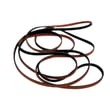


How do I tell what size dryer belt I need?
For Kenmore dryer model 11066712692, the most reliable way to get the correct belt size is to match the belt to your model number and replace it with the specified drum belt. If you still have the old belt, you can confirm by measuring its length and width.
Use the model number 11066712692 to select the exact replacement belt: drum belt 341241. This avoids mistakes with look-alike belts that differ slightly in length or rib profile.
If the belt is intact, measure it to confirm what you have:
- Length: measure the belt’s total loop length (outside circumference)
- Width: measure across the flat face of the belt
- Rib style: note whether it is ribbed or smooth, and count ribs if present
- Condition: glazing, cracks, or stretched spots indicate it should be replaced
- Markings: write down any numbers printed on the belt (if readable)
If the belt is broken, lay the pieces end-to-end and measure the total length; if pieces are missing, use the model-based match instead.
Dryer belt “size” is typically a combination of length and profile. Here is what to compare:
| What to check | How to check it | Why it matters |
|---|---|---|
| Belt length | Measure full loop length | Too long slips; too short overloads the motor/idler |
| Belt width | Measure across belt | Must fit the drum and pulley grooves correctly |
| Belt profile | Ribbed vs smooth, rib count | Wrong profile can squeal, slip, or wear quickly |
A correctly sized belt keeps the drum turning at the right speed and tension. The wrong belt can cause thumping, squealing, poor drying, or a no-tumble condition that can be mistaken for a motor problem.
Your 11066712692 is a 29-inch wide electric dryer family; belt routing and service access details are shown in the 11066712692 owner's manual.
Last updated: February 2026
How to tell if a dryer thermal fuse is bad?
On Kenmore dryer model 11066712692, a bad thermal fuse typically shows no continuity on a multimeter (often reads OL or infinite resistance) and the dryer may run with no heat or not run at all. Always correct airflow problems first because overheating commonly causes the fuse to blow.
- Unplug the dryer (or switch off the breaker) before opening any panels.
- Access the thermal fuse area (commonly near the blower housing or exhaust path).
- Remove at least one wire from the fuse terminal so you are not reading the rest of the circuit.
- Set a multimeter to continuity (or lowest ohms).
- Touch probes to the fuse terminals:
- Good fuse: continuity (beep) or near 0 ohms
- Blown fuse: no beep and OL/infinite resistance
- If the fuse is blown, clean the lint screen and exhaust venting before running the dryer again.
Restricted airflow is a leading cause of overheating. Our manual guidance for drying problems points to checking airflow at the outside exhaust hood and cleaning the exhaust system when airflow is weak. Use the venting and access details in the 11066712692 owner's manual.
- Clean the lint screen before every load
- Check strong airflow at the outside exhaust hood
- Remove lint buildup from the exhaust duct
- Replace crushed or kinked venting with rigid or heavy metal vent
| Symptom | What it often means | What we do next |
|---|---|---|
| Dryer runs but no heat | One house fuse/breaker leg is out, or a heat safety device opened | Check both breaker legs; then test thermal devices |
| Dryer will not start | Door switch, thermal fuse, or power issue | Verify power; test fuse and door switch |
| Long dry times | Restricted venting or lint blockage | Restore airflow; then recheck heating |
If testing shows an open safety device, these model-compatible parts are commonly used during a no-heat/overheat repair:
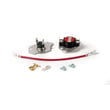
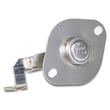
- Cut-off kit 279816 (thermal cut-off kit)
- Dryer operating thermostat WP3387134 (cycling temperature control)
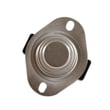
- Dryer thermostat WP3977767 (high-limit protection)
A thermal fuse is a one-time safety device; bypassing it can create an unsafe overheating condition. Replacing the fuse without fixing vent restriction often leads to repeat failures and poor drying performance.
Last updated: February 2026
Is it worth replacing the heating element in a dryer?
Yes, it’s usually worth replacing the heating element in your Kenmore dryer model 11066712692 when the dryer runs but won’t heat, because the repair cost is typically far less than replacing the dryer, and restoring proper heat often fixes long dry times.
Replace the element when the dryer tumbles normally but produces no heat, and airflow is good.
- The drum turns, timer advances, but clothes stay cold and damp
- You have strong airflow at the outside vent hood (after cleaning the lint screen)
- The dryer is otherwise in good condition (no major noise, no burning smell, no repeated shutdowns)
- You want a cost-effective fix instead of replacing the appliance
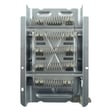
A common replacement for this model is the dryer element 279838.
The Kenmore manual troubleshooting points to airflow and settings as frequent causes of “not drying satisfactorily.” Use this quick checklist before ordering parts. See the 11066712692 owner's manual.
- Clean the lint screen before or after each load
- Run the dryer 5 to 10 minutes and check for strong air movement at the exhaust hood
- Inspect the vent for crushing, kinks, or heavy lint buildup; use rigid or heavy metal venting
- Confirm the cycle is not set to AIR DRY (no heat)
- Verify power: a dryer can run but not heat if one house fuse is blown or a breaker is tripped
If the element failed due to overheating or restricted venting, a safety device may also be open.
| Symptom | Likely area to check | Example part for this model |
|---|---|---|
| Runs but no heat | Heating circuit | Dryer element 279838 |
| No heat after vent restriction | Thermal safety devices | Cut-off kit 279816 |
| Overheats or cycles heat oddly | Temperature control | Dryer operating thermostat WP3387134 |
A failed heater is only part of the story; restricted airflow can cause long dry times and can overheat the heating circuit. Fixing venting and replacing the correct heat-related parts helps the dryer dry faster and protects components.
Last updated: February 2026
Where to find model number on a Kenmore dryer?
On Kenmore dryer model 11066712692, the model number is printed on the model and serial number plate. You’ll typically find that plate on the dryer cabinet opening (often just inside the door area) or on the back of the dryer near the top; confirm the exact location in the 11066712692 owner's manual.
- Inside the door opening on the cabinet frame (door open, look around the opening)
- On the back panel near the top edge
- Along the side of the cabinet opening near the lint screen housing (varies by design)
- On a sticker or metal plate labeled Model and Serial
The plate lists both the model and serial number. Record both so we can match the correct Kenmore parts (like a belt, thermostat, or heating element) to your exact dryer.
| Label item | What it’s used for | Example format |
|---|---|---|
| Model number | Identifies the exact dryer design | 11066712692 |
| Serial number | Identifies production run details | Letters and numbers |
Kenmore dryers can look similar across multiple series, but parts like the drum belt 341241 or dryer door switch WP3406105 can vary by model. Using the model number from the plate helps ensure the part fits and the repair instructions match your dryer.
Last updated: February 2026