Owner’s manual
 View engine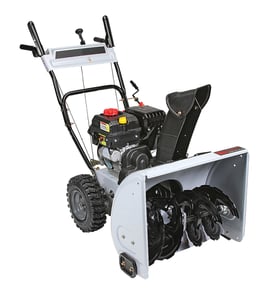



How long should a gas snowblower last?
A Craftsman gas snowblower like model 536886440 typically lasts 10 to 15 years with normal homeowner use when it is maintained each season and worn items (belts, spark plug, shear pins) are replaced as needed. Follow the maintenance intervals in the 536886440 owner's manual.
What most affects lifespan
- Maintenance frequency: oil checks, oil changes, lubrication
- Storage habits: clean and protect metal surfaces before off-season storage
- Wear parts replacement: belts, spark plug, friction components
- Operating conditions: heavy, wet snow and gravel driveways increase wear
- Fastener and control checks: catching looseness early prevents bigger failures
Maintenance schedule that helps it reach 10 to 15 years
The manual calls out several repeat intervals that directly impact longevity.
| Task | When to do it | Why it matters |
|---|---|---|
| Check for loose or damaged parts | After each use | Prevents small issues from becoming breakdowns |
| Check engine oil level | Before starting and after each 5 hours of continuous use | Avoids engine wear from low oil |
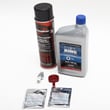
| Change engine oil (SAE 5W30) | Every 25 hours or at least yearly | Removes contaminants that shorten engine life |
| Check spark plug | Every 25 hours | Helps reliable starting and smooth running |
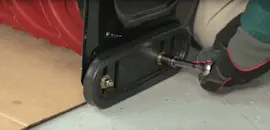
| Lubricate disc drive plate zerk | Every 25 hours and end of season | Reduces drive system wear |
| Adjust auger drive belt | After first 2 to 4 hours, mid-season, then twice per season | Prevents slipping and premature belt failure |
Parts that commonly wear out first
These are normal wear items; replacing them on time keeps the snow thrower dependable.
Why it matters
A snowblower usually gets retired early due to neglected oil changes, lack of lubrication, or running with worn belts that overload the drive and auger systems. Keeping up with the manual’s intervals is the simplest way to get full life from the engine and drivetrain.
Last updated: February 2026
How to find Craftsman snowblower model number?
On a Craftsman snowblower, the model number is printed on the product identification label; for model 536886440, that label is typically on the rear of the unit between the wheels or on the side of the frame near the auger housing. Confirm the exact label location in the 536886440 owner's manual.
Where to look on model 536886440
Check these common label locations first:
- Rear of the snowblower, between the wheels (most common)
- Side of the frame near the auger housing
- Rear of the auger housing (look from behind the bucket)
- Handle/frame area near the lower handle mounts
- Near the engine area on the frame (do not confuse this with the engine model tag)
Model number vs. engine model number (important)
This snowblower has its own model number, and the engine has a separate model number.
| What you’re reading | Example you might see | What it’s used for |
|---|---|---|
| Snowblower model number | 536886440 | Correct snowblower parts like belts, chute parts, and hardware |
| Engine model number | 143.015005 | Engine-specific parts and tune-up items |
Tips to read the label correctly
- Write the full number exactly as shown (include all digits)
- If the label is dirty, wipe it with a damp rag and mild detergent; dry it fully
- Take a clear photo before ordering parts
- Use the snowblower model number for chassis parts (auger, chute, drive system)
Why it matters
Using the correct model number prevents ordering the wrong parts for your 5-HP snow thrower. For example, the correct belts for this model include the snowblower drive belt 1733324SM and the auger belt 37X120MA, which are matched by application.
Last updated: February 2026
How to tell year of Craftsman snowblower by serial number?
For a Craftsman snowblower like model 536886440, the serial number format varies by manufacturer and production run, so the most reliable way to identify the year is to match your serial number to the identification guidance and parts breakdown in the 536886440 owner's manual. Once you confirm the build-date pattern used on your unit, you can translate the date code into the production year.
Where to find the serial number
Most Craftsman snow throwers place the model and serial tag on the frame near the engine or on the rear of the auger housing.
- Look for a metal or foil label that lists MODEL and SERIAL
- Wipe off snow, salt, and oil so every character is readable
- Write the serial number exactly as shown (include letters and leading zeros)
- Take a photo before the label wears further
How serial number date codes are commonly structured
Craftsman snowblowers were produced by different manufacturers over the years, and each used its own coding. These are the most common patterns customers see:
| Common pattern | What it usually means | Example (illustrative) |
|---|---|---|
| Letter + numbers | Letter indicates month; numbers indicate day and year code | A 15 3 (Jan 15, year code 3) |
| All numeric block | First digits indicate year and week/day | 0315 (year code 03, week 15) |
| Mixed with dashes | Date code embedded in first section | 1A23-xxxxx |
Quick checks that prevent wrong-year lookups
Use these checks before you decide the year:
- Confirm you are reading the serial number, not a casting number or engine model
- Compare the serial label to the model number 536886440 to ensure it matches the machine
- If your unit has an electric starter cord, chute controls, or handle hardware that matches the illustrated parts lists, you are on the right model family
- If you are ordering wear items (belts, shear pins), use the model-based parts list rather than guessing by year
Why it matters
The correct production year helps you get the right parts and adjustments for your exact build, especially for drive system items (belts, idlers) and auger housing components that can change across runs.
Last updated: February 2026
Is it worth fixing a snowblower?
Yes, it’s usually worth fixing a Craftsman snow thrower model 536886440 when the problem is a normal-wear item (like belts, spark plug, or shear pins) and the machine is otherwise solid. If the repair involves major engine or drivetrain damage, replacement is typically the better value.
Quick way to decide (cost vs. condition)
Use this checklist to make a clear call before you buy parts:
- Repair cost vs. replacement: If the repair is under about half the cost of a comparable new snowblower, fixing is the better value.
- Type of failure: Wear items (belts, tune-up parts) are good repair candidates; major engine damage is not.
- Overall condition: If the auger housing, chute, and controls are in good shape, repairs pay off longer.
- Safety and reliability: If it has abnormal vibration or damage after hitting an object, inspect and repair before using again.
- Maintenance history: Units that were lubricated and tuned up regularly are worth investing in.
Common “worth it” repairs for this model
These are typical, high-impact fixes that restore performance without major teardown:
| Symptom | Likely area | Example part you may need |
|---|---|---|
| Won’t drive or slips in forward/reverse | Ground drive system | Snowblower drive belt 1733324SM |
| Auger or impeller won’t engage | Auger drive system | Auger belt 37X120MA |
| Chute won’t stay positioned or feels loose | Chute hardware | Chute retainer rings (inner/outer) |
When replacement makes more sense
Replacement is typically the better choice when:
- The engine has severe internal damage (for example, a bent crankshaft from impact).
- The machine has extensive rust-through or structural damage.
- Multiple major systems need work at the same time (engine plus auger plus drive).
Why it matters
A snowblower that’s maintained and repaired promptly is safer and more dependable. The owner’s manual also emphasizes stopping the engine, disconnecting the spark plug wire, and inspecting for damage after striking a foreign object, since vibration and damage are warning signs.
For model-specific maintenance intervals and safe service steps, follow the 536886440 owner’s manual.
Last updated: February 2026
Should I spray my snowblower with WD-40?
Yes; for a Craftsman 536886440 snow thrower, spraying a light rust preventative or spray lubricant on bare metal (especially the auger housing and impeller area) helps reduce rust during storage. For snow-shedding inside the chute, a silicone-based spray typically lasts longer than standard WD-40.
Where spraying helps most
Use a light coating on these areas (wipe off excess so it does not attract grit):
- Bare metal inside the blower housing
- Auger and impeller surfaces (engine off, spark plug wire disconnected)
- Chute interior to reduce sticking in wet snow
- Exposed fasteners and linkage points that show surface rust
What to avoid spraying
We recommend keeping spray lubricants away from parts where slip or contamination causes problems:
- Drive belts and pulleys (can cause slipping)
- Friction disc and drive plate area (can cause loss of drive)
- Rubber tires and traction surfaces
- Hot muffler/exhaust area
Quick product comparison (what to use where)
| Goal | Best choice | Why |
|---|---|---|
| Prevent rust during storage | Light spray lubricant or rust preventative | Coats bare metal and slows corrosion |
| Reduce snow sticking in chute | Silicone spray | More durable, slick film in cold conditions |
| Free up sticky pivots | Light spray lubricant (sparingly) | Helps displace moisture and loosen light corrosion |
Why it matters
A snowblower packs snow, water, and road salt into tight spaces. A thin protective film on bare metal reduces corrosion, and a slick chute surface helps prevent clogs that can strain the auger/impeller system.
Model-specific tip from the manual
For the Craftsman 536886440, our manual guidance for storage includes thoroughly cleaning the unit and covering bare metal parts of the blower housing, auger, and impeller with a rust preventative such as a spray lubricant. See the storage and maintenance section in the 536886440 owner's manual.
Last updated: February 2026